Forget garden cities: This utopian ideal will never give us the houses we need

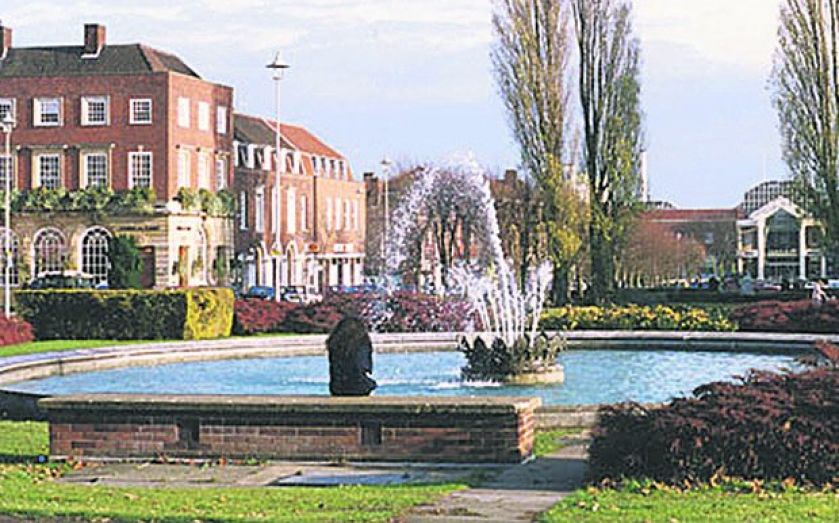
Garden cities make for a fascinating debate, and it’s only set to intensify. The shortlist for the 2014 Wolfson Prize was released last month, and five plans for a new garden city edged closer towards winning £250,000. Earlier this year, the government announced that a 15,000-home garden city would be built at Ebbsfleet in Kent. But while many praise the ideals of Victorian reformer Ebenezer Howard, used to physically, socially and economically structure Letchworth (c.1903) and Welwyn Garden City (1920), should we not be concerned about rolling out a development model that is now over a century old?
I suggest that we start from the evidence to inform our choice of an appropriate development model for Britain today. If we account for significant changes in the way we live and work over the past 100 years, it becomes clear that the garden city model is not sustainable if we want to build homes for the many, not just the privileged few.
First, the context. The UK’s population of 63m is projected to rise to 73m by 2035, creating additional pressure on housing. Average family and household size also fell across the twentieth century, and the need to house single people and single parent families has increased. This suggests that, just to keep up with population trends, the UK needs to provide 4.54m homes over the next 20 years – 227,000 homes per year. In 2012-13, an average of 107,000 homes was delivered.
Using current aspirations and development standards, we estimate that the UK will need around 97,000 hectares of land to accommodate this growing population. Using the standards of the historic garden city, however, we would need 525,000 hectares. To equate this to something Westminster politicians can understand, this is over five times’ the size of the Surrey boroughs of Elmbridge, Epsom and Ewell, Guildford, Reigate and Banstead, Runneymede, Spelthorne, Surrey Heath, and Tandridge.
So what has changed since the first garden cities were imagined, and how much space would be required for new garden cities to accomodate this? First, expectations of what constitutes a home have shifted radically since Howard’s day. Houses have become smaller, resulting in an increasing demand for space in the public realm, rather than at home in the private garden. But if we assume that “every Englishman wants his castle”, as in the garden city philosophy, we will require approximately 53,000 hectares of land for residential development and an additional 35,000 for roads, public open space and infrastructure, so about 88,000 hectares.
Second, the garden city movement was predicated on a family unit in which just one parent worked. Invariably, he was male and commuted to the city, while the family was ensconced in our green and pleasant land. Yet for most, this was an utopian ideal never to be attained. Possibly the greatest triumph of the last century has been substantial improvements in UK working conditions. But absolute office space requirements have also fallen. We would need approximately 5,400 hectares for employment purposes as the population grows. And education has also become universal, unlike in the Victorian era. We’d have to allow about 1,600 hectares for educational purposes.
The first Henry Ford Model-T rolled off the production line in 1908 and, by 1910, the UK’s vehicle production was 14,000 units; the first fixed-wing commercial flight from Hounslow Heath Aerodrome to Le Bourget was initiated in 1919; and, in the same year, the first transatlantic flight from the US to the UK took place. We would need 1,600 hectares to accommodate infrastructure not required in 1900.
The idealised garden city envisaged 32,000 people living on communal lands of 2,400 hectares. These garden cities would cluster around a central city of 50,000 people. Each city would be surrounded by a generous greenbelt and be connected by railways. Allow 15,750 hectares for public open space and transport infrastructure – excluding greenbelt land. But that would only be for a collective population of 210,000.
Given all this, why are we talking about utopian garden cities that never really delivered on their high social ideals? Is it not odd that we can discuss the merits of HS2, a technology fit for purpose for the twenty-first century, and yet try to retro-fit this into Victorian city ideals?
If we are to seriously initiate a national housing debate, it should be about the impact 10m people will have on our cultural and environmental landscape. We need to create a new narrative about town and city living, rather than the garden shires of a past era. We must accept that the UK will become increasingly urbanised and address the issues this presents. We have to create homes for 10m people, not the privileged few.
We should stop selling the unattainable dream of utopian cities and deliver for tomorrow, by embracing existing cities, building on their strengths, and addressing their limitations.