Founder culture is a form of tyranny

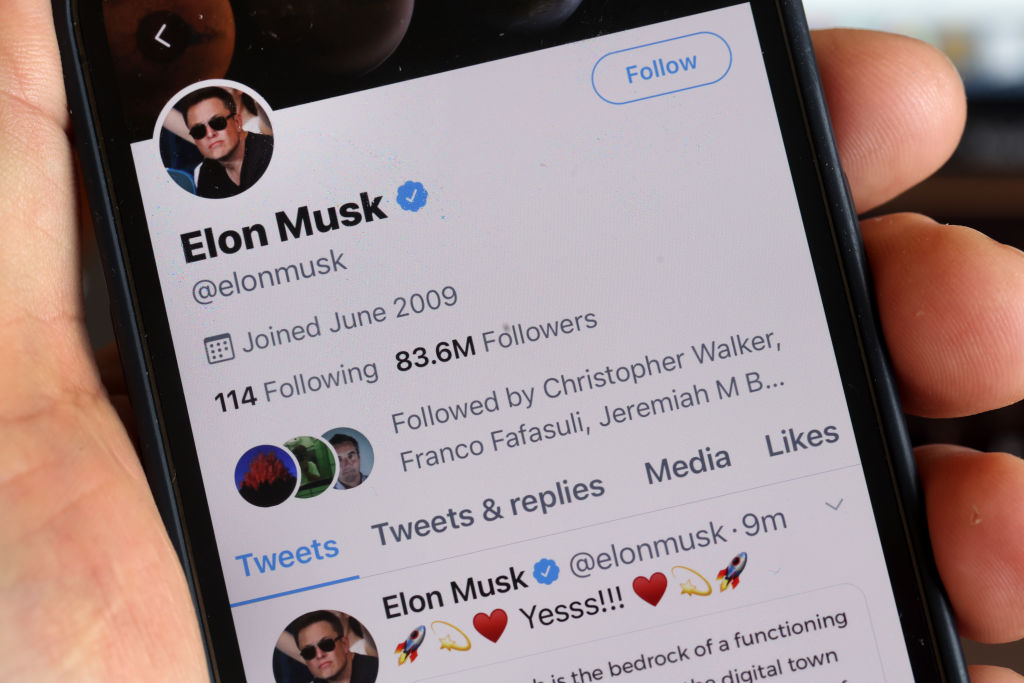
Elon Musk may or may not buy Twitter. It was revealed this week that the sale, apparently agreed, has a $1bn break clause. If that sounds like a lot, remember that $1bn is small change to Elon. By my calculation, it is to him what the membership fee at my local, council-run swimming pool is to me.
If there is one thing that Musk and I agree on, it is that Twitter is of great societal importance. It has indeed become, as he says, the “de facto town square”. Given this is the case, that Twitter’s fate should rest in the hands of one man is shocking, particularly a man whose whims are so capricious.
It is, however, indicative of the new world of business. In the old world, it was harder for any business leader to gain so much power. In 1844, one of the most influential pieces of legislation in history was passed: the Joint Stock Companies Act.
In that moment, the public limited company was born. A business, once owned by its directors, became an entity in its own right. The result was that directors were protected from the companies they ran: a business could go bankrupt without bankrupting its managers. At the same time, a company was protected from its directors, whose ability to exert control was limited by their accountability to its shareholders.
In Silicon Valley, however, they move fast and breaks things. The governing principle of the public limited company is just another example. Today, the great titans of Silicon Valley are, nominally, public companies. And should you wish to, you can indeed buy a share in Meta or Alphabet or Tesla. In doing so, however, you will discover that some shareholders are more equal than others.
That is because Silicon Valley is the land of ‘dual-class shares’, where not every share has an equal right to vote. It is for this reason that Mark Zuckerberg can own 14 per cent of Meta but hold 58 per cent of the vote. It is an arrangement that has allowed Zuckerberg to create vast wealth by selling off chunks of his company without ever actually surrendering control or becoming accountable to anyone.
For years, the London Stock Exchange maintained that dual-class share arrangements like these would bar a company from listing on its premium segment. Late last year, however, it relented in the face of considerable pressure, most notably from the Kalifa Review into UK FinTech.
‘One share, one vote’ was once sacred in the City, but it is no longer. Some have held out. A number of investors refused to back Deliveroo’s catastrophic IPO because of its dual-class shares. Deliveroo’s dreadful performance since, now valued at little more than the cash it holds in its bank accounts, suggests they had a point.
Dual-class shares, however, don’t look to be disappearing anytime soon. This is a loss for shareholders, and it will prove to be a loss for society too. It comes, after all, at a moment when companies, and their leaders, seem to be arrogating more power than ever before.
The movement often called “stakeholder capitalism” argues that companies should be accountable to all of society, not just to shareholders. That means that a business should be responsible for more than simply delivering a profit. They must act in the interests of us all, more like a government than a business.
It is a rejection of Milton Friedman’s argument for “shareholder primacy”, published in the New York Times in 1970. Many remember his famous line: “the social responsibility of business is to increase its profits.” Fewer, however, remember that he also argued that anything more would be undemocratic, with executives assuming powers that should be assigned through democratic means. Public policy, he believed, should be decided only with public consent.
Whether you agree with Friedman on the responsibility of businesses or not, it is hard to disagree that business leaders should be accountable to someone, and to their shareholders at the very least. Today, however, a new breed of executive has emerged, sitting atop a public company with little accountability even to those who are its legal and rightful owners. The Joint Stock Company created a kind of democracy. What we have now looks more like tyranny.