Four reasons to fear Labour’s plan to part-nationalise BT

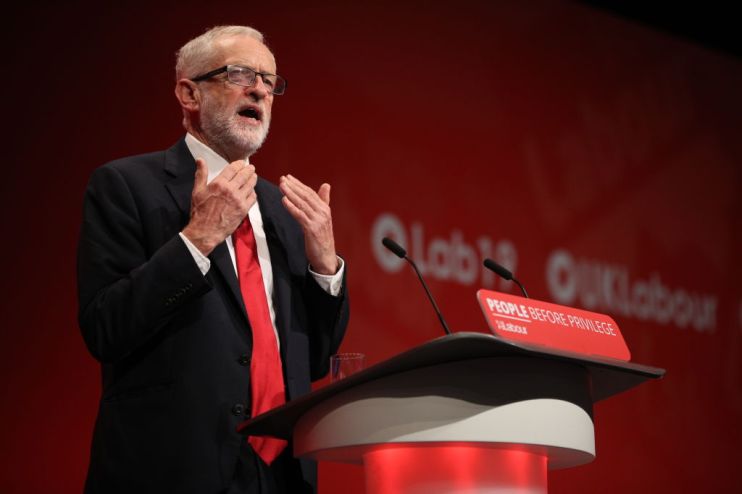
British businesses today poured scorn on Labour’s plans to provide Brits with free broadband and part-nationalise BT, slamming the policy as a major setback for the UK’s digital economy.
Labour leader Jeremy Corbyn has set out plans to nationalise BT’s full-fibre arm, Openreach, along with other divisions, funding it by taxing multinational tech giants.
Read more: BT CEO warns Labour’s part-nationalisation of BT could cost £100bn
But the telecoms industry today warned that Labour’s re-nationalisation policy could hurt competition and see shareholders – including pensions – invested in BT lose out.
Matthew Lesh, head of research at the Adam Smith Institute, warned that “nationalising broadband would be a total disaster for the British people. It will cost tens of billions of pounds, lower service quality and leave millions waiting longer for the rollout of high speed fibre internet and 5G.
“We shouldn’t have to call up Jeremy Corbyn every time the internet goes down,” he added.
Here are four reasons businesses are worried about Labour’s plan.
It could wipe out broadband investment
According to Ofcom, the telecoms industry contributes £33.8bn to the UK economy. For Julian David, chief executive of tech industry body Tech UK, “renationalisation would immediately halt the investment being driven not just by BT but the growing number of new and innovative companies that compete with BT”.
Joshua Mahoney, senior markets analyst at IG, agreed: “This proposal has a wide reach that would essentially wipe out the whole broadband business in the UK.”
Lesh pointed out that the effect of the announcement had been immediate, with Talk Talk putting its multi-billion pound project to invest in fibre, Fibre Nation, on hold.
“The last thing we need is a costly government scheme that will scare away booming private sector investment from companies.”
Read more: Labour’s BT plans force Talk Talk to pause sale of Fibrenation
A spokesperson for leading competitor Virgin Media agreed: “Virgin Media has the fastest scaled network in the UK and has pledged to bring next-generation Gigabit broadband to half of the UK, by the end of 2021.
“As this commitment shows, private investment is essential to delivering improved broadband infrastructure.”
Labour’s policy would hurt investors
Labour said that parliament will set the cost of taking BT divisions back into the public realm, sparking fears of a heavy discount to the market rate.
BT’s chief executive Philip Jansen today called on the party to carefully consider how shareholders would be affected by the plan.
For shareholders who have already suffered losses as BT invests in full-fibre broadband, it could be a step too far.
Read more: City reacts with shock to Labour’s plans to part-nationalise BT
“[Shareholders] recognise we’re going to invest very, very heavily in a competitive market and there’s a lot of risk in that investment.
“Any change like the current idea of nationalising part of BT or the infrastructure bill or giving it away for free takes away that competitive nature.”
Shares in BT were down 2.5 per cent this morning.
It’s been tried before
Only one other country has nationalised its telecoms industry, and it wasn’t pretty.
Australia’s NBN network ended up costing the country an estimated $51bn, up from the Liberal party’s original estimate before the 2013 election of $29.5bn.
At telecoms giant Telstra’s October AGM, chairman John Mullen claimed all Australians would have access to high-speed internet at a “fraction of the cost” if the government had not proceeded with the project.
Matthew Howett, principal analyst at Assembly Research, agrees: “Only one other country in the world has gone down this route, and for a good reason. It’s hard, expensive and fraught with difficulty. Australia’s NBN is years late, massively over budget and offering speeds and technology a fraction of the original political aim.”
Read more: Jeremy Corbyn’s British broadband speech in full
Tech UK’s David says the move is unnecessary: “The telecoms sector has delivered increased coverage, capacity and quality whilst household spend on telecoms services has remained flat. Put simply, it is delivering for consumers and UK plc.”
Lesh concurs: “The government shouldn’t be paying for a service that the vast majority of us can afford. There are so many other more pressing priorities like schools, hospitals and police.”
It could cost the taxpayer billions
Finally, the money has to come from somewhere – and that place is likely to be the taxpayer’s pocket.
The majority of the current estimated £30bn cost for full fibre is currently being borne by the private sector and public company shareholders.
For David, “renationalisation would put this cost back onto the taxpayer, no doubt after years of legal wrangling, wasting precious time when we can least afford it”.
Matthew Fell, policy director at the CBI, says the move would hurt businesses and individuals alike.
Read more: 21 UK stocks in danger from a Labour election win
“As the scope of Labour’s radical renationalisation plans expands almost daily, firms around the world lose confidence in the UK as a place to invest safely. Some will be asking if they are next,” he says.
“This threat damages the livelihoods of communities across the country. It’s time for all parties to work with business, not against it.”
Main image credit: Getty