Four reasons Osborne should abolish the Budget

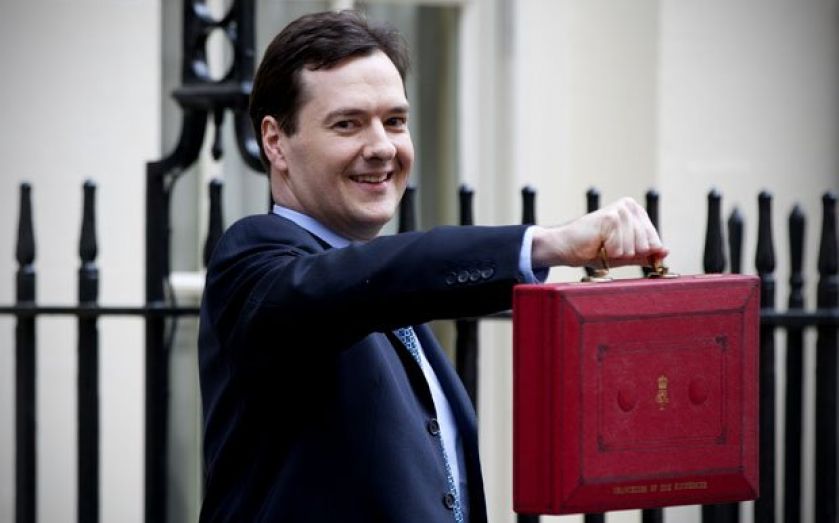
IN EIGHT days, George Osborne will deliver the penultimate Budget of this Parliament. Despite little indication of what it will contain, newspapers are already rife with speculation, organisations are pushing their favourite policy hobby-horses, broadcasters are booking Budget Day interviewees, and commentators are salivating about what a minor tax cut here, or spending pledge there, might do to the parties’ electoral fortunes.
Budget Day creates a great deal of excitement for a range of professions. But what if the annual Budget (and its sister Autumn Statement) is part of the problem, not the solution?
Over the past decade, the Budget has moved far beyond its original purpose of announcing spending totals, and tax rates and allowances. It has morphed into a wide economic statement, announcing measures which shouldn’t fall under the Treasury’s remit at all (think laying tarmac on various A-roads as part of an “Infrastructure Plan”). The Budget now includes an orgy of announcements across a range of areas (or, worse, announcements of new consultations), as well as providing us with the OBR’s economic forecasts. There’s a Big Bang effect, with the politics of the day taking centre stage.
This has several negative consequences. First, it creates heaps of uncertainty for businesses and households. Firms spend lots of money analysing the effects of the Budget on their fortunes, and we know from years of economic research that uncertainty tends to dampen investment.
Second, the Budget and the associated Finance Acts have led to truly dreadful tax policy-making. The draft legislation and explanatory notes issued in December 2012 for the 2013 Finance Act alone, for example, were 1,074 pages long. The process doesn’t just mean the Treasury is lobbied from all quarters for tax changes, adding to the pressure coming from ideas generated within government. Having announced tax changes in the Budget, the subsequent Finance Acts are also heavily whipped and badly scrutinised in guillotined debates through Parliament, and don’t endure the scrutiny, committee stages and amendments faced by other legislation.
Third, the all-encompassing nature of the Budget makes the Treasury more powerful than its functions. It erodes the idea that statements and legislation should be brought forward by the minister responsible, following discussion with Cabinet, and after clearing any necessary fiscal hurdles with the Treasury.
Finally, the political nature of the day leads to obfuscation of any “nasties” contained within the Budget. This encourages the idea that a good Budget is expansionary, with more “winners” than “losers”. When we are still borrowing over £110bn per year, this is not particularly helpful.
If Osborne really wants to be radical, he should stand up on 19 March and announce that this will be the last Budget of its kind. Instead, it should be replaced with a simple statement of the changes to tax rates, allowances, and borrowing requirements necessary to meet the spending commitments outlined in the previous year’s Autumn Statement. All the other sorts of announcements we have grown accustomed to seeing in Budgets would have to be brought before the House by departments in the usual way.
In one swoop, this would improve the transparency and the scrutiny of policymaking, reduce uncertainty, lead to more careful tax policy, curtail the Treasury’s power, and take the political sting out of Budget Day. When the economic challenges we face are still so significant, this can only be a good thing.
Ryan Bourne is head of public policy at the Institute of Economic Affairs, which today releases its Budget submission http://www.iea.org.uk/publications/research/iea-submission-to-the-budget @MrRBourne