AI cheating surges in French high schools as baccalaureate fraud rises 30 per cent
A 30 per cent jump in suspected cheating during the French baccalaureate has prompted new penalties and phone detectors for the 2026 exam session.
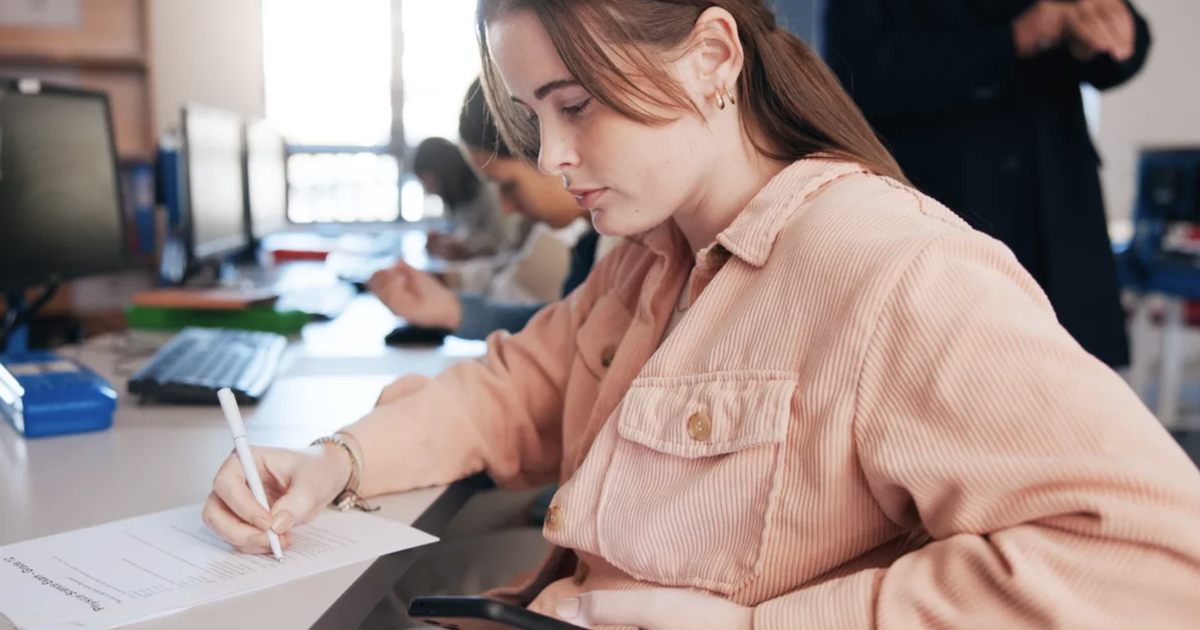
Cheating in French high schools has moved well beyond scribbled notes. Students now photograph exam papers and send them to generative AI tools for instant answers, driving a sharp rise in detected fraud during the national baccalaureate.
Education Minister Édouard Geffray told a press conference on 19 May that suspected cheating cases jumped more than 30 per cent in the most recent session, with 1,208 incidents recorded among 1.2 million candidates. The surge has forced teachers into a technological arms race and pushed the ministry to harden penalties for the 2026 exams.
Phones, earbuds and Snapchat AI
At Suger High School in Saint-Denis, 17-year-old Clarisse says classmates routinely slip out phones during supervised tests. Some bypass mainstream models such as ChatGPT or Claude entirely, using the AI assistant embedded in Snapchat instead. "It's become so easy, just take a picture of the test and send it to AI," she says.
Teachers describe supervision as a game of cat and mouse. Jean-Rémi Girard, president of the SNALC union, notes that wireless earbuds, smartwatches and even smart glasses make devices easier to conceal. "First, because phones are very easy to hide, but also because some students use wireless earbuds, smartwatches, or smart glasses," he says.
You have to stay extremely alert; you can no longer just sit at your desk.
Félix Tourmente, a philosophy teacher at a French school abroad, says the job now demands constant vigilance. Many schools already require phones to be handed in before exams, but workarounds persist. At Notre-Dame des Oiseaux in Paris, compartmentalised storage boxes are used, yet teacher Estelle Challamel says students simply bring a second device.
Detection shifts to the marking desk
Most AI-assisted cheating is spotted after the fact. Markers look for work that far exceeds a student's usual standard, formulaic phrasing, or references to material never covered in class. Without hard proof, sanctions are limited. Challamel says she often awards a deliberately average mark to signal she is not fooled.
AI-detection software has been tried, but a Stanford University study found an average error rate of 30 per cent, and handwritten scripts are especially difficult for such tools to process. In scientific subjects, Lucas Markarian, a mathematics teacher at Chevreul Blancarde High School in Marseille, uses a low-tech countermeasure: he calls suspected students to the board to reproduce their proofs. "If they are completely incapable of doing so, then they are probably not the author," he says. The public embarrassment, he adds, deters others.
New penalties and phone detectors for 2026
The ministry is responding with stricter rules. A February decree allows graders who uncover fraud after an exam to report it to regional authorities, previously only students caught in the act faced consequences. Geffray also announced that a single cheater can now trigger the cancellation of an individual paper, a group of papers, or an entire session.
Phone detectors, already in use in some academic districts since 2013, will be deployed at random in examination centres for the 2026 baccalaureate. The devices pick up smartphone signals within roughly 20 metres, verifying that handsets have been surrendered. Each unit costs more than €100.
The SNALC union supports the technology. "If technology can help combat cheating, then it should be used," Girard says. The parents' federation PEEP disagrees. Laurent Zameczkowski argues schools should not resemble airports and calls for more educational assistants instead. The current ratio averages one assistant per 120 pupils.
Some schools have already imposed total phone bans. At Stanislas High School in Paris, devices are forbidden in corridors and courtyards, with immediate confiscation for violations. Dean François Jubert says the policy has deterred AI use during supervised exams this year.
Teachers hope the ministry's tougher stance will shift the calculus. Sophie Vénétitay of the SNES-FSU union says the signal matters: "It is important to send this signal. Let us hope it will deter potential cheaters." Challamel warns that students who rely on shortcuts face a rude awakening in selective higher education, where entrance exams are closely monitored and the ability to work independently cannot be faked.


