Antoni Gaudí: the architect who built with gravity and faith
The Catalan master turned physics into poetry, using inverted chains to design a cathedral that is still rising today.
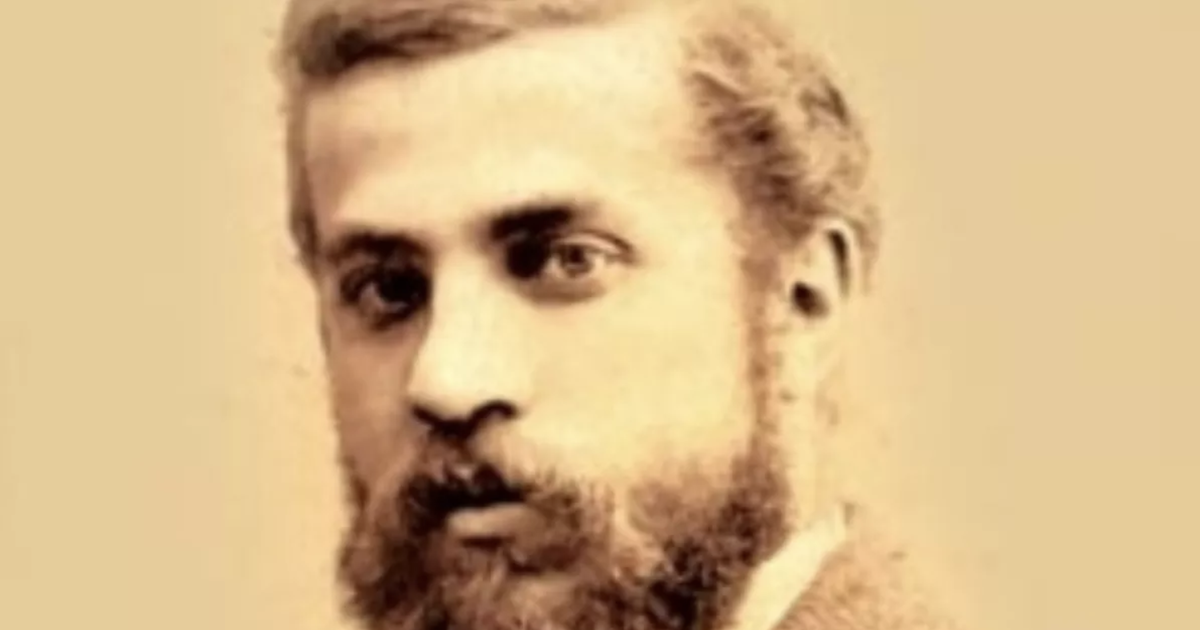
When Elies Rogent handed Antoni Gaudí his architecture diploma in 1878, the dean of Barcelona's school reportedly wondered whether the 26-year-old Catalan was "a madman or a genius". History has settled on both. A century after Gaudí was struck and killed by a tram in 1926, seven of his works carry UNESCO World Heritage status, and his masterpiece, the Sagrada Família, remains a construction site that draws millions of visitors each year.
Gaudí left almost no personal writings. The son of coppersmiths from Reus, he was reserved, devout and, in later life, ascetic. What survives are his models, his buildings and the recollections of a few patrons, chief among them the textile industrialist Eusebi Güell. Together they reveal an architect who treated nature as a structural textbook and gravity as a design tool.
Physics as form
The breakthrough came from a simple observation: a hanging chain forms a curve of pure tension. Invert it, and you get a curve of pure compression, an arch that needs no buttress. Gaudí built scale models from strings and lead weights, then used mirrors to see the upright structure. The 2022 retrospective at Paris' Musée d'Orsay displayed the surviving model for Güell's church at Colònia Güell, a cotton-and-lead stalactite that prefigured the Sagrada Família's branching columns.
"Gothic is a dead system," Gaudí declared, unafraid of offending his devout patrons.
He reinforced the stone with early reinforced concrete, shaped columns like trees, and pierced non-load-bearing walls with more than 800 stained-glass openings. Inside the nave, light filters through coloured glass onto vaults that echo a rainforest canopy, a biomorphic language drawn from Montserrat's rock formations, fern fractals, fish scales and palm leaves.
Faith and the infinite site
An existential crisis in 1894, marked by family deaths, illness and broken engagements, turned Gaudí toward intense piety. He moved onto the Sagrada Família site, fasted regularly, and treated the project as prayer. "To do things well, two elements are necessary: first love, then technique," he said. He designed schools for workers' children before the first tower rose, and insisted the church be an "expiatory temple" funded by donations, not capital.
When he died, only one of 18 planned towers stood complete. The Spanish Civil War later destroyed his workshop and many models. Yet the project continued, guided by surviving fragments and, since the 1980s, by computer-aided design that reverse-engineers his geometric logic.
A saint for architects?
The Vatican opened a beatification cause in 2003; if successful, Gaudí would become only the second artist canonised, after Fra Angelico. Curator Élise Dubreuil described him as "refined and austere, proud and humble", contradictions that mirror a building designed to be forever unfinished. "Creation continues, and the Creator uses His creatures to continue it," Gaudí told followers. The Sagrada Família, now targeting completion in the 2030s, remains his most enduring sermon.


