Rick Atkinson: without France there would have been no American independence in 1783
Historian Rick Atkinson argues that French military and financial support was decisive for American victory and that the founding generation's flaws make them more relatable than marble myths.
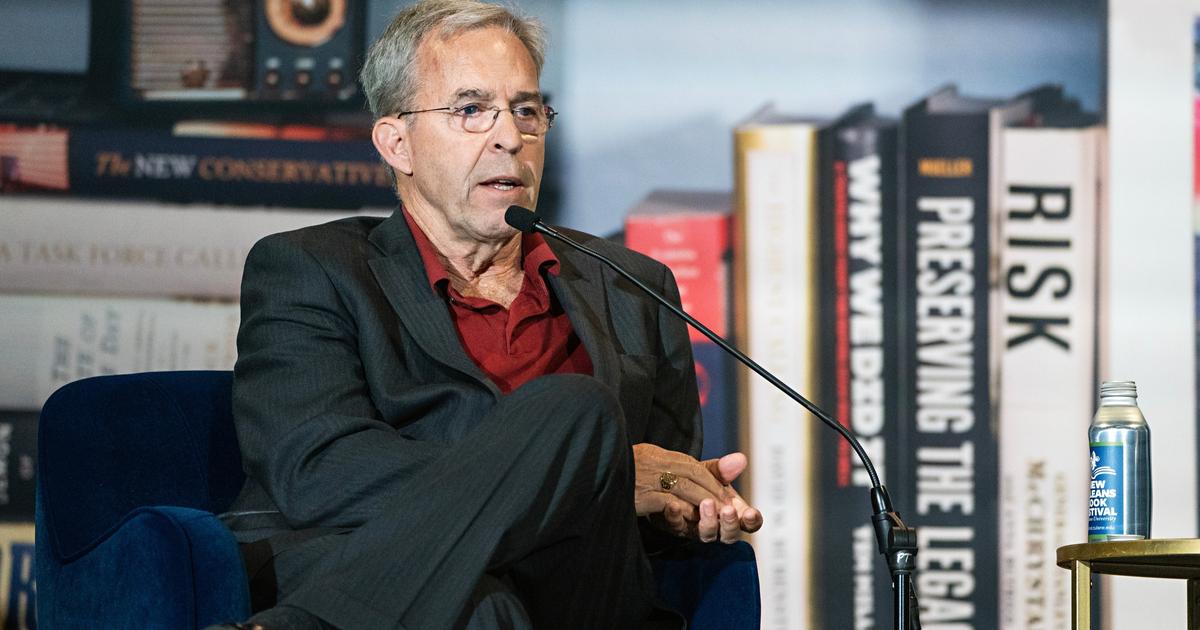
Pulitzer Prize-winning historian Rick Atkinson argues that without French military intervention and hard currency, the United States would not have won independence in 1783. Speaking ahead of the 250th anniversary of the Declaration of Independence, Atkinson said French general Rochambeau and Admiral de Grasse turned the tide at Yorktown in 1781, while French hard currency paid Continental soldiers when the Continental dollar had collapsed.
The interview, published in a French newspaper, covers the historian's broader project of dismantling what he calls the "myth of independence", the reverence that turns George Washington and Thomas Jefferson into marble statues rather than flawed humans who owned hundreds of enslaved people. Atkinson argues the Declaration's promise that "all men are created equal" was aspirational, not descriptive, in 1776, and that the country's current divisions are nothing new for a nation born in argument.
The French difference
Atkinson highlights the contrast between two French expeditions. Admiral d'Estaing's earlier effort was hampered by bad luck and coordination failures. By contrast, Rochambeau's 1780 arrival with 5,500 troops and de Grasse's timely naval victory at the Chesapeake created the conditions for the decisive victory at Yorktown. Atkinson notes that Rochambeau, under orders to defer to Washington, nevertheless persuaded the American commander to abandon a planned attack on New York in favour of the Virginia campaign that trapped Cornwallis.
Without France, there would have been no American independence in 1783. It might have happened later, but the French played a crucial role in the victory.
Equally critical, Atkinson says, was French hard currency. The Continental dollar had become worthless, and French specie paid soldiers who might otherwise have mutinied or deserted. That financial lifeline deepened France's own debt crisis, accelerating the chain of events that led to 1789.
Lafayette and the founding myths
Gilbert du Motier, Marquis de Lafayette, remains far better known in the United States than in France. He arrived in 1777 at nineteen, having defied Louis XVI's orders and chartered his own ship. Wounded at Brandywine, he formed a close bond with Washington, who had no children of his own. His 1824 triumphal tour of the United States cemented his American reputation, while his complicated role in the French Revolution, initially a moderate revolutionary, later imprisoned by radicals, left a more ambiguous legacy in his homeland.
Atkinson's current work includes extensive research in George III's archives at Windsor, seeking to understand why Britain fought an eight-year war across an ocean against its own subjects. He dismisses the caricature of "stupid Brits" and a mad king, arguing the British perspective is far more interesting than American mythology allows.
History as perspective
On the question of whether Americans still agree on the Declaration's meaning, Atkinson offers historical perspective. The country has been dividing and arguing since 1775, he notes, and the Revolutionary War itself had the dimensions of a civil war. The current period, "however unpleasant and toxic," is mild compared to the Civil War, the Great Depression, or two world wars. That resilience, he suggests, is worth celebrating alongside the French alliance that made independence possible.


