Foreign fighters held at Ukrainian camp reveal Russian recruitment scheme
A camp in western Ukraine detains around a hundred men, many from Central Asia and Africa, shedding light on a recruitment network that promises jobs and citizenship but delivers minimal training and front‑line service.
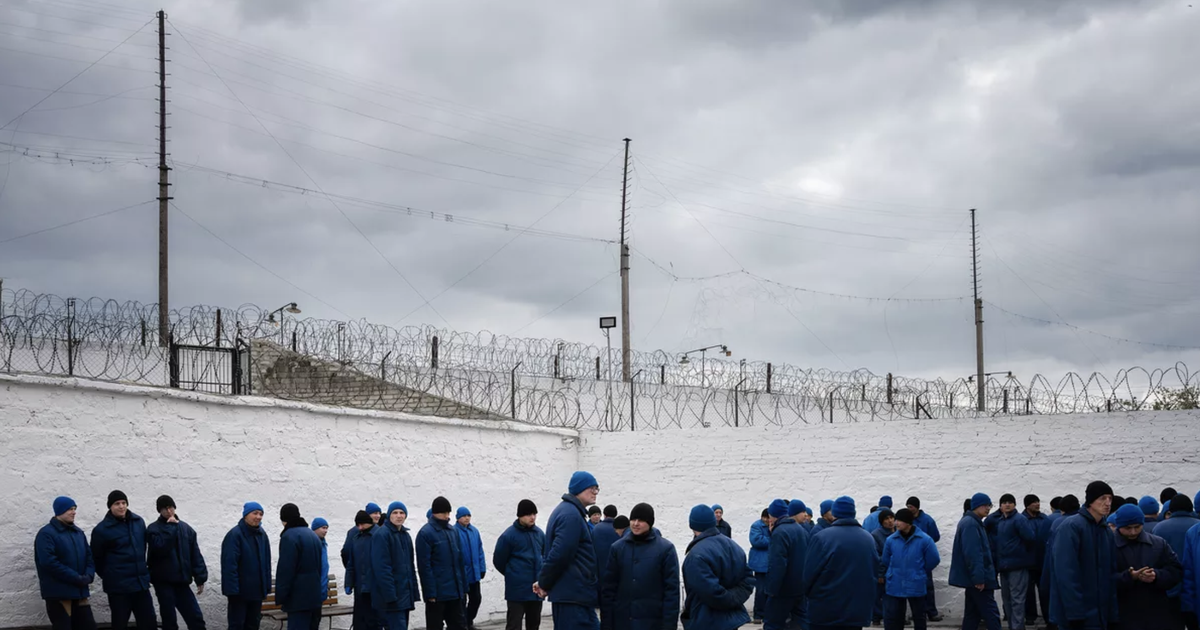
Camp conditions and detainee profiles
A detention site in the Lviv region of western Ukraine holds roughly one hundred men behind barbed wire. The detainees include Russian soldiers captured on the front line and nationals from more than thirty countries. The largest groups among the foreign prisoners come from Tajikistan, Uzbekistan, Belarus, Kazakhstan, Azerbaijan and Kyrgyzstan, with additional prisoners from Nepal and various African states.
Petro Yatsenko, the Ukrainian official coordinating the treatment of prisoners of war, has described the foreign detainees as cannon fodder and said that a surrender by them is a rare miracle. He noted that the prisoners receive only minimal training, lack language skills and have little equipment.
One French‑speaking Black prisoner, identified as Pierre, insists he is a volunteer and rejects claims that African recruits are deceived by Moscow. He says he was born on Russian territory, believes Russia supports Africa, blames Europe for impoverishing the continent and argues that Russian forces suffer higher casualties than Ukrainian forces.
Another detainee, Denis, says he enlisted to earn money and build a life in Russia. He hopes to be exchanged and return home, noting that he had not received his passport or full pay before being captured and believes those documents and his wages are awaiting him in Russia.
Recruitment promises versus reality
Investigations from early 2024 allege a systematic recruitment operation targeting Africans. Recruiters in more than twenty countries allegedly promise civilian jobs, salaries of about €2,500 per month, bonuses up to €10,000 and Russian citizenship. Contracts are said to be written in Russian and agencies pose as travel or employment firms, advertising on WhatsApp and Telegram. Recruits reportedly receive only a few weeks of basic training before being sent to the front.
In September 2022 a Zambian student named Lemekhani Nathan Nyirenda died fighting for Russia. Yevgeny Prigozhin claimed Nyirenda volunteered to repay a debt for Soviet support during African independence struggles, and the Kremlin later accepted responsibility for his death.
International reactions and ongoing exchanges
Kenya’s National Assembly on 18 February cited a report that a trafficking network sent over one thousand Kenyans to fight with the Russian army. Recruiters in Kenya allegedly targeted former soldiers and police officers and used two Kenyan medical centres for preliminary examinations. The provisional Kenyan toll includes 39 hospitalised, 30 repatriated, 28 missing, 35 in camps or bases, 89 on the front line, one detained and one who completed his contract.
Governments in Tanzania, Zambia, South Africa, Nigeria, Togo, Mali and Botswana have reported similar cases of their citizens being recruited. In March Russian Foreign Minister Sergei Lavrov said Kenyans had signed contracts to participate in the special military operation voluntarily and could suspend participation during the contract period. He added that Kenya’s foreign minister did not want the issue to dominate bilateral relations, which he described as having a long history of a common struggle for justice.
Prisoner exchanges between Kyiv and Moscow continue, with foreign nationals receiving lower priority. The recruitment pipeline is described as still active, driven by economic hardship and opaque intermediaries.


