Ukrainian soldiers guard Chernobyl against Russian drones as nuclear risks mount
Special forces scan the skies above the exclusion zone where a drone strike in February breached the reactor sarcophagus and the IAEA says safety functions are compromised.
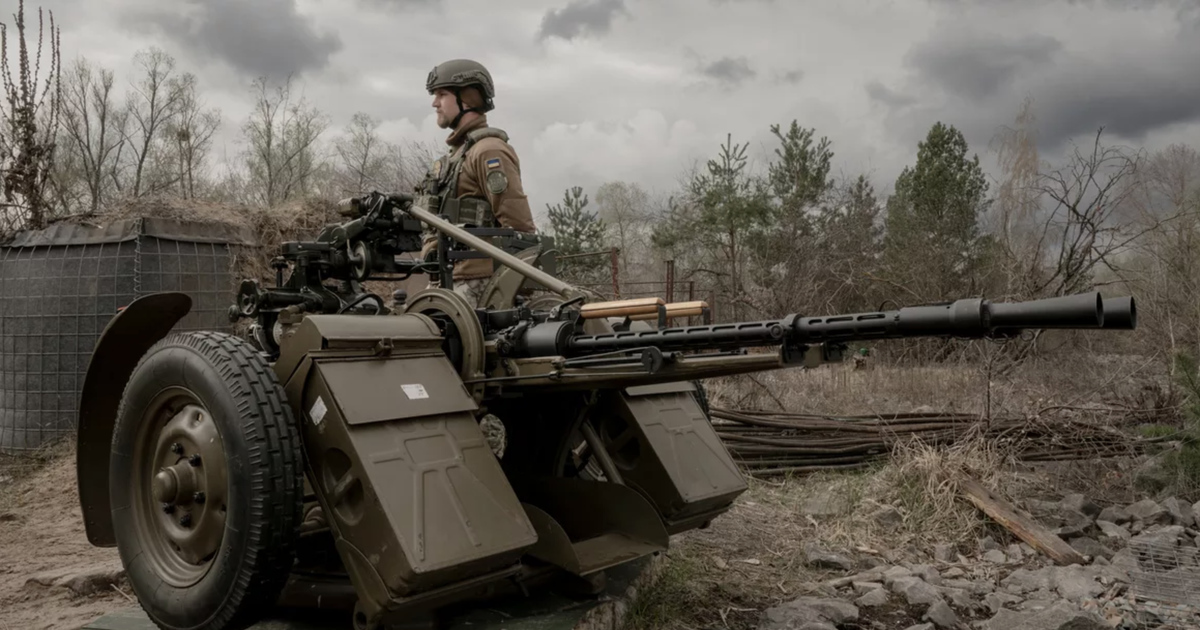
Yevhen spent his childhood dreaming of visiting Chernobyl. Now the soldier sits at a mobile machine-gun station in the exclusion zone, barrel trained toward the Belarusian border, watching for the Russian drones that cross this radioactive corridor several times a week. Behind him rises the massive arch of the New Safe Confinement, sealing 400,000 cubic metres of radioactive waste beneath its dome.
His unit, the National Guard's Omega special forces, has defended Chernobyl's airspace since 2024. The exclusion zone sits directly beneath the flight paths of Russian missiles and Shahed drones transiting from Belarus toward Kyiv and western Ukraine. "We get alerts at least twice a week," says Sergeant Artem, 34, who heads Omega's anti-Shahed detachment. "They can come from anywhere, north or south, because they adapt their routes, making detours to avoid our radars."
Escalating threat to nuclear infrastructure
Since July 2024, Ukrainian prosecutors have officially logged 92 Shahed or Gerbera drones within five kilometres of the plant's anti-radiation shield, with 35 more detected within 20 kilometres of Chernobyl and the Khmelnytskyi nuclear site in western Ukraine. Prosecutor General Ruslan Kravchenko called the overflights "extremely irresponsible" and a "complete disregard for civilian safety, not only in Ukraine but across Europe."
The most serious incident came in February 2025 when a Russian drone struck the sarcophagus covering Reactor No. 4. A white patch 15 metres across marks the repaired section where fire burned through the dome. Although no radiation leak was reported, the International Atomic Energy Agency announced in December that the protective structure had "lost its primary safety functions" and requires repairs estimated at €1.5 billion.
"The adversary does not fear catastrophe, but manages the risk. It controls its escalation logic. The objective is to keep nuclear plants under constant threat."
Ukrainian prosecutors say preliminary findings suggest the strike was "likely deliberate," citing the drone's flight path. Viktor Kevliuk, a reserve colonel at Kyiv's Center for Defense Strategies, takes a more measured view: Moscow, he argues, calibrates its escalation rather than seeking outright disaster.
Electronic warfare and new defences
Omega soldiers have noticed a significant decline in overflights since the February incident, possibly because the Russians reassessed the consequences, or because Chernobyl has upgraded its radar and jamming capabilities. But new threats have emerged: small Mavic-type surveillance drones appear almost daily along the border, while long-range Shaheds, Gerberas, Orlans and Zalas now carry cameras for reconnaissance.
Electronic warfare rages across the frontier. "Their jamming sometimes prevents our drones from taking off even as far as Pripyat, miles away," says Andriy, a member of the 1st battalion stationed at Chernobyl for four decades. Meanwhile, Ukrainian forces deploy decoys, mannequins dressed as soldiers in gas masks, to mislead Russian reconnaissance.
Fortifying the zone
Without waiting for another assault, Chernobyl is hardening its defences. Units are piling earth into raised trenches, digging is impossible in the radioactive soil, and stringing anti-drone nets above roads and key infrastructure. Three days before the April 26 disaster commemorations, teams were installing more netting above the sarcophagus approaches.
The history weighs on the soldiers. Konstantin, an Omega fighter, recalls his father, one of the Soviet "liquidators" sent to demolish contaminated structures after 1986. "He died at 43 from stomach cancer. Probably because of the aftereffects," Konstantin says. "I never thought fate would bring me to Chernobyl, and even less as a soldier." His father protected people from radiation; he now protects them from drones. "After all, whether in Chernobyl or elsewhere, our job is the same: bring down the Shaheds."


