Skip to content
Saturday 12 September 2026London --:--Frankfurt --:--Zurich --:--
NewslettersSearchEN · DE · FR
MorningWire

European business, markets and politics

FTSE 100
10,650.44
+0.39%
DAX
25,568.56
+0.82%
CAC 40
8,179.77
+0.78%
STOXX 50
6,325.13
+0.90%
  • Europe
  • Markets
  • Business
  • Economy
  • Regulation
  • Politics
  • Opinion
More
GermanyFranceEU InstitutionsCompetitionPublic AffairsBankingTechnologyEnergy
  • Germany
  • France
  • Europe
  • Markets
  • Business
  • Economy
  • Regulation
  • Politics
  • Opinion
  • DE
Wednesday 22 January 2020 3:52 am  |  Updated:  Tuesday 21 January 2020 5:55 pm

From A&E waiting times to the Windrush scandal, beware bureaucratic targets

By: Paul Ormerod

Add as a preferred source on Google
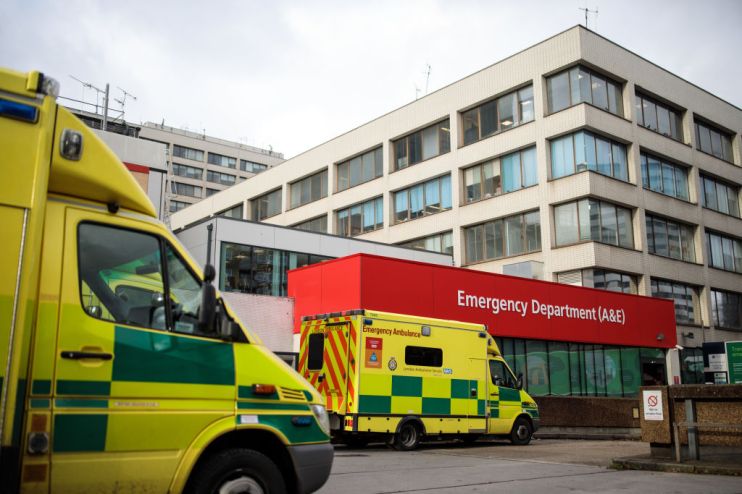
NHS Cancels Non-essential Operations To Help Avoid Winter Crisis

Last week, health secretary Matt Hancock signalled an important change of strategy.

Accident and Emergency Departments have a target that 95 per cent of patients should be admitted, transferred or discharged within four hours. Hancock suggested that the target will be scrapped. Instead, wait times will be determined by clinical need.

Cue predictable hyperbolic outrage. The president of the Royal College of Emergency Medicine, for example, claimed that this change would have a “near-catastrophic impact on patient safety”.  

The NHS is not meeting the target by a long chalk. In December, the actual figure assessed within four hours slipped to under 70 per cent.

A key reason seems to be increased demand for A&E services. Since the Conservatives came to power in 2010, admissions have increased by almost 25 per cent.

It is inherently implausible to imagine that cases of genuine emergencies have risen by this amount. Road casualties, for example, far from increasing, have actually fallen by 24 per cent since 2010.

There is much anecdotal evidence to suggest that people are bypassing GP surgeries and turning up at A&E with trivial complaints. Perhaps GPs are so oversubscribed that people who cannot get appointments go to hospital instead, or maybe limited out-of-hours care means that patients feel they have little choice if they fall ill at weekends. 

But regardless, the lengthening waits indicate excess demand for A&E care.  Some form of rationing is necessary to allocate resources and to decide who gets treated.  

There are two ways to ration. One is by price — whoever is willing to pay the most gets dealt with first. The other is by queue.

Read more

Deloitte snaps up construction cost boutique to target infrastructure boom

Illuminated white Deloitte logo sign with a green dot, mounted on a dark background, reflecting in a window.

Even the most hardline free marketeer would surely balk at the idea of making people involved in genuine accidents wave their credit cards. So queue it has to be. And in such circumstances, it is entirely appropriate that decisions on who to treat first should be made on clinical grounds rather than a purely arbitrary target on the length of wait.

This controversy demonstrates the wider problem with setting targets: sooner or later (and usually sooner), people work out how to game them.

In A&E departments, once a patient has waited more than four hours, they have zero priority. The hospital incurs no more downsides if the wait is 14 hours rather than four hours plus a single minute.

We see this in other sectors too. Schools can, for example, meet exam targets by getting rid of weaker students — hardly what the target was designed to achieve.

And the Windrush scandal had its origins in the Home Office targets for the numbers to be deported. Officials could have tried to track down members of eastern European criminal gangs. Instead, they focused on the seemingly easier task of deporting elderly people who had lived in Britain for decades. They worked out how to meet the targets by minimising their effort.

Examples of gaming the system proliferate. Hancock is to be applauded for taking the first step to dismantle the culture of bureaucratic, counter-productive targets.

Main image credit: Getty

Read more

£74m for branded condoms? UK must stop spaffing cash on foreign aid

Ed Miliband in a suit and red tie, carrying a red folder, walking past railings outside Downing Street

Share this article

  • Facebook
  • X
  • LinkedIn
  • WhatsApp
  • Email

Similarly tagged content:

Sections

  • Markets & Economics
  • News
  • Opinion

Categories

  • Business
  • Economics
  • Opinion

Trending Articles

  • Wetherspoon boss: ‘Not up to Burnham’ to choose who is on the high street 

  • Primark sales slip as owner dresses up retailer for demerger

  • Badger Beer maker Hall & Woodhouse doubles profit ahead of tie-up with James May

  • Crystal Palace owner Blitzer part of £1bn mega stadium redevelopment

  • Barclays faces legal scrutiny over role in £90m ‘Ponzi scheme within a Ponzi scheme’

More from Morning Wire

  • Deloitte snaps up construction cost boutique to target infrastructure boom

    Big Four
    Illuminated white Deloitte logo sign with a green dot, mounted on a dark background, reflecting in a window.
  • £74m for branded condoms? UK must stop spaffing cash on foreign aid

    Opinion
    Ed Miliband in a suit and red tie, carrying a red folder, walking past railings outside Downing Street
  • Sempresto’s Smartphone-Integrated Epinephrine Auto-Injector Wins Red Dot Design Award

    Business Wire
  • Farage vows to call ‘national emergency’ on day one

    Politics
    Nigel Farage in Parliament, addressing a female clerk holding a document, with other parliamentarians in the background.
  • Surge in borrowing costs could force Healey to deliver ‘emergency Budget’

    Economics
    Patrick Healey in a suit with a red tie, looking contemplatively to the left, with an American flag behind him.
  • Emergency government meeting held over high temperature amid ‘strain on public finances’

    Economics
    Aerial view of dry, brown farm fields affected by high temperatures, with a road and farm buildings.
  • Government to inject millions into electric vehicle firms despite mandate backlash

    Politics
    Car bodies on an assembly line in a UK car plant, showcasing EV manufacturing process
  • HSBC kicks off $1bn share buyback after profit smashes forecast

    Banking
    HSBC's stock has taken a hit due to the huge tariffs slapped on Asian countries.
MorningWire

Independent European business, markets and political news for decision-makers.

Morning Briefing

Europe

  • Germany
  • France
  • EU Institutions
  • Europe

Business

  • Markets
  • Business
  • Economy
  • Regulation
  • Competition
  • Public Affairs

Editorial

  • Opinion
  • Editorial Policy
  • Corrections
  • Contact

Company

  • About Morning Wire
  • Privacy Policy
  • Terms of Use
  • Cookie Policy
© 2026 Morning Wire Ltd · Published by Morning Wire Media, Bahnhofstrasse 65, 8001 Zürich, Switzerland
Privacy · Terms · Cookies · Facebook