From CND to evangelist: Julia Pyke has nuclear ambitions for Sizewell C

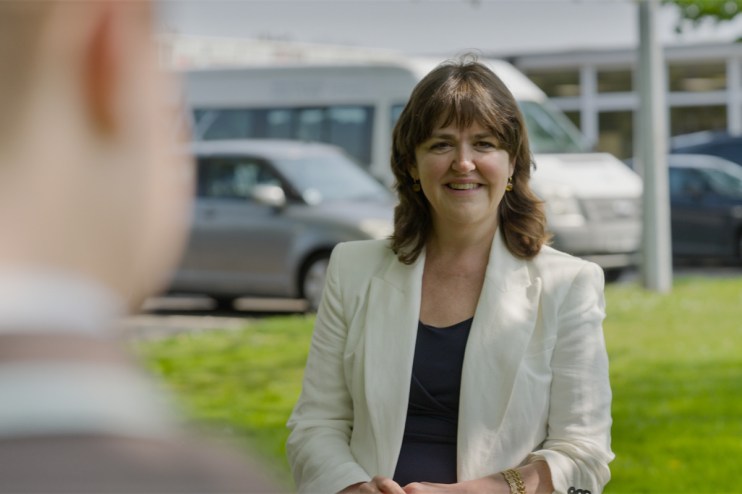
Julia Pyke has fended off judicial reviews and staunch local opposition, and waded through Britain’s unwieldy Treasury ‘Green Book’ process to get Sizewell C commissioned by the government. Now, she tells Ali Lyon, there’s just the small issue of building what will be the UK’s joint-largest power plant.
It was in 1980s Lichfield – the small Black Country city renowned for supplying water to Victorian England’s unquenchable coal-fired factories – that Julia Pyke’s fervent feelings about nuclear fission were first ignited.
With the threat of nuclear war still looming large over global affairs, the idealistic, Cambridge-bound teenager was convinced that nuclear weapons and nuclear power were a cause of – not a solution for – the world’s ills.
Like many teenagers at the time, her solution was to become a card-carrying member of the Campaign for Nuclear Disarmament (CND), then a powerful force on the left of British politics. She attended meetings, rallies – “if you can call them that” – and even went to a talk held by anti-nuclear firebrand Bruce Kent, the organisation’s charismatic, dog-collar-toting figurehead.
It was an adolescence unlikely to spawn a career running the UK’s most divisive nuclear power project for generations. But that is exactly what has come to pass for the joint-managing director of Sizewell C, a mega-power station being built on the Suffolk coast that, by the time it’s online in 2035, will generate enough energy to power 6m homes.
“I’ve always been a believer in a cause,” she tells Morning Wire. “Before I understood anything much about nuclear power, I believed in not having it. But the more I understood the industry, the more I became convinced that it is a good thing. A really good thing”
Pyke’s intellectual journey on nuclear is shared by the incumbent Labour party, which failed to commission a single nuclear plant during the 13-years it enjoyed in office under Tony Blair and then Gordon Brown.
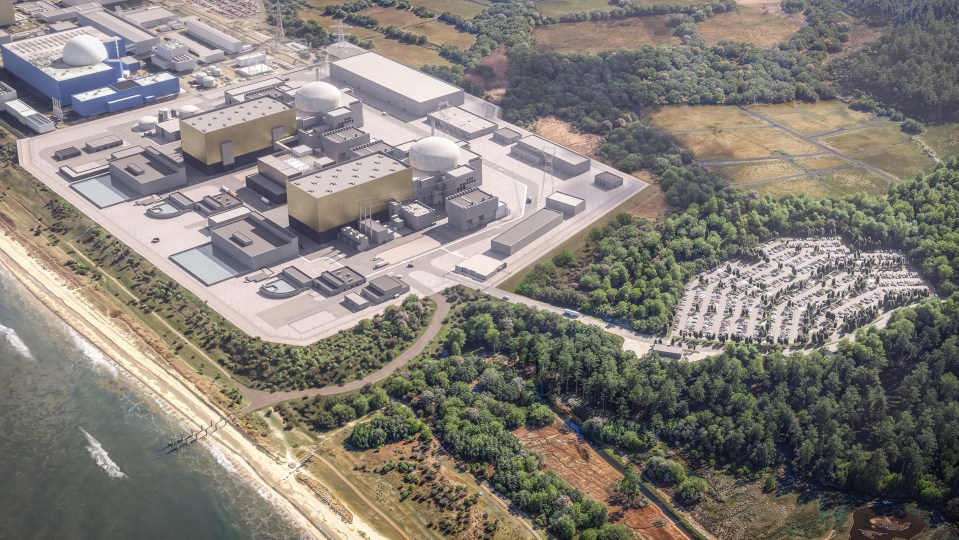
Sizewell C gets the green light
But last month – over 40 years since it was first proposed, and a year and a half since it was granted planning permission – Keir Starmer and energy secretary Ed Miliband gave Sizewell C the final green light, signing off on a £14bn taxpayer-funded investment to get the project’s funding over the line.
Pyke herself spent eight years at the coalface of Britain’s knotweed-like planning system and pedestrian ‘Treasury Green Book’ process – all while fending off one of the most well-organised rearguard campaigns in British history – just to get that political ratification. And so it is understandable that – when asked to reflect on getting that all-important go-ahead – the dark-haired former lawyer breaks into a relieved-looking smile.
“The overwhelming feeling is one of immense satisfaction,” she says. “Because we’ve been working very hard to get to this point, and obviously I believe that the project is a very good, very important thing for the country.”
People with even a passing interest in the questionable state of Britain’s domestic energy production would agree with Pyke’s assessment of Sizewell’s importance. But even those who don’t should be aware of its significance.
Because all told, current estimates put the East Anglian site at costing north of £38bn in 2025 money (some believe it will be closer to £40bn). It will also take over a decade to build, indirectly employ tens of thousands of workers and – at its peak – directly employ up to 8,000. Households across the UK will also be forced to fork out £1 a month extra on their energy bill to fund its construction. And that money, somewhat controversially, will go directly into the pockets of the project’s private-sector backers and creditors, in a bid to bring that private capital on board and minimise interest payments on loans.
The carrot lying at the other side of that vast allocation of resources, however, is immense. It will provide thousands of skilled jobs and apprenticeships to an area starved of good employment opportunities, save 9m tons of CO2 every year it’s online, and, once built, produce a gargantuan amount of cheap energy for 60 years.
Among the big names who wanted a slice of that action, were London-listed Centrica (15 per cent stake), EDF (12.5 per cent) and the Canadian pensions giant La Caisse (20 per cent). The government owns 45 per cent, making it the first majority British-owned nuclear plant in over 30 years.
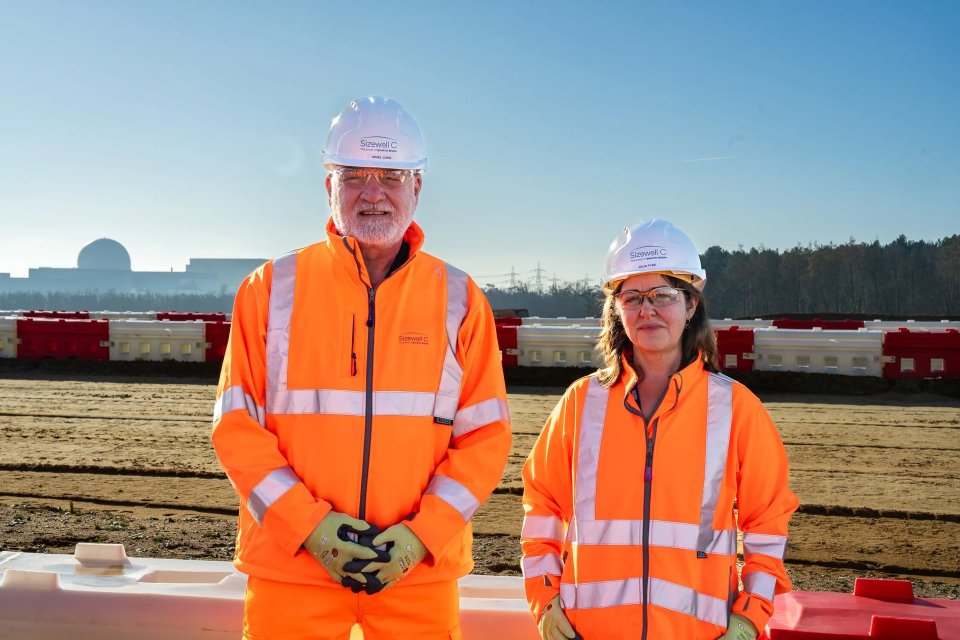
Imitation the sincerest form of flattery
And as well as its innovative funding model, known as RAB, or ‘regulated asset base’ in industry parlance, what also makes Sizewell C different is – perversely – its similarity to the only recent UK nuclear project that has preceded it.
For unlike the ‘A’ and ‘B’ plants that preceded it in Suffolk, and contrary to calls from some industry figures for it to replicate more efficient designs seen overseas, Pyke’s Sizewell C is seeking to replicate Hinkley Point C, a nuclear plant located in Somerset. Its duplicative design, supporters argue, means it has to overcome similar regulatory and planning hurdles, has access to a more established workforce, and – crucially – will encounter fewer of the nasty surprises that tend to arise when one undertakes something for the first time.
We already know the mistakes and time it took Hinkley to install everything
“The importance of replication – and not endlessly reinventing the wheel – can’t be understated,” Pyke says, before comparing Sizewell’s risk-averse approach to the much-pilloried white elephant that is the HS2 rail network.
“We are doing this huge thing as a copy,” she adds. “De-risking, learning lessons, and that is, actually, relatively unusual in the UK for a project of this scale.”
But the approach is not without its detractors. To its critics, Hinkley Point C has been a paragon of profligacy and operational inefficiency, beset by delays and budget problems from the moment it was commissioned by Theresa May in 2016. It even recently had to secure £4.5bn of unexpected financing from Apollo at a seven per cent interest rate to plug cost overruns.
A knowing smile fleetingly passes the lips of Pyke, whose general demeanour is as bright and sparkly as the pink, yellow, and blue-striped trainers she is sporting, when your reporter gently raises those concerns. But when her answer comes it is uncompromising.
“What copying a design means is that when we look at our cost estimate, a lot of things are known which for Hinkley were not,” she says. “We know how much cable, how much concrete, how much steel we’ll need. And we know the mistakes and the time it took Hinkley to install everything.”
Her staunch defence has not stopped the inevitable wave of public scrutiny and alternative figures being bandied around. A recent Financial Times report found nominal costs could balloon to between £80bn and £100bn once debt interest and dividends are factored in.
Pyke, who is speaking to Morning Wire shortly after returning from about as well-earned a 10-day break as it is possible to imagine, shoots a sharp look after being asked about the report in question.
“When we say £38bn, what we’re talking about is the construction cost,” she retorts. “We’re not talking about the cost of financing the construction costs. If you were to say X per cent of that is going straight back into taxation, and Y per cent is interest on debt being provided by, oh look, the government, cost starts to become quite a complicated concept.”
On the production side, at least Sizewell’s approach already appears to be being vindicated. The plant’s top brass have had to make just 60 changes to its master design in order to get it approved by safety regulators, planning officers and the Treasury. By way of comparison, Hinkley Point C had – at the same stage – been forced to make over 7,000.
“We’re hoping this is a really good model in which we’re not sort of wholly private – with people reflecting on whether or not it’s entirely appropriate for 100 per cent of the profits from this activity to go into private hands,” she says. “But we’re not wholly public, so we’re not subject to politics or what can be seen as as the quite considerable bureaucracy of government.”

An unapologetic ambassador for nuclear
It is thinking like this, and the hard-earned stripes she has earned pushing through what is the second- or third-largest infrastructure project in Britain depending how one calculates it, that means Pyke has slowly become something of a grandee in UK business circles.
While she is technically the project’s joint managing director, she is its undoubted figurehead. And as she wheels off answers to questions on thorny, if well-trodden, subject matter, opining on things that are semi-peripheral to the daily running of Sizewell C evidently doesn’t phase her.
Planning reforms are, in her eyes, “welcome [but] we still basically have to live with judicial review”. Energy prices must come down: “It would be quite good if, as a society, we actually had enough energy”. And the Treasury “needs to have a better appreciation of cost and value, not just cost” if we want even the slightest hope of achieving sustained supply-side boosts to our economy.
But it is in her role as the unofficial ambassador of a UK nuclear power industry that still has something of a PR problem, that she feels a particular responsibility to get right.
She wants to to dispel concerns that stem both from the kind of assiduous campaigning carried out over decades by the CND of which Pyke was once a member and the damaging depictions in popular culture (“The Simpsons still has incredible public salience”).
“I think it’s really important to be the champion of this technology, because I think this technology is going to make a significant contribution towards having a low-carbon, industrialised economy,” she says. “And I think it’s really important that I am very visible in Suffolk, because we are imposing on the people of Leiston, and we have to be personally visible and accountable.”
The pressures of the role
Doing so in such a public facing role does – she concedes – bring with it certain pressures. Pressures that extend beyond the daily strains and stresses of running a company that will employ thousands to the relentlessly high levels of political and public scrutiny.
She still finds herself in a constant battle to advocate the project to disgruntled locals, will be the subject of constant public and political scrutiny, and be expected to keep costs down for the taxpayer in an industry not renowned for its parsimony.
And all that does weigh heavily on the 57-year-old.
“I feel a lot of pressure,” she concedes. “You definitely have to be resilient to be in this. Really resilient – it’s hard work.”
And how does Pyke – who will have been at Sizewell C for nearly 20 years by the time it finally comes online – try and deal with those relentless demands?
“I go to the Tyrrell,” she says, matter-of-factly. “And I definitely don’t read the FT on holiday.”