From Scotland, with love: indulgent drink driving laws get us nowhere

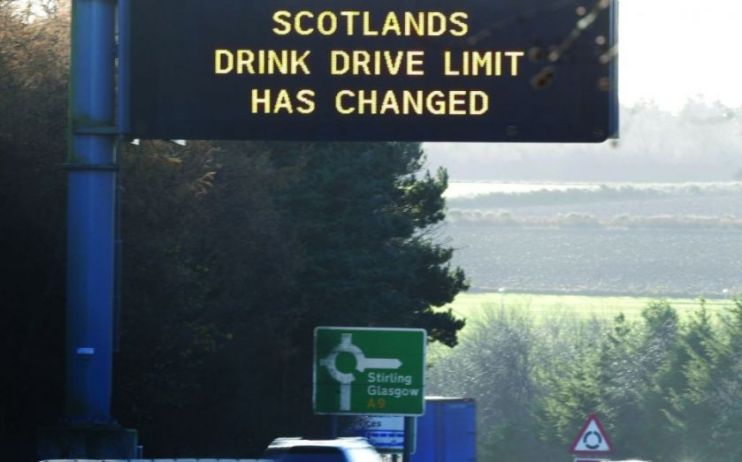
In December 2014, Scotland introduced a new policy modifying its drink-drive limit, to reduce the number of alcohol-fuelled traffic accidents. The legal limit was slashed from 80 to 50mg per 100ml of blood. Now, seven years later, a study published in the Journal of Health Economics has looked at the impact of the policy. The results are perhaps surprising.
When the policy came into force, a team from Sheffield University, famous for modelling the impact of minimum unit pricing for alcohol, predicted that fatalities could be reduced by 6 per cent and injuries by 1.4 per cent if the legal limit was lowered. Scotland’s Justice Secretary Michael Matheson has boasted about the policy claiming it was “leading the UK”.
The change in the law was accompanied by a targeted public information campaign. Messages included “one drink can get you a criminal record” and “don’t let one drink after work ruin your life”. The Scots took this warning seriously and abided by the new rules; there was no increase in arrests for drink-driving after the limit was lowered and pubs complained about losing business.
So did it work? According to the new study: no. The authors of the new study compared the number of road accidents in Scotland before the policy change to the number afterwards. They then juxtaposed accident rates in local authorities in Scotland to those in England and Wales. They compared local authorities in Scotland to local authorities close to the Scottish border. Whatever methodology they used, the policy seemed to have no effect. When they drilled down into the data and looked only at young male drivers, or compared urban to rural areas, or looked at slight, serious or fatal collisions, the answer was always the same: the lower limit was not associated with a decline in road traffic accidents.
One of the authors of the study said the findings “defied” expectations of the reform. Yet, it is not alone in its revelations. A study published in The Lancet in 2018 concluded that lowering the limit led to a 0.7 per cent decline in alcohol sales in pubs, but to no reduction in road traffic accidents. When the researchers compared Scotland to England and Wales, they actually found a seven per cent increase in accidents.
All of this suggests that there was never much of an issue with people driving after consuming a single drink. The real problem is with people having a skinful before getting behind the wheel – a more difficult problem to solve. It requires hard work, money and police resources.
The drink-driving policy is another example of politicians going after soft targets with grandstanding legislation rather than enforcing the laws that already exist. It is easier to ban plastic straws in Britain than to stop China and Indonesia dumping millions of tons of plastic waste into the sea. It is easier to make the possession of laughing gas a criminal offence than to tackle overdoses from hard drugs, which are at a record high. And it is easier to go after the person who has one quick pint on the way home from work than to target incorrigible drink-drivers (or, as we used to call them, drunk-drivers).
In 2019, a Conservative MP introduced a Bill to ban the consumption of dog meat. He admitted that there was no evidence of dog meat being eaten in the UK but said that he was ‘setting an example to the world’. It was a classic case of legislation being proposed to make politicians feel better without having to get their hands dirty, spend money or engage in serious political debate.
The Scotland example points to a larger truth: the public would be better off if we had governments that spent less time legislating and more time governing.