The Funding for Lending pivot may take the gloss off Osborne’s economy

THE ANNOUNCEMENT that the Funding for Lending Scheme (FLS) is being redirected away from mortgages is one of the most significant economic policy developments of the year. FLS was launched in the summer of 2012 as a joint Treasury and Bank of England initiative to boost bank lending to the real economy. Unlike 2011’s Project Merlin, which was entirely aimed at small to medium-sized enterprises (SMEs), it took a more scatter gun approach.
The scheme allows banks cheap access to funding in order to support lending. In the 18 months or so since its launch, its limitations have become apparent – mortgage borrowing and unsecured household lending have risen, while lending to SMEs and non-financial firms more generally has continued to contract.
Yet in some ways FLS, has been a great success. Since its launch, household borrowing costs have fallen, gross mortgage lending and wider housing market activity have picked up, and unsecured borrowing is now growing at around £5bn a month. All of this has underpinned a falling household savings ratio and allowed consumption to outpace household incomes. The recovery since mid-2012 (when FLS came online) has been led by household spending, despite continuing falls in real wages. FLS has played an important part in this.
But the Bank is now clearly concerned that parts of the housing market are starting to look frothy – very possibly a worry that is being exacerbated by the Help to Buy scheme – and is moving to refocus FLS on firms.
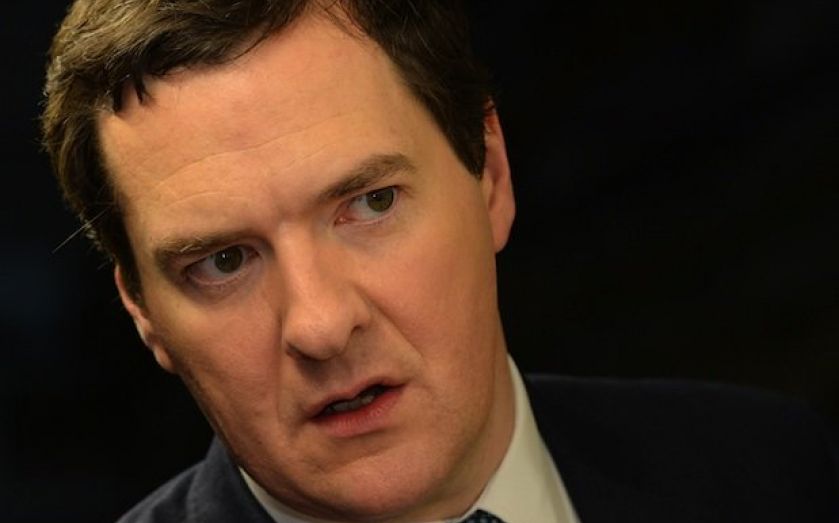
The Treasury has publicly welcomed the move, and indeed hailed it as a move to support business. Behind closed doors, however, it is unlikely that this change has gone down well in Number 11. George Osborne initially pledged to deliver a “new economic model” in which growth was based on rising exports and business investment, rather than the “old model” of consumer and government spending.
Yet while the government has been keen to welcome the recent pick-up in growth, there has been no evidence that the hoped-for “rebalancing” is happening. The trade gap is widening and business investment is lower than it was a year ago. Instead, the recovery we have looks suspiciously like the “old model” – only this time accompanied by falling real earnings.
The problem the Treasury now faces is that the new financial stability architecture that was created in 2010 and 2011 (the Bank’s Financial Policy Committee and its beefed up role in macroprudential supervision) was designed to fit an economy that was rebalancing. This framework is now jarring up against an economic policy that seems to be based on re-inflating the housing market and encouraging consumer borrowing to fill the gap caused by real wage falls.
A recovery built on rising household borrowing, while living standards remain under pressure, is not a real recovery at all and the Bank is right to act early. The Treasury, however, will no doubt be feeling more than a little concerned at anything that takes the gloss of its attempt to engineer a pre-election feel-good factor.
Duncan Weldon is senior economist at the Trades Union Congress.