Further pain ahead for Bitcoin as environmental groups queue up to reject cryptocurrencies

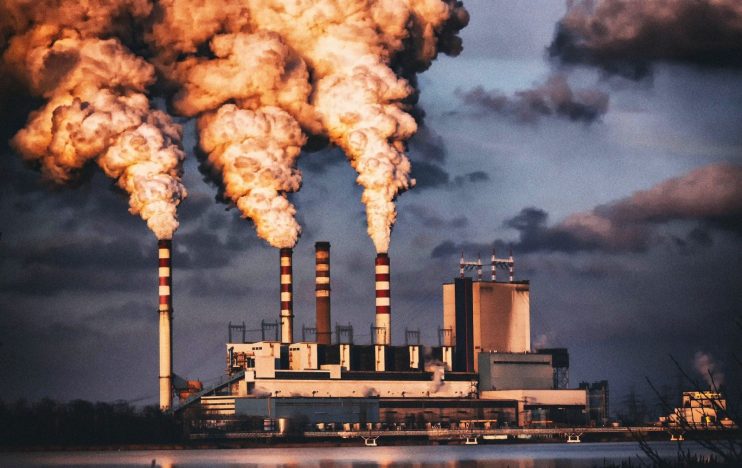
Environmental groups across the globe are lining up to disable the ability to accept donations with Bitcoin until the original cryptocurrency cleans up its act.
Ever since Elon Musk dramatically announced Tesla would no longer allow customers to pay for his vehicles in Bitcoin, the spotlight has been firmly on the crypto world’s impact on the environment.
The backlash from Musk highlighting what was already regarded as a widely known (but often overlooked) truth, however, is beginning to spread far and wide.
In the coming week, Greenpeace USA is expected to officially announce it will no longer accept charitable donations in Bitcoin. The UK arm of the world’s most recognisable environmental group is expected to follow suit, as are the rest of its branches across the world.
Greenpeace was one of the early adopters of crypto. In 2014, while much of the world had still not even heard of decentralised finance, it created a facility to make donations using BTC and regularly promoted its policy of onboarding the digital community.
However, speaking to the Financial Times, the group said: “As the amount of energy needed to run Bitcoin became clearer, the policy became no longer tenable.”
It is understood Friends of the Earth will be making a similar announcement by June, with several other high-profile organisations expected to withdraw the facility to donate BTC in the coming weeks.
READ MORE: Bitcoin rocked by Elon Musk’s dramatic Tesla announcement
The trigger point for the eco exodus was, of course, Elon Musk’s sudden backtrack on the ability to purchase Tesla cars with Bitcoin. The markets were rocked when he said: “Cryptocurrency is a good idea on many levels and we believe it has a promising future, but this cannot come at great cost to the environment.”
At the time, Bitcoin had just enjoyed an all-time high above $62,000 with virtually every crypto on the board racking up record figures. The step down in price was then further fuelled by China repeating calls it had made over four years urging businesses not to trade in cryptocurrency.
China’s grumbling may have briefly moved the spotlight away from Bitcoin’s green problems, but those concerns will be rapidly thrust under the microscope this summer as environmental groups turn on crypto.
The amount of fossil fuels used, and the output of greenhouse gasses as a direct result of Bitcoin mining would be impossible to accurately calculate. And how it balances out against the environmental impact of fiat currencies is an argument that will echo through the corridors of history for many decades yet.
However, what is accepted as a fact, is the estimate that crypto mining annually matches the electricity output of Sweden – around half of the consumption of the UK’s yearly electricity needs.
Unwanted reputation
According to many academics, Bitcoin is developing an unwanted reputation as an unclean asset – a label the industry quickly needs to dispel if it is to enjoy the kind of future its investors believe it can have.
“Bitcoin alone consumes as much electricity as a medium-sized European country,” Trinity College Dublin’s Professor Brian Lucey says.
“This is a stunning amount of electricity. It’s a dirty business – it’s a dirty currency.”
He’s not alone, and his viewpoint is far from unique.
Of perhaps even more concern, is how traditional banking institutions may now turn this chink in Bitcoin’s armour to their advantage.
Some of the big players are already beginning to encircle their prey, with the European Central Bank adopting the alpha male role by describing “grounds for concern” over Bitcoin’s “exorbitant carbon footprint”. The Italian central bank was also quick to point out its own payment system’s environmental impact was some 40,000 times smaller than that of BTC.
READ MORE: Bitcoin gets the jitters as Elon Musk’s curious meddling continues
Another cause for alarm will be the fact that many of the crypto naysayers are using data from 2020 or 2019 – both years in which the price of Bitcoin and its digital stablemates was considerably less than it is today. Many estimates suggest the number of Bitcoin miners in 2021 could be double what it was in 2019.
Bitcoin proponents have been slow to come forward to present a case for the defence, but the slow emergence is not without its voices.
Twitter supremo Jack Dorsey, together with Ark Investment’s Cathie Wood, have already produced a white paper outlining how the Bitcoin ecosystem may yet facilitate a more rapid development in better alternative energy sources. In particular, they point towards more immediate effort towards “overbuilding” solar provision.
It’s a short-term answer to a long-term problem that clearly isn’t going away any time soon.
Solutions to Bitcoin’s current public relations nightmare may be as complex as the mathematical problems posed by the very method of mining itself, but they need to be solved if Bitcoin wants to enjoy its days in the sun again.
Perversely, those solutions may yet lie in the very country currently responsible for some of crypto’s current predicament.
Carbon footprint
While China accounts for a vast proportion of the world’s crypto mining, it is not responsible for the same proportion of its carbon footprint. Several years ago, the world’s most populated country established massive hydroelectricity programs – a source it now leans heavily upon for its crypto mining needs.
The provinces of Sichuan and Yunnan, where hydroelectricity dominates supply, alone account for around 50 per cent all global Bitcoin mining during the wet season. The point being that alternatives to fossil fuels are proving to be successful, and it is down to the Bitcoin community to drive towards activating these choices.
Although in its infancy, momentum is building towards refining Bitcoin’s green credentials.
According to Canadian business consultant Magdalena Gronowska, cryptocurrency and the current issues surrounding environmental concerns may actually have a key role in shaping how the power is accessed and used.
“I see Bitcoin mining increasingly playing a role in the transition to a clean, modern, and more decentralised energy system,” she explained.
“Miners can provide grid balancing and flexible demand-response services and improve renewables integration.”
Whatever the solution is, and wherever the answers lie, the cryptocurrency community needs to act fast before this particular brand of public image sticks.