Skip to content
Wednesday 12 August 2026London --:--Frankfurt --:--Zurich --:--
NewslettersSearchEN · DE
MorningWire

European business, markets and politics

FTSE 100
10,833.15
-0.10%
DAX
26,331.07
-0.23%
CAC 40
8,674.94
-0.46%
STOXX 50
6,533.99
-0.26%
  • Europe
  • Markets
  • Business
  • Economy
  • Technology
  • Politics
  • Opinion
More
GermanyFranceBankingAIEnergyFintechPropertyCapital Markets
  • Germany
  • France
  • Europe
  • Markets
  • Business
  • Economy
  • Technology
  • Politics
  • Opinion
  • DE
Tuesday 31 March 2020 4:18 am  |  Updated:  Monday 30 March 2020 6:39 pm

How vertical farming can future-proof our food supply chain to withstand crises

By: Erez Galonska

Add as a preferred source on Google
Farming
Around 150 workers already made it to the UK before the airspace troubles occurred. But another 500 are lined up for jobs in the UK and have visas ready to go.

The spread of Covid-19 across the globe has brought to light many new challenges, from insufficiencies in healthcare to the stability of the global economy.

Equally as important, but less talked about, is whether our global food supply chain is able to withstand the impact of pandemics — now and in the future. 

It is clear that our food supply chain is at risk. In fact, it always has been at risk, but the Covid-19 pandemic is making it impossible to ignore. Today’s crisis is highlighting the urgent agricultural and ecological challenges of our time — challenges which have already been made worse by the effects of climate change, soil degradation, and the loss of natural ecosystems. 

Conventional agriculture — industrial farming — is primarily what fills the produce departments of major grocery stores around the world. But this type of farming places an incredible burden on our environment. Plants need to travel long distances to reach consumers, and are sapped of vital nutrients by the time they arrive in the supermarket. They also pass through many different hands, compromising the safety of workers and consumers.

There’s also the issue of supply and demand. Consumers’ access to fresh, healthy produce is at the mercy of retailers’ supply and demand challenges, particularly in urban environments where local agricultural farms aren’t possible. With Covid-19 shuttering restaurants and schools, large-scale farms that depend on these buyers have an issue of demand not meeting supply. And on the smaller scale, local farms are struggling, as farmer’s markets are being shut down in cities around the world. 

With the world’s population only continuing to grow, it has become more evident than ever that we need another way to feed our cities’ populations.  

The answer is more resilient local food economies. We need to shorten supply chains so they are leaner, more accountable, safer, and more sustainable. And we need to increase cities’ self-sufficiency by diversifying local food production. 

Read more

Arch Construction Risk Report Reveals Top Challenges Facing Sector Amid Rising Volatility

Urban farming is one of the most important innovations of our time, and one of the most effective ways to tackle these urgent challenges. 

In built-up environments where traditional local farms aren’t possible or sustainable, urban farms grow produce as close as possible to where it is consumed. Vertical farming models mitigate retailers’ supply and demand challenges by integrating farming directly into their own supply chain. Farms that are grown directly inside supermarkets, or at least within the local community, supply hyper-local, safe and transparent food production, and almost completely eliminate the supply chain of food.

Covid-19 and future pandemics will continue to highlight the importance of healthy food. While pantry items are the first to fly off the shelves, people need access to nutritious, fresh produce, and the challenges of our global supply chain that we are seeing right now will put our cities at risk of a shortage for these vital nutrients. 

It is essential our cities look at options to shift towards self-sufficiency, autonomy and control of food production. Shortening the supply chain and considering vertical farming is the most effective way to affect the change needed. 

Let’s not wait for the next pandemic to address this challenge.

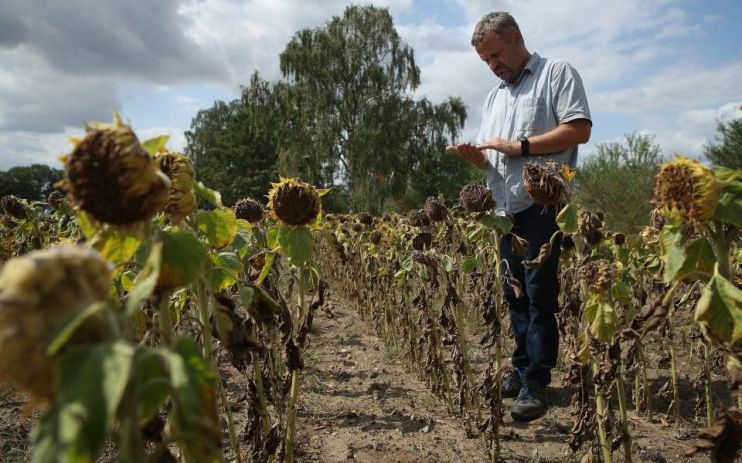
Main image credit: Getty

Read more

Eaton Opens European Aerospace Additive Manufacturing Center to Expand Production and Strengthen Regional Supply Chain Resilience

Share this article

  • Facebook
  • X
  • LinkedIn
  • WhatsApp
  • Email

Similarly tagged content:

Sections

  • News
  • Opinion

Categories

  • Business
  • Opinion
  • Retail

Related Topics

  • Coronavirus

Trending Articles

  • Five-star Mayfair hotel hit with HMRC winding-up petition

  • Nottingham Forest owner Marinakis sues Crystal Palace for defamation

  • Back to basics: Sainsbury’s gradual retreat from the British high street

  • Hargreaves Lansdown orders staff back to office

  • As it happened: Intel, Arm shares slide; Oil climbs higher

More from Morning Wire

  • Arch Construction Risk Report Reveals Top Challenges Facing Sector Amid Rising Volatility

    Business Wire
  • Eaton Opens European Aerospace Additive Manufacturing Center to Expand Production and Strengthen Regional Supply Chain Resilience

    Business Wire
  • Roasting heat putting Brits off roasts, warns Toby Carvery owner

    Hospitality
    Close-up of a plated roast dinner with meat, roasted potatoes, peas, carrots, and gravy on a white plate
  • Government nationalises British Steel

    Industrials
    Britains steel industry facing challenges with potential shutdowns and job losses, highlighting economic impact.
  • Wetherspoon shares dive as pub chain warns on profit again

    Hospitality
    Tim Martin, founder of JD Wetherspoon, speaking and gesturing with an open hand, wearing a blue polo shirt and dark jacket.
  • U.K. Firms Make Cyber Resilience Measurable

    Business Wire
  • El Nino heatwaves to ‘fuel inflation next year’

    Economics
    Firefighter in helmet and uniform watching a blazing forest fire at night, red glow in the sky
  • Temporary inflation slowdown set to boost Burnham

    Economics
    Rising inflation graph with increasing percentage symbols, highlighting economic trends and financial market impact
MorningWire

Independent European business, markets and political news for decision-makers.

Morning Briefing

Europe

  • Germany
  • France
  • Europe
  • UK & Ireland

Business

  • Markets
  • Banking
  • Technology
  • Energy
  • Property
  • Fintech

Editorial

  • Opinion
  • Editorial Policy
  • Corrections
  • Contact

Company

  • About Morning Wire
  • Privacy Policy
  • Terms of Use
  • Cookie Policy
© 2026 Morning Wire Ltd · Published by Morning Wire Media, Bahnhofstrasse 65, 8001 Zürich, Switzerland
Privacy · Terms · Cookies · Facebook