How Greek game theory could lead to a win-win situation in the Eurozone

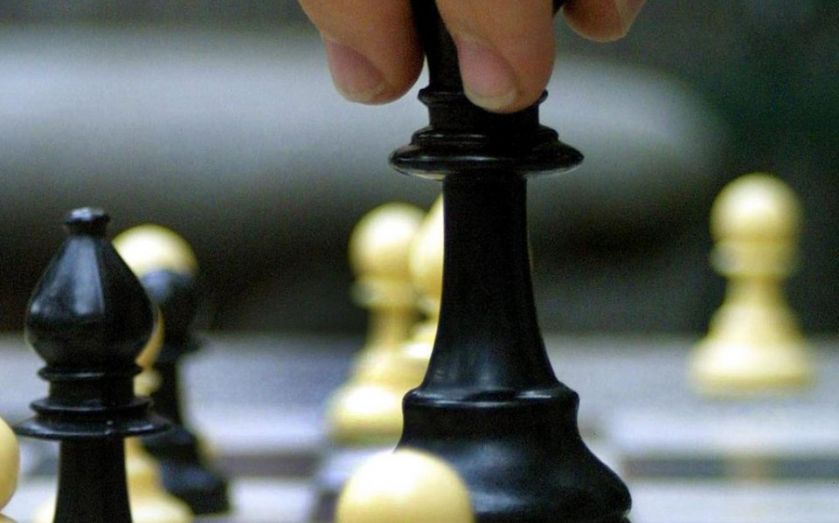
Meetings to discuss the future of Greece are no playtime for the leaders of Europe, but that doesn't mean the country's finance minister isn't using game theory to ensure the best possible outcome for his strugging economy.
Yanis Varoufakis was an academic and researcher of the technique before he went into politics. In fact, he is such an expert that he co-authored a book on it in 2004. This has led some people to question whether he might be adopting its rules, whether consciously or subconsciously, to try and persuade Greece's creditor nations to renegotiate the nation's bailout agreement.
Varoufakis has been adamant that this is not the case – in Monday's New York Times, he wrote: “Because I spent many years during my previous life as an academic researching game theory, some commentators rushed to presume that as Greece’s new finance minister I was busily devising bluffs, stratagems and outside options, struggling to improve upon a weak hand. Nothing could be further from the truth.”
But what is “game-theory”? And why are people so worried about it?
It is a way of explaining how we make decisions based upon the actions and decisions of others – we weigh up all the possible behaviours of the people around us in a social situation, along with their likelihoods, and use this information to decide what we say or do.
It influences our actions in any event involving other people, whether it is how we interact with our colleagues, what we do to attract someone we desire, or whether we do a favour for a friend. It's not limited to humans, either – many animals in nature adopt this approach when interacting socially.
A popular example for describing how game theory works is the prisoner's dilemma. In this, two prisoners who supposedly committed a crime together are questioned by police, and their answers determine not only their own punishment, but the punishment of their partner (in crime).
If they cooperate and both remain silent, they each get one year in prison only. But if one remains silent and the other confesses, the one who confesses is released while the one who didn't say anything gets a whole 20 years. If both confess, they are each locked up for five years. The decision made by each depends on what they expect the other to do, and whether they care about what happens to the other person.
Why so bad?
What the prisoner's dilemma shows is that cooperation can often be the best choice for both parties, indicating that game theory might not always be a bad thing, even in the case of the Eurozone's negotiations on Greece.
In a traditional game, there tends to be one winner. In a game of chess, for example, someone wins it all, while the other loses it all. It is for this reason that “game” theory might sound like a negative thing – we rarely play games where all contestants are aiming for a draw.
But sometimes, this can be the best outcome in game theory – a fact recognised by all participants. In prisoner's dilemma, a cooperative move by both leads to just one year in prison and a harmonious relationship henceforth. By screwing their partner over, a confessor might only be OK if they have neither a conscience nor any intention of working with the person they left behind in jail ever again. In the case of Greece and its many next door neighbours, this is highly unlikely.
"While game theory may appear to be essentially about situations involving opposed self-interests, it needn't be,” Ethicist Carissa Veliz, of the Oxford Uehiro Centre for Practical Ethics, told the BBC.
Selfishness need not be among the assumptions of game theory. In the classical Prisoner's Dilemma, it is often assumed that each prisoner only values his or her own well-being. But we can imagine the case where both prisoners are genuinely disinterested activists, and each wants to leave prison as soon as possible because they sincerely believe they will do the most good in the world by furthering the respective cause they are committed to.
Besides, game-theory is not an invention – it is a way of describing a thought-process used by all of us in our social interactions. There is no set line for when it can apply or when it can't – it would almost be inadvisable not to use it to some degree, as you'd be making all your decisions without thinking about how other people might react. Who says Wolfgang Schaeuble isn't using it without even realising?