Skip to content
Wednesday 2 September 2026London --:--Frankfurt --:--Zurich --:--
NewslettersSearchEN · DE · FR
MorningWire

European business, markets and politics

FTSE 100
10,789.28
-0.32%
DAX
25,970.11
-1.10%
CAC 40
8,301.85
0.00%
STOXX 50
6,368.98
-0.80%
  • Europe
  • Markets
  • Business
  • Economy
  • Regulation
  • Politics
  • Opinion
More
GermanyFranceEU InstitutionsCompetitionPublic AffairsBankingTechnologyEnergy
  • Germany
  • France
  • Europe
  • Markets
  • Business
  • Economy
  • Regulation
  • Politics
  • Opinion
  • DE
Monday 05 April 2021 11:00 am  |  Updated:  Monday 05 April 2021 10:41 am

Gender divide: a post-Covid recovery must address pandemic inequalities

By: Mehrunisha Suleman

Add as a preferred source on Google
MPs Pressure PM To Announce Plan To Reopen Schools
(Photo by Leon Neal/Getty Images)

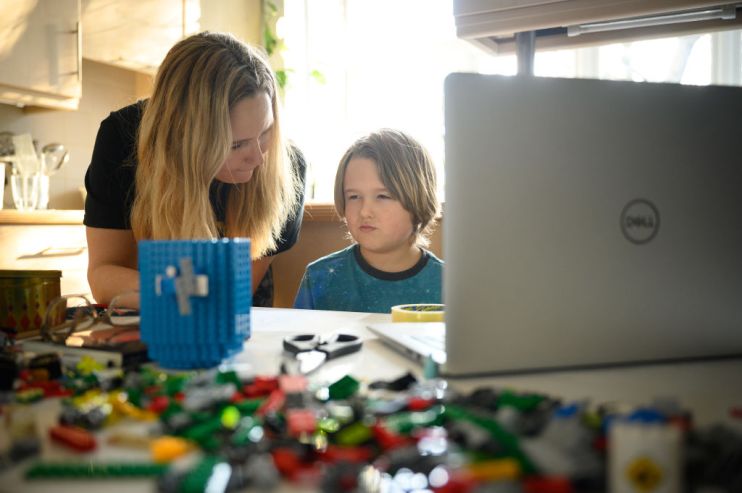
The Covid-19 pandemic has affected us all. However, it’s clear women across the UK have faced particular challenges over the past year. From key workers, the majority of whom are female, to mothers supporting their children with home learning – often combined with working from home – women have shown incredible resilience; but at what risk to their long-term health? 

It’s essential that we look at how the pandemic has impacted women – particularly those experiencing other inequalities such as disabled women and those from ethnic minority communities – and importantly, what we as a society must do to counter these issues.

Women’s mental health has deteriorated almost twice as much as men’s during the first lockdown due to difference in caring responsibilities and social tendencies, according to the UK Household Longitudinal Survey. This is no surprise, as they have bore the brunt of pressures from home schooling, alongside fears of redundancy and greater feelings of loneliness. As many as 45 per cent of women reported loneliness, compared to 29 per cent of men. There has also been a rise in domestic abuse.

Both men and women have helped educate their kids at home, but recent evidence has showed women have shouldered more of the burden. During the first lockdown in April last year, the ONS found that parents reported splitting home schooling equally between them, but by January this had increased to 67 per cent of women in couples taking on most of the responsibilities. With home working set to become normalised post-pandemic, organisations would be wise to put efforts into ensuring that female employees are supported in juggling multiple pressures.

Women are also feeling the effects of the pandemic’s economic impact. Prior to the coronavirus outbreak, women were more likely than men to be in uncertain employment, making up 54 per cent of those on zero-hour contracts and 74 per cent of those on part time hours. They tended to be overrepresented in shutdown sectors such as retail and hospitality. More than half of part-time working women were furloughed by June last year, compared with 41 per cent of men. This predisposes them to greater job insecurity as the job retention scheme comes to an end.

As the latest lockdown unwinds, the disproportionate impact on women must be factored into policymakers decisions for the future. Ensuring the social security system provides an adequate income is essential for a healthy life – for everything from quality housing to buying healthy foods. Job creation schemes should focus on better quality job design businesses in industries such as hospitality, which predominantly employ women, should be incentivised to keep people in work and the opportunity for more flexible working to become the norm should be taken. 

We have a unique opportunity to take on the learnings of the past year and ensure that health, and the future health of the nation, is at the heart of our recovery. The Health Foundation as been looking at the implications of the pandemic on people’s health through our COVID-19 Impact Inquiry. It will provide provide a robust analysis for government on how we can tackle these inequalities head on. We owe it to every woman who has played their own part in the COVID-19 response to ensure that we build back fairer and protect their future health for decades to come.

Read more

The Debate: should we release female prisoners to make space for men?

Brick prison wall with barred windows, razor wire, and a security camera.

Share this article

  • Facebook
  • X
  • LinkedIn
  • WhatsApp
  • Email

Similarly tagged content:

Sections

  • Opinion

Categories

  • Opinion

Related Topics

  • Coronavirus

Trending Articles

  • Vodafone and Deliveroo look to patch up Reform ties after Yusuf prison threats

  • Jaguar reveals the Type 01’s screen-free interior

  • Trio of firms poised to quit London Stock Exchange as exodus gathers pace

  • Easyjet’s over-60s recruitment push is economically necessary

  • FCA ‘worked backwards’ to justify motor finance redress, say lenders

More from Morning Wire

  • The Debate: should we release female prisoners to make space for men?

    Opinion
    Brick prison wall with barred windows, razor wire, and a security camera.
  • Mary Kay’s Pink Changing Lives® Program Turns Purpose Into Measurable Impact for Women Around the World

    Business Wire
  • That women ‘lack confidence to invest’ is a lazy answer to a major problem

    Opinion
    Two business women talking about sales in office at desk with laptop (Photo: Unsplash)
  • A love letter to Sweetings, the City’s oldest restaurant

    Life&Style
    Sweetings Canada restaurant exterior, showing diners inside and a seafood display in the window.
  • e.l.f. Beauty and Parity Release “Girls Who Play Change the Game”, Connecting Girls’ Sports Participation to Long-Term Workplace Impact

    Business Wire
  • Ebru Koksal: ‘Women tend to ask difficult questions, and that’s not always liked’

    Sport Business
    A woman in a polka dot dress speaks into a microphone at a business event, a man in a suit beside her.
  • Improve technical education for women to plug engineer shortage

    Opinion
    Two engineers in hard hats and high-visibility gear inspecting a large, illuminated tunnel under construction.
  • Sorry Elon, universal basic income won’t solve the AI jobs apocalypse

    Opinion
    Elon Musk smiling and waving from a podium with the Seal of the President of the United States.
MorningWire

Independent European business, markets and political news for decision-makers.

Morning Briefing

Europe

  • Germany
  • France
  • EU Institutions
  • Europe

Business

  • Markets
  • Business
  • Economy
  • Regulation
  • Competition
  • Public Affairs

Editorial

  • Opinion
  • Editorial Policy
  • Corrections
  • Contact

Company

  • About Morning Wire
  • Privacy Policy
  • Terms of Use
  • Cookie Policy
© 2026 Morning Wire Ltd · Published by Morning Wire Media, Bahnhofstrasse 65, 8001 Zürich, Switzerland
Privacy · Terms · Cookies · Facebook