Germany's rivers hit historic lows as drought threatens economy and supply chains
Successive heatwaves have pushed Germany's main waterways to their lowest levels on record, forcing cargo cuts, threatening fuel supplies and igniting a political clash over climate readiness.
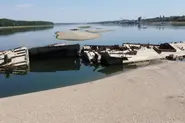
Germany's major rivers have fallen to historically low levels after months of deficient rainfall and successive heatwaves, disrupting inland shipping, threatening industrial supply chains and prompting warnings of a measurable hit to economic output.
The Rhine and Danube, arteries for chemicals, steel, petroleum and grain, are running so shallow that barges must slash loads to stay afloat. The Kiel Institute for the World Economy estimates the disruption could shave €1 billion to €2 billion off German GDP in the third quarter if conditions persist. Scientists at the World Weather Attribution group say human-driven climate change has intensified the drought, while the Federal Institute of Hydrology warns such episodes will become more severe.
Shipping, industry and tourism feel the strain
Barge operators on the Rhine are loading at 25 to 35 per cent of capacity, pushing transport costs sharply higher. Thilo Schaefer of the German Economic Institute noted that the 2018 low-water episode coincided with a rise in average petrol prices from €1.34 to €1.42 per litre, a precedent that has fuel markets on edge. Meanwhile, river cruise companies on the Rhine, Danube and Moselle are rerouting or cancelling trips, offering rebooking options as schedules collapse.
"We are seeing bottlenecks that the existing rail and road network simply cannot absorb at short notice," said a spokesperson for the Federal Association of German Inland Waterway Transport.
Environmental impacts are compounding the economic ones. Warmer, shallower water holds less oxygen, stressing fish populations and degrading water quality. The Federal Ministry for the Environment has flagged habitat loss, while farmers in eastern Europe warn of crop damage as irrigation sources dwindle.
Political pressure mounts on the chancellery
Criticism of Chancellor Friedrich Merz's government has sharpened. Katharina Dröge, parliamentary leader of the Green Party, accused the chancellor of failing to acknowledge the consequences of extreme heat, while co-leader Ricarda Lang said the administration is not treating the climate crisis with sufficient seriousness. Oliver Krischer, transport minister for North Rhine-Westphalia and a Green, has called for a national task force linking federal, state and local authorities with the logistics sector, plus federal funding for long-planned Rhine deepening projects.
The government has convened an expert conference in Bonn for Thursday, but shipping groups and environmental organisations argue that structural fixes, faster bottleneck removal, fleets built for shallow draft, and large-scale wetland restoration to sponge up winter rain, are overdue. The Nature and Biodiversity Conservation Union says rewetting floodplains and forests would release water gradually during dry spells, buffering both navigation and ecology.
Rain remains the only near-term relief
Forecasters see no sustained, widespread rainfall in the immediate outlook. The Federal Institute of Hydrology and the Rhine Waterways and Shipping Authority both stress that without prolonged precipitation, water levels will continue to fall, deepening the logistical and economic squeeze. For now, industry, tourists and policymakers are watching the gauges and waiting for the sky to open.