
‘Get ESG-ready’ series: What is ESG and why is it relevant now?
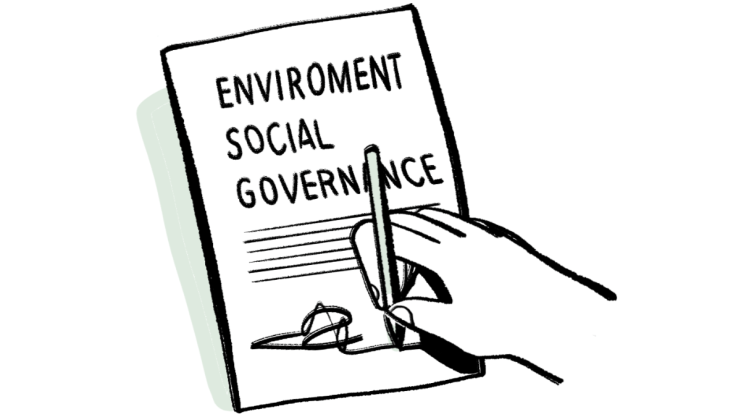
Companies are like citizens, they need to act responsibly and try to do more good than harm.
Many of us will have heard of ‘Corporate Social Responsibility’ (CSR) and similar ideas such as the ‘Triple Bottom Line’, ‘Corporate Purpose’ and ‘Shared Value’. In practice, many of these ideas were hijacked by marketeers, which meant that companies claimed great things but stakeholders (like customers, employees and society-at-large) rarely felt the benefits. Meanwhile, investors were discovering that issues such as sexual harassment cases, slave labour, carbon emissions were having a real impact on ROI.
Against this backdrop, regulators around the world have started turning to the business community to help solve problems such as transitioning to clean energy, closing gender pay gaps, and reducing inequality. Regulators are now working in a coordinated and networked fashion to leverage the world’s capital markets to pressurise companies (large and small) into measuring and valuing their impact on the environment and society to help meet these challenges.
2004 was when it all began..
It was back in 2004 with the support of the UN, that a group of investors met and agreed that three factors; ‘Environmental’, ‘Social’ and ‘Governance’ are financially material to company value and represent a risk to investment capital. The risk applies to all types of capital, such as loans or equity investments and is material in the mid-term (3-5 years) as well as long term. In short, investors concluded that ESG could make a real difference to them.
E is for the environmental impact that a company has on things like Co2 emissions, water usage and recycling.
S is for the social impact the company has through salaries and wages, employee diversity and product quality and service for example.
G is for governance and includes information on the management structure, diversity of Directors and ethics.
In the immediate years after 2004, when the seed of measuring this type of non-financial data was first planted, there was little progress. It wasn’t until around 2018 that the idea of measuring ESG data started to create mainstream interest (Google search trends back this!). Investors, consumers, suppliers, customers and shareholders started to become more aware and began to demand information that determined how sustainable and ethical organisations truly are.
Measuring ESG data
It has become increasingly mainstream for investors to value the importance of ESG metrics in decisions about which companies to invest in; and for lenders to decide who to lend to and on what terms. Through my research at King’s Business School in London, I found that the most common metrics for ESG, regardless of the framework, are detailed below.


These are a good set of core data points that enable organisations to demonstrate their sustainability and ethical impact, reassuring investors, consumers and suppliers. They are also the fewest number of indicators that offer the highest level of compliance with new regulations and emerging ESG or non-financial accounting standards in the EU, UK and US.
Why is ESG relevant now?
Central banks and financial regulators worldwide are coming together with the shared goal to “counter greenwashing” (the practice of claiming ESG performance in excess of actual performance) and to ensure that ESG data is meaningful. More than 40 jurisdictions have already committed to adopting new accounting standards being issued by the IFRS’s International Sustainability Standards Board (ISSB) in Q1, 2023. These new standards are designed to measure ESG or non-financial data in a way that is material for investors and is comparable with financial reporting standards as laid down by the International Accounting Standards Board (IASB).
It is a priority for the UK government since it announced the green paper following COP 26. From April 2022, large UK companies (of 500 employees or more) have to report on their plans to transition to Net Zero carbon emissions (using a framework called TCFD). This in turn requires them to ask companies in their supply chains for their carbon emissions. The same is true for large asset managers and banks. This is why you, or your clients, most likely are one of the two in three companies that are already receiving multiple requests from supply chain customers (including central and local government), investors and lenders for ESG information.
A wave of new regulations is set to emerge over the next few years, focusing first on climate change but rapidly moving on to other environmental issues like water consumption, biodiversity and recycling, as well as pressing social issues like diversity, equity and inclusivity. And remember all new regulations will adopt the new ISSB accounting standards in what they call a new “global baseline”. So all of us, as accountants, or SMEs will soon be involved (if we’re not already).
It’s time to get ESG-ready!
Keep an eye out for more from the ‘Get ESG-ready’ Series.
By Marc Lepere (CoFounder of Omnevue & Lead on ESG & Sustainability, Executive Education, King’s Business School)
In the meantime, you can visit https://www.omnevue.com/ to find out more.