Global economies distracted by crypto must be alive to advanced security threats

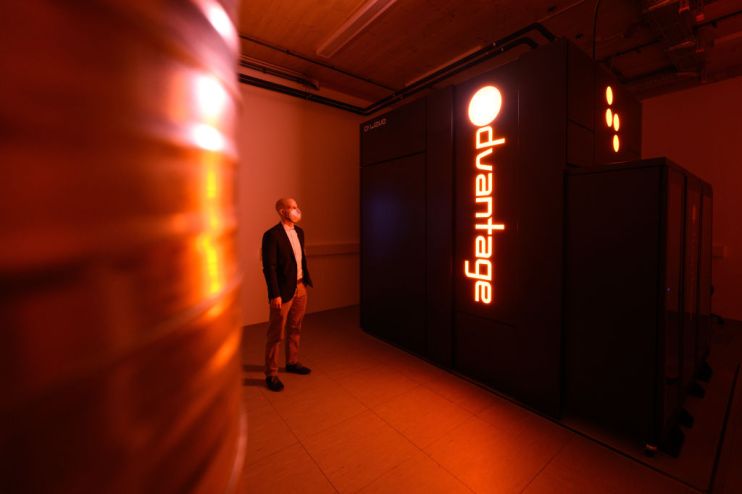
Cyber security isn’t just about somebody reading your email; it has nation-sized implications. Before Russia’s invasion began, a wave of cyberattacks hit Ukraine’s banks and government departments. Now, the US is modelling how it would respond to escalations, including major cyberattacks on financial institutions, according to the New York Times.
It’s clear that cyberattacks are already a weapon of war. But there is another change on the horizon, what’s known as Q day – the moment quantum computing advances enough to crack today’s digital encryptions. At that point, the threat they pose to financial systems and national security will multiply.
This is not alarmism; it’s a fact. Facing up to it makes investment in quantum computing a strategic priority for governments, financial institutions and companies everywhere.
For now, public key encryption is the internet’s standard security mechanism. Financial institutions, large corporations and governments use it across IT systems to protect data that is sensitive and of significant economic value. Quantum computing will render that encryption obsolete.
Beyond cybersecurity and cryptography, quantum computing’s ability to solve problems beyond the reach of classical computers opens multiple avenues for scientific and technological advancement.
In classical computing, everything is binary (0 or 1) and all information breaks down to strings of binary digits, or bits. Quantum computers take it a step further, working with what’s known as qubits, which can be 1, 0, or some combination of 1 and 0 at the same time. In simple terms: it gives computing the ability to traverse challenges we have not envisaged yet. But it also poses a threat to our economic systems if we’re not prepared.
This sounds fairly far-flung to most people, something out of a sci-fi movie. But a team led by Google has said it was able to demonstrate “quantum supremacy” with one of its machines. The tech company estimated that the calculation carried out would take the best classical computer 10,000 years to complete. While Q-day could still be far off, it’s about “when”, and not “if”.
Policymakers, companies and investors are increasingly alive to the promise of quantum computing. According to BCG, advances in the technology could generate an additional US$450-850bn of value across industries within just the next 15-30 years, well before it reaches peak development.
In 2021 alone, there were about 90 venture capital investments in early-stage quantum computing firms, reaching a value of over US$1bn. There were also notable mergers and acquisitions, including Honeywell’s Quantum Solutions combining with Cambridge Quantum, under which Honeywell and other investors agreed to invest US$300 million in the newly-formed Quantinuum. (Full disclosure, we’re an investor in Quantinuum).
Certain classes of problems that classical computers can’t solve, or can’t solve within human lifetimes, are perfect candidates for quantum solutions. In financial services, supercharging the analysis of large and unstructured data sets could transform the industry, giving institutions an edge in capital markets, corporate finance or portfolio management. Quantum solutions can also accelerate Monte Carlo simulations, which investment banks use to model the probability of different outcomes.
Financial institutions should be thinking about this at least as much as they do about blockchain or cryptocurrencies, because the cybersecurity of digital assets will eventually be just as vulnerable as code on centralised databases.
If we start investing now in both quantum computing and quantum-safe encryption, we won’t have to face a trade-off between data security and the vast improvements this technology offers. In the race for Q-day, falling behind means leaving data exposed and whole economies at risk.