Got an oyster card? Then you’d better get used to paying more for less

If freezing rail fares is vital for cutting the cost of living, why are transport costs in London rising sharply? Asks James Ford
As part of his latest, desperate relaunch, beleaguered Prime Minister Keir Starmer has vowed to focus on cutting the cost of living for Britons this year. One of the key planks of this in 2026 is the much-vaunted commitment to freeze national rail fares – the first such freeze in 30 years.
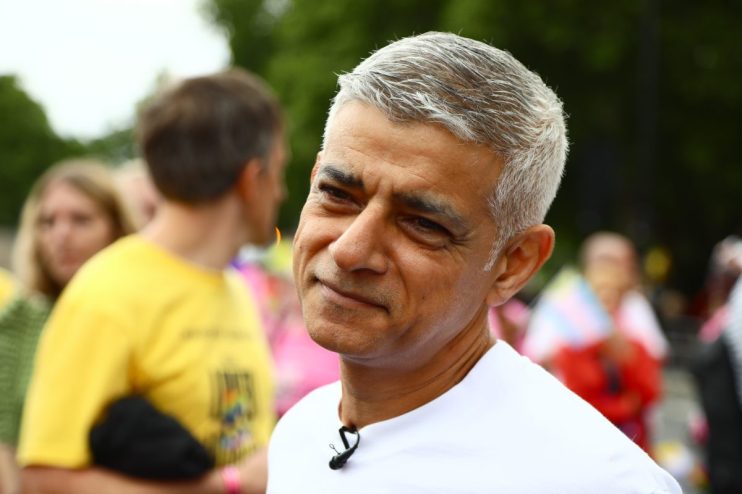
Labour’s man in City Hall, however, clearly did not get the memo about freezing fares. Whilst commuters travelling from Milton Keynes to London are set to save £315 a year, passengers in London travelling between Morden, Muswell Hill and Maida Vale will see their transport costs rise across the board. Mayor Sadiq Khan has just hiked the congestion charge by 20 per cent. Tube fares will rise by an average of 5.8 per cent from March and bus fares will go up in July. And nor are these fare hikes a one off. TfL fares will rise by more than the rate of inflation (RPI + one per cent) every single year until 2030.
Why is London heading in the opposite direction to the rest of the country? Simple: our Mayor is really, really bad at negotiating, even with ministers in his own party.
Despite his desperate efforts to convince voters to the contrary – not least by promoting the story that the Reeves threw him out of her office during funding negotiations in 2025 – London’s allocation last year suggests that, rather than trembling at the prospect of haggling with Sadiq Khan, the Chancellor and the Transport Secretary view him as something of a gullible chump. TfL got the multi-year capital expenditure settlement it said it wanted but its £2.2bn was overshadowed by the £2.5bn that Manchester got (and Manchester’s boost was just part of a £15bn transport boom for mayors across the North and Midlands).
Of course, City Hall would probably point to progress on the DLR extension to Thamesmead as proof of their negotiating prowess. But, given that TfL is expected to end up picking up all of the £1.7bn tab for this project by borrowing against future fares income (the transport infrastructure equivalent of putting a purchase on your credit card), it is far from the great victory that the Mayor would like you to think it is. When you factor in that proceeding with the DLR extension means that other (far more consequential) transport projects like Crossrail 2, West London Orbital or the Bakerloo line extension are dead in the water, then the DLR extension looks more and more like an own goal.
When Khan negotiates, London loses
In short, at the spending round and in the subsequent budget City Hall got much less cash than it needed or wanted but still had to sign-up to implement eye-watering fare rises for years. When Khan lobbies, London loses (and ministers snigger). If anyone is looking to offload five magic beans for cash, I suggest they try auctioning them to the Mayor.
Having got a really bad deal, there are ways that City Hall and TfL could have softened the blow for London’s put-upon public. TfL could offer to share the pain that passengers are feeling by agreeing to cut costs, restrain executive pay and implement a serious efficiency drive. There are currently 548 senior managers at TfL who earn more than £100k a year – and I confidently predict that number will increase rather than fall over the next few years.
TfL could set out how they are going to get better at spending the money they collect from passengers. They could promise that vanity projects like the rebrand of the London Overground network (which cost £6.3m but did not add a single carriage of extra capacity, a single metre of new track or shave so much as a second off journey times) will stop. They could even reduce the number of farcical announcements they make – like having to deny the new Piccadilly Line trains are too big to fit in tunnels or that the new DLR trains can function in the rain. But there is no indication that TfL has any aspirations to appear like a competent, capable transport authority any time soon.
Another important step would be to set out exactly what benefits and improvements passengers will see during the lifetime of this funding settlement. How many stations will be upgraded to become step-free? Will TfL finally do something about rampant fare evasion? Will the number of dirty, graffitied trains operating finally fall? Yet again, TfL has remained painfully mute on these failings.
Hard-hit passengers will, understandably, wonder what they are getting in return for handing over yet more of their hard-earned cash. Under the current administration at City Hall, customer satisfaction with TfL has steadily dropped (from 86 per cent in 2016/17 to 78 per cent in 2022/23 – the longest continual decline on record). In 2023/24 just 54 per cent of Londoners surveyed agreed with the statement that “TfL cares about its customers”. Given the current trajectory of fare rises, it is hard to see how TfL can possibly improve on these scores or achieve its goal of getting passenger numbers close to pre-pandemic levels. Passengers will soon tire of paying more for services that will remain static at best and, in many cases, are in pronounced decline.
James Ford is a former adviser on transport policy to Boris Johnson during his time as Mayor of London