Gousto founder: Rise of weight-loss jabs ‘a depressing state of affairs’

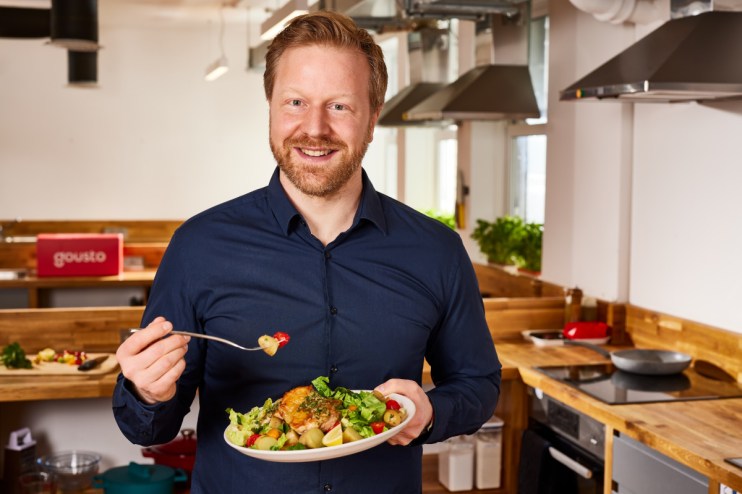
Gousto founder Timo Boldt is on a mission to make the UK’s food system healthier. But in a world of weight-loss jabs – and after a succession of failed government initiatives – Ali Lyon asks whether he is fighting a losing battle.
What goes into the most moreish hamburger on earth? Ask the owners of Valencia’s Hundred Burgers – who claim to be the world’s top-ranked purveyor of umami-drenched beef buns – the answer is suitably haughty: two patties of Rubia Gallejia beef that has been “dry-aged for 60 days”, a couple of rashers of “super crispy” bacon, a dash of Korean gochujang sauce, and, naturally, a “savoury demi brioche milk bun hybrid”.
But speak to Timo Boldt, the founder of mealkit-maker Gousto, and the reality is simpler – and more sinister. Deep down, humans have been hardwired over millennia to desire an unholy combo of three ingredients above all else: fat, salt and sugar. And in the context of a burger, that means 165 per cent of your daily intake of salt, triple the daily sugar limit and “extremely high” levels of saturated fat.
Get that combination right, and the ultra-processed meal will impart on its devourer more than their daily calorie intake in just a few mouthfuls, before eliciting a dopamine response – known as ‘the bliss point’ – that compels you to have even more.
“This food is highly addictive,” Boldt says. “It’s all geared towards preventing you and me from stopping eating. People are trying to engineer this ‘bliss point’, where they combine fat, salt and sugar to find the point where you can’t stop eating, and can’t stop shaking off the cravings.”
Boldt is speaking to Morning Wire shortly after the ‘launch’ of Gousto’s ‘The Big Secret’ burger, a hypothetical fast-food meal made in collaboration London School of Economics food scientists which – were it to be cooked up in a fast-food kitchen – would be ‘the most addictive in the world’.
The aim of the stunt, he says, is to draw attention to the UK’s dire food system; a long-running sore that has blighted the country’s health service and, Boldt argues, economy for years. Successive governments have yanked at tax and policy levers in the hope of regulating their way to a healthier population. George Osborne’s Conservative Treasury famously introduced a ‘soft drinks levy’ – later given the moniker, the ‘sugar tax’ – to help push people towards calorie-free fizzy drinks and encourage manufacturers to reformulate recipes.
Boris Johnson’s Tories floated several other nudge theory-like measures, like a ban on buy-one-get-one-free deals and a so-called ‘snack tax’ on sugary and salty foods. And under the current Labour government, the energetic Wes Streeting has spearheaded controversial efforts to tax sugary milkshakes and ban junk food adverts aimed at children.

Britain’s food the least healthy in the developed world
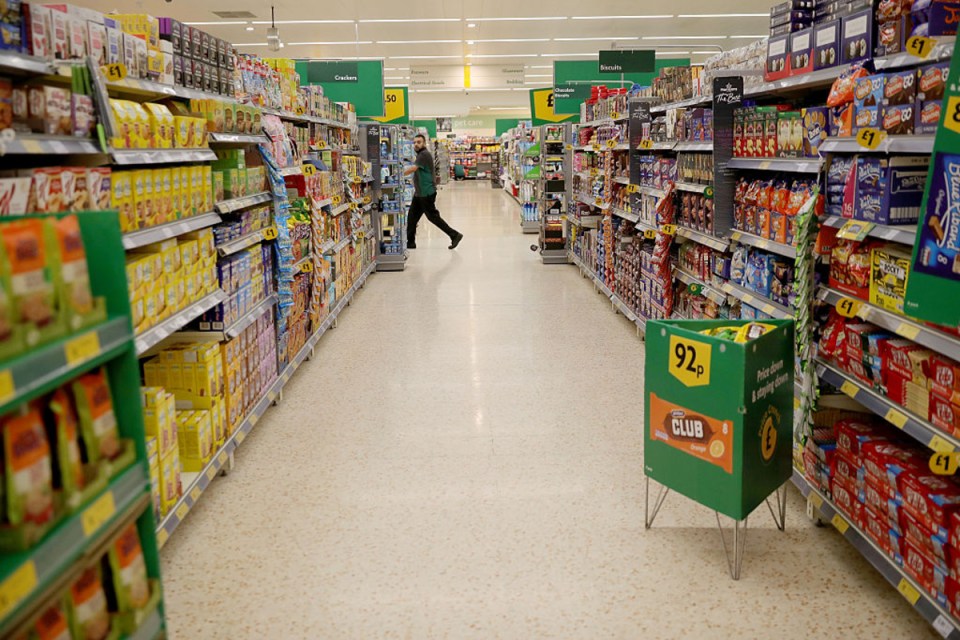
But still, says Boldt, who founded Gousto in 2012 with the mission to “build a model where food waste was no longer an issue”, Britain’s food system remains among the least healthy in the developed world. Among fierce competition – including from the Gousto founder’s native, currywurst-and-chips-loving Germany – only super-sized America can lay claim to having supermarket shelves stacked with less healthy food stuffs than Britain.
The upshot of this is an adult population where two-thirds are either overweight or obese. This, according to official estimates, costs the taxpayer an estimated £6.5bn a year – or half the entire Ministry of Justice budget.
To many, the failure of successive reports, strategies and state interventions to forge a healthier country, suggests any central, top-down enforcement is not only economically misguided, but doomed to fail on its own terms. The solution to our food systems lies in so-called GLP-1 ‘miracle drugs’ – the most popular brands of which are Ozempic and Mounjaro – that suppress patients’ appetites by manipulating signals sent to their brain.
The medication has been held up as a silver bullet to the global obesity crisis, and driven enormous stock market rallies for the pharmaceutical companies who make it. But to Boldt, the notion of medicating our way out of a problem decades in the making without tackling what he sees as the root cause is beyond the pale.
‘Depressing state of affairs’
“It’s a pretty depressing state of affairs,” he says. “GLP-1 drugs, in certain situations, are probably the right thing to do. But fundamentally, even if you take them, you still have to change your habits. And changing habits is incredibly difficult.”
Despite their status as a potential miracle cure, a slow rollout from the NHS – and their current, unpopular needle-based method of delivery – means weight-loss drugs are yet to shift the dial on the obesity picture nationally. And even when they do, Boldt, who entered Gousto off the back of a short-lived foray into asset management, believes they will need to work in conjunction with improving the quality of the food we eat. Indeed those that take them will find themselves having to do so by being obliged to eat vitamin-rich, high-fibre, high-protein foods to ensure they get their fill of nutrients in fewer mouthfuls.
Marks & Spencer – ever the innovative retailer – has already released a ‘Nutrient Dense’ range of 20 products that claims to pack a “nutritional punch” for their size. And consumer good giant Nestle has launched a line of “portion-aligned” ready meals pumped full of vitamins, calcium and protein called Vital Pursuit.
But just as GLP-1 usage has hitherto failed to show up in national official obesity numbers, Boldt has not seen any discernible signs that Gousto’s nearly 5m customers are changing their meal kit orders to cater for their new drug-suppressed appetites.
“We are seeing an uptick in demand for healthy food,” he says. “And theoretically we are positioned exceptionally well to benefit from this because the healthiest way to eat is cooking from scratch. But we haven’t really seen it in the numbers, I would argue, beyond that general increase in healthy eating.”
Incentivising health
That hasn’t stopped some firms from exploring novels ways of combining traditional, ‘move more, eat less’ incentives alongside the use of GLP-1. Last week, it emerged that Boots plans to offer weight-loss drug patients 25 per cent off their jabs if they jog 5km on the weekend as part of a tie-up with health insurer Vitality.
And to Boldd, there is scope for – or logic in – a similar partnership for the loyal subscribers who consume some of the 140m meal kits prepared each year in Gousto’s Warrington warehouse.
“We have to work with insurance companies to lower premiums for people who eat healthily,” he says. “Frankly, if you’re a Gousto customer, you should get cheaper health insurance.”
The company also, Boldt says, has a “moat” protecting it from the other markets megatrend: artificial intelligence. Speak to the growing number of analysts who believe the technology will totally overhaul every corner of our lives, and the idea of the ‘weekly shop’, or of meal delivery companies, is on borrowed time in an age of upheaval in which AI agents will carry out all our menial tasks on our behalf. As they see it, your agent will simply speak directly to Sainsbury’s or Tesco’s agent, ordering goods autonomously as and when you need them. Such a scenario coming to pass could be ruinous for Gousto. But Boldt is sanguine, suggesting that the many companies that have tried something similar – like a supermarket curating recipe offerings from their ingredients – have universally failed.
“What people see on their menu is AI-driven. So you should never see on your feed what I’m seeing – we should have totally different experiences,” he says. “But the moat is actually the data we have about the customer and the supply chain and the fact that, unlike supermarket menu equivalents, we pre-proportion the ingredients.”
Those ingredients are – by and large – far healthier than the median meal in the UK. Just 12 per cent of its food components are classified as high-processed, compared with 60 per cent consumed by the wider population.
Be that as it may, with a menu boasting cheesy pasta bakes and even fish and chips as well as healthier, more heavily promoted options, even health crusader Boldt concedes his customers are partial to a salty, fatty, sugary dish with striking similarities to the Big Secret.
“When you ask people, ‘What do you want to eat?’ People tend to say salad,” he says. “But when you look at what people actually eat, they still like burgers and fries.”