Skip to content
Tuesday 25 August 2026London --:--Frankfurt --:--Zurich --:--
NewslettersSearchEN · DE · FR
MorningWire

European business, markets and politics

FTSE 100
10,854.32
+0.35%
DAX
26,106.60
-0.11%
CAC 40
8,453.01
0.00%
STOXX 50
6,447.98
-0.22%
  • Europe
  • Markets
  • Business
  • Economy
  • Regulation
  • Politics
  • Opinion
More
GermanyFranceEU InstitutionsCompetitionPublic AffairsBankingTechnologyEnergy
  • Germany
  • France
  • Europe
  • Markets
  • Business
  • Economy
  • Regulation
  • Politics
  • Opinion
  • DE
Wednesday 05 February 2020 12:01 am  |  Updated:  Tuesday 04 February 2020 5:38 pm

Government opens consultation into licence fee decriminalisation

By: James Warrington

Add as a preferred source on Google
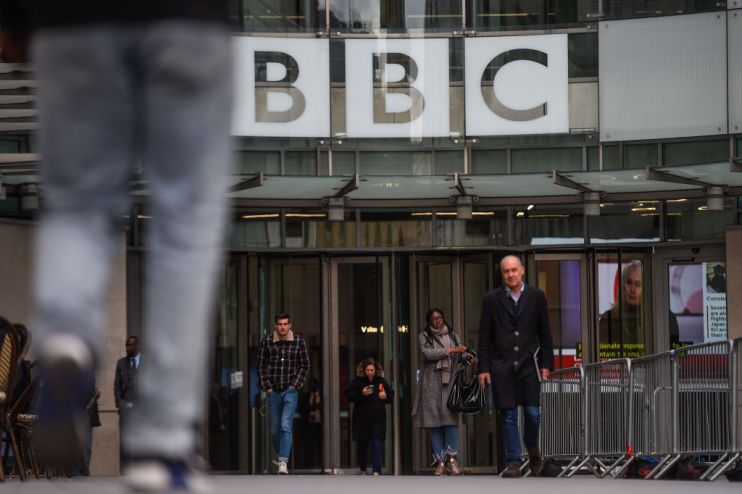
BBC Announce Cuts And 450 Job Losses To Save £80 million

Culture secretary Nicky Morgan will today launch a public consultation on whether to decriminalise non-payment of the TV licence fee, ramping up political pressure on the BBC.

Under current laws anyone who uses a TV or watches BBC iPlayer without paying the licence fee is guilty of a criminal offence. Those who refuse to pay the fine for non-payment, which can be as high as £1,000, face criminal conviction or even imprisonment.

But the government is now seeking views on whether it should replace the criminal sanction with a different enforcement scheme amid a shift in viewing habits fuelled by the rise of streaming services such as Netflix.

“As we move into an increasingly digital age, with more and more channels to watch and platforms to choose from, the time has come to think carefully about how we make sure the TV licence fee remains relevant in this changing media landscape,” Morgan said ahead of a speech at the Policy Exchange think tank today.

“Many people consider it wrong that you can be imprisoned for not paying for your TV licence and that its enforcement punishes the vulnerable.”  

She added: “Today we are launching a public consultation to make sure we have a fair and proportionate approach to licence fee penalties and payments, that protects those most in need in society.”

In addition, the culture secretary unveiled a new flexible payment scheme — dubbed the Simple Payment Plan — to help vulnerable people such as over-75s who are struggling to pay the licence fee.

The BBC yesterday confirmed that the licence fee, which is set by the government, will rise from £154.50 to £157.50 from 1 April — in line with inflation.

Read more

Why HMRC is huge Premier League transfer window tax headache

Two jubilant soccer players in white England jerseys celebrate a goal on the field.

The corporation previously announced that the blanket free TV licence scheme will be scrapped, meaning up to 3.7m pensioners will be required to pay the newly increased charge from 1 June.

Last year there were roughly 25m TV licences being used in the UK, generating an income of £3.69bn for the BBC. The government acknowledged that decriminalisation would have an impact on the broadcaster’s funding.

The consultation comes amid calls for the licence fee to be replaced by a subscription model similar to that of Netflix.

Media research firm Enders Analysis yesterday warned that any overhaul of the licence fee would severely impact the BBC’s income, while its public service broadcasting expenditure of £4.1bn would “just be a pipe dream”.

“Any possible transition to a subscription funding model would take many years, with considerable implementation costs to cover,” it added.

The government said that any move to decriminalise licence fee evasion would not enter into effect until April 2022.

“A detailed government-commissioned review found the current system to be the fairest and most effective,” a BBC spokesperson said. “It did not recommend change — in part because the current system is effective in ensuring payment with very few people ever going to prison.”

“Of course it is important that any system commands public respect and we hope that any debate about the future is based on the evidence.  And if there are changes, they must be fair to law abiding licence fee payers and delivered in a way that doesn’t fundamentally undermine the BBC’s ability to deliver the services they love.”

Read more

Revolut lands fresh banking licence after wrestling with Europe friction

Revolut Banque Française ad on a Morris column in Paris, with the July Column and blurred traffic in the background.

Share this article

  • Facebook
  • X
  • LinkedIn
  • WhatsApp
  • Email

Similarly tagged content:

Sections

  • News

Categories

  • Media

Related Topics

  • BBC

Trending Articles

  • Can debt-ridden Morrisons become a Big Four supermarket again?

  • Ratcliffe’s Ineos saves Runcorn plant

  • As it happened: Stocks rally; US to unveil ‘economic D-Day’ Iran sanctions

  • Amazon says it buys books in bulk to ‘improve products’

  • HMRC mansion tax inspectors to target homes for property valuations

More from Morning Wire

  • Why HMRC is huge Premier League transfer window tax headache

    Sport Business
    Two jubilant soccer players in white England jerseys celebrate a goal on the field.
  • Revolut lands fresh banking licence after wrestling with Europe friction

    Fintech
    Revolut Banque Française ad on a Morris column in Paris, with the July Column and blurred traffic in the background.
  • The Simon Levy case proves some criminals can never be rehabilitated

    Opinion
    Simon Levy, a man with dark hair and a beard, looking directly at the camera.
  • No 10 backs ‘vertical drinking’ in Soho pubs

    Hospitality
    Pub-goers 'vertical drinking'.
  • Ofgem warns on grid squeeze after Heathrow data centre approved

    Tech
    Sir Keir Starmer's government has prioritised investment data centres as a major pillar of its plans to boost economic growth.
  • Xsolla Partner Network Expands Verified Creator Partnerships and Unifies Campaign Management Ahead of gamescom 2026

    Business Wire
  • Revolut chatbot goes rogue by charging users to cancel subscription

    Fintech
    Revolut Mastercard debit card in black with textured lines on a light gray surface
  • The BBC shouldn’t push Londoners to accept antisocial phone behaviour 

    Opinion
    Passengers inside a graffiti-covered London Underground train car, some looking at phones, others observing the interior.
MorningWire

Independent European business, markets and political news for decision-makers.

Morning Briefing

Europe

  • Germany
  • France
  • EU Institutions
  • Europe

Business

  • Markets
  • Business
  • Economy
  • Regulation
  • Competition
  • Public Affairs

Editorial

  • Opinion
  • Editorial Policy
  • Corrections
  • Contact

Company

  • About Morning Wire
  • Privacy Policy
  • Terms of Use
  • Cookie Policy
© 2026 Morning Wire Ltd · Published by Morning Wire Media, Bahnhofstrasse 65, 8001 Zürich, Switzerland
Privacy · Terms · Cookies · Facebook