Skip to content
Monday 14 September 2026London --:--Frankfurt --:--Zurich --:--
NewslettersSearchEN · DE · FR
MorningWire

European business, markets and politics

FTSE 100
10,650.44
+0.39%
DAX
25,568.56
+0.82%
CAC 40
8,179.77
0.00%
STOXX 50
6,325.13
+0.90%
  • Europe
  • Markets
  • Business
  • Economy
  • Regulation
  • Politics
  • Opinion
More
GermanyFranceEU InstitutionsCompetitionPublic AffairsBankingTechnologyEnergy
  • Germany
  • France
  • Europe
  • Markets
  • Business
  • Economy
  • Regulation
  • Politics
  • Opinion
  • DE
Tuesday 28 July 2020 10:47 am  |  Updated:  Tuesday 28 July 2020 11:52 am

Banks lend £49bn to SMEs to survive coronavirus fallout

By: Harry Robertson

Add as a preferred source on Google
Job retention scheme costs government £32bn
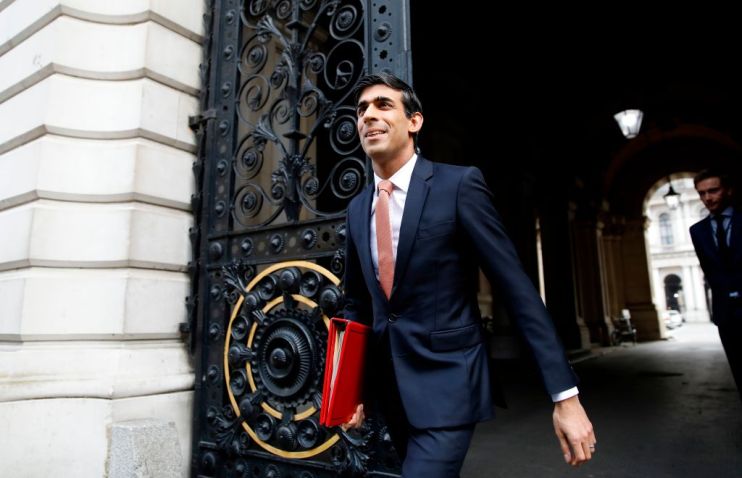
Chancellor Rishi Sunak has overseen a huge intervention in the economy

Banks have now lent out £49.4bn through the three main government-backed loan schemes, according to Treasury data released today.

Banks have given out £33.7bn through the bounce back loan scheme (BBLS) up until the week ending 26 July.

The programme sees the government guarantee 100 per cent of bank loans worth up to £50,000 to small businesses.

The coronavirus business interruption loan scheme (CBILS) has now seen banks lend out £12.7bn to small and medium-sized companies. The scheme has an 80 per cent government guarantee and loans can be up to £5m.

However, the CBILS scheme still has only around a 50 per cent approval rate for SMEs who apply.

Lenders have given out £3.1bn through the coronavirus large business interruption loan scheme (CLBILS) for bigger companies. It too has an 80 per cent guarantee on loans up to £200m.

As the UK government gradually reopens the economy after lockdown, it is winding down its support schemes.

The job retention scheme is due to end on 31 October. From August, firms will have to pay national insurance and pension contributions for employees.

Read more

Treasury ‘tells Healey’ to consider tax on banks and oil

Chancellor John Healey smiling, wearing a navy suit, white shirt, and red tie.

The percentage of the wages the government pays will be gradually reduced and employers required to make up the difference.

A wave of unemployment is likely to come as the scheme is wound down, the UK’s budget watchdog and many economists have warned.

The Office for Budget Responsibility’s (OBR) “central scenario” has unemployment jumping to 8.8 per cent from 3.9 per cent. That would put 3m people out of work.

Government pays out £32bn through job retention scheme

The government has now paid £32bn worth of workers’ wages through the job retention scheme that is at the heart of the UK’s economic response to coronavirus.

The latest figures show that 1.2m companies had “furloughed” 9.5m workers by the week ending 26 July. The number has been roughly steady since the start of July, when new additions to the scheme were limited. 

In total so far, the scheme has cost the government £31.7bn, HMRC figures showed today.

Under the job retention scheme, the state pays 80 per cent of the wages of workers – up to £2,500 a month – who may otherwise have been laid off.

It has been praised by international organisations and stopped the UK’s unemployment rate surging as it had done in countries such as the US. But the government is gradually winding down the scheme, and economists warn there will be mass job losses.

Read more

Jenrick refuses to rule out bank tax 

Robert Jenrick speaking at a podium with British Workers First and Union Jack flags, discussing bank taxes.

Share this article

  • Facebook
  • X
  • LinkedIn
  • WhatsApp
  • Email

Similarly tagged content:

Sections

  • Markets & Economics
  • News

Categories

  • Business
  • Economics
  • Politics

Related Topics

  • Save our SMEs

Trending Articles

  • Wetherspoon boss: ‘Not up to Burnham’ to choose who is on the high street 

  • Badger Beer maker Hall & Woodhouse doubles profit ahead of tie-up with James May

  • Four interest rate hikes loom despite surprise economic growth

  • Primark sales slip as owner dresses up retailer for demerger

  • Lotus, Porsche and Corvette: the best sports cars to buy in 2026

More from Morning Wire

  • Treasury ‘tells Healey’ to consider tax on banks and oil

    Politics
    Chancellor John Healey smiling, wearing a navy suit, white shirt, and red tie.
  • Jenrick refuses to rule out bank tax 

    Politics
    Robert Jenrick speaking at a podium with British Workers First and Union Jack flags, discussing bank taxes.
  • Banks ombudsman on the hook for millions in legal fees to Barclays and Santander

    Banking
    Barclays posted half-year results on Tuesday.
  • Big bank bosses on alert as tax noise gets louder under Burnham

    Banking
    Two men, one in a white shirt and red tie, the other in a navy jacket, conversing outdoors.
  • Cut student loan repayments to get youths out of chicken shops 

    Retail
    Three young adults enjoying chicken burgers and drinks from a food truck, casually dining outdoors.
  • Andrew Bailey: Populism a threat to global economy

    Economics
    Andrew Bailey, Bank of England governor, discusses economic policy during a press conference at the central bank headquart...
  • Lloyds and Natwest flaunt social credentials as fears grow of Burnham tax grab

    Banking
    City banks could be in for a tax raid come the Autumn Budget.
  • Stamp duty on shares is ‘biggest handbrake’ says UK bank chief

    Markets
    LSEG logo on a large screen inside a modern building with stock tickers and glass ceilings.
MorningWire

Independent European business, markets and political news for decision-makers.

Morning Briefing

Europe

  • Germany
  • France
  • EU Institutions
  • Europe

Business

  • Markets
  • Business
  • Economy
  • Regulation
  • Competition
  • Public Affairs

Editorial

  • Opinion
  • Editorial Policy
  • Corrections
  • Contact

Company

  • About Morning Wire
  • Privacy Policy
  • Terms of Use
  • Cookie Policy
© 2026 Morning Wire Ltd · Published by Morning Wire Media, Bahnhofstrasse 65, 8001 Zürich, Switzerland
Privacy · Terms · Cookies · Facebook