Government plans £6bn loan scheme to protect households from soaring energy bills

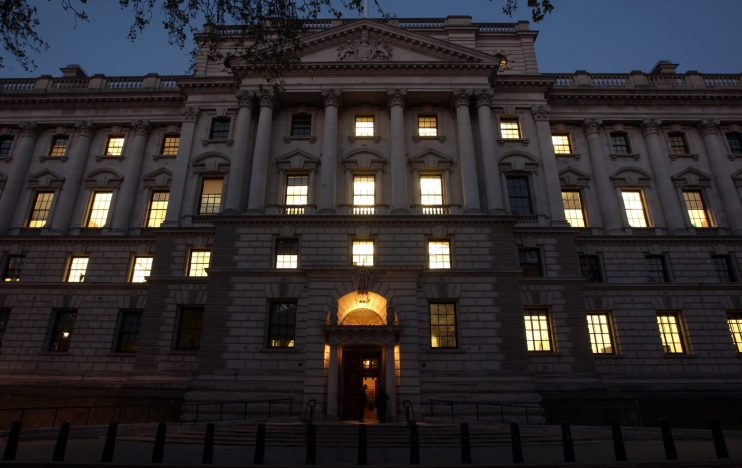
Downing Street is set to announce billions of pounds in state-backed loans to ease the burden on energy users, according to The Times.
Prime Minister Boris Johnson and Chancellor Rishi Sunak have agreed to roll out a “rebate and clawback” scheme, with taxpayers effectively underwriting loans to energy firms.
Companies will pass the money on to every household in the UK in the form of a rebate on energy bills, limiting the impact of expected price rises in April.
The firms will then recoup the money from consumers in subsequent years, to pay back the loans when energy prices eventually fall.
Industry sources have told the newspaper the government could provide up to £6bn in the arrangements, equivalent to a £200 rebate for every UK household.
The idea has reportedly been approved by ministers and will be announced in the coming days, possibly as early as tomorrow.
Johnson dips into public purse to fix market meltdown
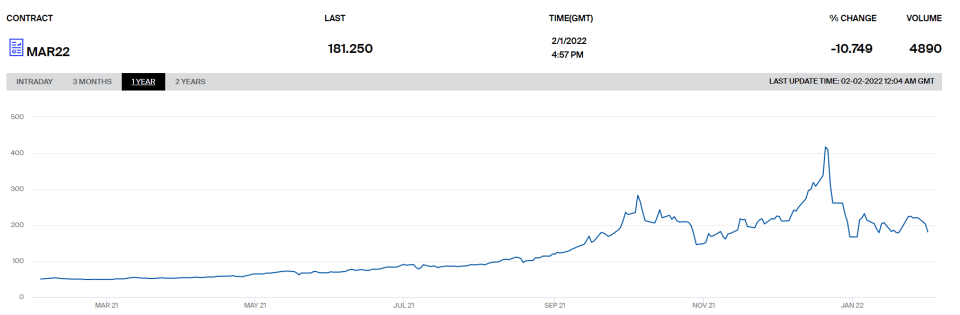
The government has turned to public money amid growing fears of a potential 50 per cent hike to the consumer price cap this spring.
The latest reports from Cornwall Insight suggest the average energy bill could rise to nearly £1,900 per year, a marked uptick on the current cap which is set at £1,277.
Market regulator Ofgem will meet next week to establish the next update for the price cap, and trading body Energy UK has warned it could be increased again beyond the £2,000 milestone in October.
The latest developments also follow widely covered reports of Downing Street mulling over loans earlier this month.
Recent speculation suggested the government was grappling between blanket measures to protect everyone and targeted plans for low-income energy households.
It now appears they will try and do both, as the government is also expected to announce specific plans for poorer households.
This includes a likely extension of the warm homes discount, which currently provides 2.2m UK households with a yearly £140 saving.
Council tax rebates and increased benefits are reportedly also under consideration.
Last week, Octopus Energy’s chief executive Greg Jackson called for costs to be spread over time, and suggested the Treasury should be considered in industry plans to minimise household bills.
However, Utilita Energy (Utilita) founder Bill Bullen recently told Morning Wire that it would be a mistake to tamper further with the market, and that the government should instead increase existing benefit schemes to protect poorer households.
It is also unclear whether the scheme will work as anticipated, as it relies on higher wholesale costs declining significantly, so that suppliers can swoop in later to recoup the funds.
There are growing concerns that higher prices and general volatility in the industry is baked into the market, with Centrica boss Chris O’Shea suggesting there could be a sustained increase in prices.
Prices could also rise if Russia invades Ukraine, or if sanctions result in the Kremlin restricting supplies of gas into Europe.
Price cap survives amid industry pressure for reform
There have been sustained calls for the price cap to be scrapped or reformed within the industry, with ScottishPower and Utilita both attributing market carnage to the inability of suppliers to pass costs on to the wider market.
So far, 26 energy firms have ceased trading since last September, with four million customers directly effected by the volatility.
The mess has already resulted in hefty bills for consumers, with Investec estimating that households could be on the hook for £3.2bn due to spiralling on-boarding costs.
Meanwhile, Bulb entered de-facto nationalisation last November, and remains on life-support this winter, surviving through regular transfusions of public money.
When it fell from from grace, it revealed in its administrative statement that the cap was limiting charges to consumers to 70p per therm, even as costs to supply energy rose above £4 per therm.
John Penrose MP, who first proposed the cap in the House of Commons, also believes it is no longer fit for purpose.
Think tanks such as the Institute of Economic Affairs and Adam Smith Institute have also called for the price cap to be removed, and have criticised government meddling in the market.
However, the government and Ofgem have remained committed to the cap and with Downing Street now intervening further with a loan system, it appears that Johnson’s thirst for public funds remains unquenched.
Meanwhile, calls from 20 Tory MPs and peers to scrap VAT and environmental levies have also seemingly fallen on deaf ears.
The decision to intervene in the market follows Johnson and Sunak agreeing last Friday to proceed with plans to increase national insurance by 1.25 percentage points, to clear NHS backlogs and overhaul social care.
The country is on course to have the highest tax burden since the 1950s, with the rise opposed by many backbenchers who have said it it will hit their constituents as they are struggling to cope with rising energy bills and inflation.