Great transport means opportunities – we just need to learn how to fund it

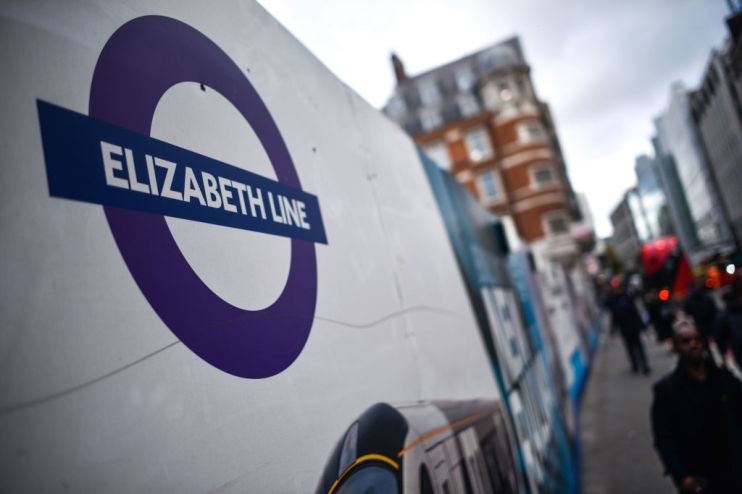
It will not have escaped your notice that Transport for London opened a new part of the network last week. The Elizabeth line, which began life as Crossrail in a 1974 rail report, currently runs in three separate stages across the capital. It will eventually extend from Reading and Heathrow in the west to Shenfield and Abbey Wood in the east. It will slash journey times in London: Paddington to Tottenham Court Road will fall from 20 minutes to just four, while Bond Street to Whitechapel, previously a 24-minute journey, will be more than halved to ten.
Infrastructure connoisseurs have been thrilled by the new line. Transport historian Tim Dunn described it as “absolutely joyfully gobsmackingly wonderful”, while Centre for London boss Nick Bowes rejoiced in the “smooth and quiet” journey. The prime minister noted that it supported 55,000 new jobs and 1,000 apprenticeships, and would boost the UK economy by £42bn.
It has taken a long time to get here. The notion of an east-west link was first mooted by wartime planners. The project was given legislative authority in 2008 and work began in 2009. The Elizabeth line is several years behind schedule, and TfL has opted for a gradual opening to avoid the problems which beset Thameslink when it was unveiled in 1988. It is also £4bn over budget. Nevertheless, the new line will provide not only shorter journey times but extra capacity, making a significant contribution to the public transport infrastructure of London, and this is cause for optimism.
Last week’s opening of the Elizabeth line should make us ponder about how we fund our transport system.The line was completed with money from TfL, the Greater London Authority and the Department for Transport but mostly through a loan from HM Treasury, which will be repaid by receipts from the Mayoral Community Infrastructure Levy and the Business Rate Supplement. This loan has been granted at commercial rates of interest, and TfL has, in Nick Bowes’s phrase, “maxed out its credit card”.
We need a new funding model for our transport infrastructure – and fiscal devolution is a popular slogan. The UK remains a brutally centralised polity, with local government able to vary only council tax and business rates, and the majority of council spending coming from a grant from Whitehall. This makes local authorities less accountable, less responsive and less responsible. We have to find a way to allow much more of the revenue spent locally to be raised locally, but this has to fit into a wider picture of devolving political power to recognisable and effective local leaders and institutions.
Even if the Elizabeth line has only been operating for a few days, it is permissible to ask, what next for London? The Bakerloo line extension has been discussed for nearly ten years, and would take the Tube beyond Elephant and Castle through Lewisham and Catford and, potentially, as far as Beckenham. TfL argues that this project would improve the connectivity of south-east London, providing better access to central London to new homes and jobs.
At the other extreme of the compass, the West London Orbital would employ underused railway lines to connect Hounslow and Kew Bridge with Hendon and West Hampstead. Again this would cut journey times but – as with the Bakerloo extension – it has another, more strategic purpose: TfL estimates that it would allow the building of nearly 16,000 new homes.
Transport, housing and employment are strongly intertwined. An efficient and integrated public transport system makes a real difference for our capital. That’s why it is important to pay for it in the most efficient way possible.
But we must also look beyond London to the whole of the UK. Critics have accused the Elizabeth line of purely benefiting the capital while infrastructure in the regions goes from bad to worse, and there is some truth in this.
It need not be a zero-sum game, but if the government is serious about advancing innovation and growth up and down the country, then infrastructure is perhaps the most obvious big-ticket item which will make a substantial contribution.
The Elizabeth line could be the last project funded by scrabbling around for cash at the final gasp. If we can think broadly and imaginatively, we can install systems which will allow local and regional infrastructure to be planned, developed, built and paid for as close as possible to the communities it is intended to serve. But there is a terrifying number of moving parts, and they can only be lubricated by goodwill and cooperation.