Skip to content
Wednesday 2 September 2026London --:--Frankfurt --:--Zurich --:--
NewslettersSearchEN · DE · FR
MorningWire

European business, markets and politics

FTSE 100
10,756.45
-0.30%
DAX
25,839.33
-0.50%
CAC 40
8,280.63
-0.26%
STOXX 50
6,362.15
-0.11%
  • Europe
  • Markets
  • Business
  • Economy
  • Regulation
  • Politics
  • Opinion
More
GermanyFranceEU InstitutionsCompetitionPublic AffairsBankingTechnologyEnergy
  • Germany
  • France
  • Europe
  • Markets
  • Business
  • Economy
  • Regulation
  • Politics
  • Opinion
  • DE
Tuesday 03 December 2019 4:12 am  |  Updated:  Monday 02 December 2019 5:55 pm

Green belt reform isn’t political dynamite, it’s a major part of fixing the housing crisis

By: Claire Fallows

Add as a preferred source on Google
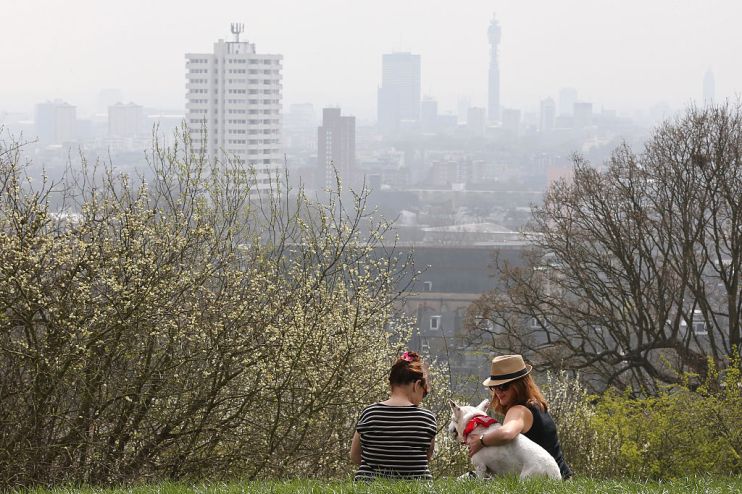
Warnings Are Given On Air Pollution Levels Across The UK

As in every election campaign, the need to build huge numbers of new homes for voters is common ground across the main political parties. 

Yet, also treading a well-worn path, both the Conservatives and Labour continue through their manifestos to promise to protect the green belt and to prioritise development of brownfield land. 

Will this approach deliver the homes the country needs?

That there is a massive housing shortage in the country is not news. Headline figures aside, however, the imperative for buyers is all about location. Politicians need to deliver homes in places where people want to live. But search online for a map of the green belt, and you will see how extensive it is, constraining development around many of our towns and cities. 

Indeed, the fundamental planning aim of the green belt is to check urban sprawl — by keeping land permanently open.

Tinkering with the green belt is political dynamite — or so successive governments would have you think. In fact, green belt boundaries are constantly up for review, every time a local authority located within it brings forward a new plan setting out its development strategy. That has led to proposals for land to be released from the green belt across the UK, including (for example) in East Hertfordshire, Guildford and St Albans, to meet housing need.

So why not stop the pretence and undertake a strategic review of whether the green belt remains fit for purpose in 2019 and beyond? Look at the potential for releasing land in sensible places around transport hubs and routes into cities, especially given that much of it isn’t particularly “green” at all. 

Read more

Let them build homes near stations, but let them be beautiful too

Two town planners examining a London monorail concept model with buildings and a proposed elevated train line.

Then consider the creation of replacement areas where appropriate to preserve openness, facilitating access to green spaces to improve wellbeing (which is not currently a planning purpose of the green belt).

Now, what of the panacea of brownfield development? Compared to greenfield sites, many brownfield sites are complex and therefore expensive to develop. There could be contamination from previous uses, conflicts with services or infrastructure, rights to light for neighbouring residents. The list is long and the risk can be high, reducing the attractiveness of these sites to developers.

To prioritise development of brownfield sites would actually require a sea change in planning policy and increased flexibility, especially around affordable housing and demands for contributions towards infrastructure. Yet planning policy in many areas, especially around London, is pushing in the opposite direction, with policymakers setting ever more stringent requirements for affordable housing delivery in particular. 

Development of brownfield sites should of course remain a central plank of government policy. But at the same time, any government must recognise that development of relatively unconstrained greenfield sites provides a critical contribution towards the need for affordable homes. 

Sticking to the old rhetoric about prioritising brownfield sites and preserving the green belt is not only misleading, but also a missed opportunity. The uncomfortable truth is that solving the housing crisis will require development on all types of land.

Main image credit: Getty

Read more

House prices suffer biggest August slump in eight years 

Aerial view of colorful residential houses built on a hillside, nestled among green trees, representing housing markets

Share this article

  • Facebook
  • X
  • LinkedIn
  • WhatsApp
  • Email

Similarly tagged content:

Sections

  • News
  • Opinion

Categories

  • Opinion
  • Politics

Related Topics

  • London business

Trending Articles

  • Vodafone and Deliveroo look to patch up Reform ties after Yusuf prison threats

  • Trio of firms poised to quit London Stock Exchange as exodus gathers pace

  • Jaguar reveals the Type 01’s screen-free interior

  • Easyjet’s over-60s recruitment push is economically necessary

  • Jim O’Neill: Capital gains tax hike ‘looms’ as top option for Burnham

More from Morning Wire

  • Let them build homes near stations, but let them be beautiful too

    Opinion
    Two town planners examining a London monorail concept model with buildings and a proposed elevated train line.
  • House prices suffer biggest August slump in eight years 

    Property
    Aerial view of colorful residential houses built on a hillside, nestled among green trees, representing housing markets
  • Burnham to hand mayors power to overrule local councils’ planning decisions

    Politics
    Andy Burnham speaking at a press conference, wearing a suit and tie, addressing current political issues in Manchester.
  • Housebuilder shares soar on Burnham council housing plans

    Property
    Construction worker on a new house roof, surrounded by scaffolding and building materials, illustrating housebuilding.
  • Housebuilder Bellway calls for ‘immediate’ cut to stamp duty

    Property
    Barratt Redrow said it remained "confident" in its medium-term target of 22,000 homes a year.
  • Stealth taxes intensify London first time buyer struggle

    Property
    Row of classic London terraced houses with white facades and green doors, indicating UK property.
  • Ofgem warns on grid squeeze after Heathrow data centre approved

    Tech
    Sir Keir Starmer's government has prioritised investment data centres as a major pillar of its plans to boost economic growth.
  • London doesn’t compete with other UK cities, it competes with global capitals

    Opinion
    London skyline with The Shard, Walkie Talkie, and Gherkin skyscrapers towering over residential buildings and autumn trees.
MorningWire

Independent European business, markets and political news for decision-makers.

Morning Briefing

Europe

  • Germany
  • France
  • EU Institutions
  • Europe

Business

  • Markets
  • Business
  • Economy
  • Regulation
  • Competition
  • Public Affairs

Editorial

  • Opinion
  • Editorial Policy
  • Corrections
  • Contact

Company

  • About Morning Wire
  • Privacy Policy
  • Terms of Use
  • Cookie Policy
© 2026 Morning Wire Ltd · Published by Morning Wire Media, Bahnhofstrasse 65, 8001 Zürich, Switzerland
Privacy · Terms · Cookies · Facebook