Skip to content
Tuesday 1 September 2026London --:--Frankfurt --:--Zurich --:--
NewslettersSearchEN · DE · FR
MorningWire

European business, markets and politics

FTSE 100
10,824.26
+0.29%
DAX
26,258.11
0.00%
CAC 40
8,334.50
0.00%
STOXX 50
6,420.16
0.00%
  • Europe
  • Markets
  • Business
  • Economy
  • Regulation
  • Politics
  • Opinion
More
GermanyFranceEU InstitutionsCompetitionPublic AffairsBankingTechnologyEnergy
  • Germany
  • France
  • Europe
  • Markets
  • Business
  • Economy
  • Regulation
  • Politics
  • Opinion
  • DE
Friday 04 October 2019 4:26 am  |  Updated:  Thursday 03 October 2019 6:28 pm

Green finance is still stuck in the slow lane after New York Climate Week

By: Daniel Klier

Add as a preferred source on Google
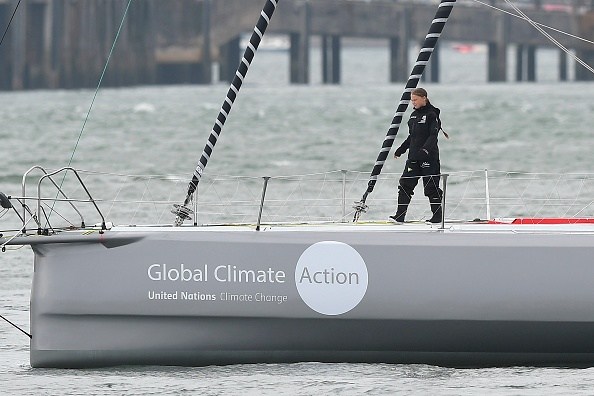
Swedish climate activist Greta Thunberg stands aboard the Malizia II IMOCA class sailing yacht off the coast of Plymouth, southwest England, on August 14, 2019, as she prepares to start her journey across the Atlantic to New York where she will attend the UN Climate Action Summit next month. - A year after her school strike made her a figurehead for climate activists, Greta Thunberg believes her uncompromising message about global warming is getting through -- even if action remains thin on the ground. The 16-year-old Swede, who sets sail for New York this week to take her message to the United States, has been a target for abuse but sees that as proof she is having an effect. (Photo by Ben STANSALL / AFP) (Photo credit should read BEN STANSALL/AFP/Getty Images)

Attendees to New York Climate Week were treated to the city at its late-September finest – blue skies, warm sunshine, and a hint of fall colour creeping into the leaves of Central Park. 

Unfortunately, the beauty of this backdrop did not inspire enough concrete action on climate change. For many, the overriding feeling from last week will have been frustration. 

There is no doubt that progress is being made on green and sustainable investment. We expect to see $180-240bn of green bond issuance by the end of 2019, significantly more than forecast in January. 

Much of that issuance funds renewable energy projects, a core requirement for reducing carbon emissions. The long transition to a zero-carbon future has certainly begun. 

New York Climate Week also saw several new commitments and initiatives from governments, financial institutions, and big businesses that will, for example, help fight the effects of drought, reduce plastic waste, and decarbonise supply chains. 

In addition, it was the most senior debate on climate change to date, with participation from dozens of heads of state and chief executives from major corporations. 

These are positive steps – but they are still small steps. We have to recognise that we are still not moving fast enough to solve the climate problem. 

The week in New York highlighted three major shortcomings with our current approach.

First, despite record growth in the market, we are still far short of where we need to be on green and sustainable investment. 

The gap is daunting. To keep the global temperature rise below two degrees celsius, we need roughly $6-8 trillion of investment per year by 2030. However, we estimate current total investment to be only $1 trillion per year at the very best. 

Read more

Meet the new energy minister who believes lower growth is “good news”

Katie White, a woman with curly blonde hair, smiling in a navy blazer and white collared shirt against a dark background.

That money needs to flow into almost every economic sector to create substantial change in our growth model – power generation, transport, waste management, housing, and real estate. We’ve barely begun to look at areas where high carbon emissions are hard to abate, such as marine freight and air travel. 

We’re also not seeing enough green investment in emerging economies, where missed opportunities now could lock in high emissions for decades to come. 

New commitments and initiatives to solve these various sectoral problems are obviously welcome, but this raises the second major shortcoming: fragmentation. 

By pledging a few hundred million here and there, we are only really nibbling away at the climate challenge, rather than striking at its heart. We need far more cooperation between financial institutions and participants in these various industries to unlock systematic investment, and a more coherent policy framework from governments to guide the transition. 

Finally, perhaps the biggest source of frustration in New York (aside from the traffic) was the fact that we ended up discussing the same old barriers to green investment – a lack of disclosure from issuers and investors, inconsistent product definitions, mismatch of money supply and money demand – without finding ways to overcome them. 

These barriers have been evident in the market for some time, and until they are dealt with we have no chance of hitting the ambitious green investment targets. 

From now on, urgency should be our climate change watchword. Urgency to tackle emissions, to boost investment into green projects and to preserve our fragile ecosystems.

New York is famous for being a fast-paced town, but we need far more energy than was on display there last week.

Main image credit: Getty

Read more

ReNew Reports 25.6% Reduction in Scope 1 & 2 Emissions and 24.7 Billion Units of Clean Power Generated in FY 2025-26

Share this article

  • Facebook
  • X
  • LinkedIn
  • WhatsApp
  • Email

Similarly tagged content:

Sections

  • News
  • Opinion

Categories

  • Banking
  • Business
  • Opinion

Trending Articles

  • Jaguar reveals the Type 01’s screen-free interior

  • Treasury ‘tells Healey’ to consider tax on banks and oil

  • Pensioners to hand over bank statements in government benefits crackdown

  • City firms mandate phone and face-to-face comms bootcamps for Gen Z lawyers

  • Jamie Carragher: HMRC petitions for Sky Sports star to be declared bankrupt

More from Morning Wire

  • Meet the new energy minister who believes lower growth is “good news”

    Opinion
    Katie White, a woman with curly blonde hair, smiling in a navy blazer and white collared shirt against a dark background.
  • ReNew Reports 25.6% Reduction in Scope 1 & 2 Emissions and 24.7 Billion Units of Clean Power Generated in FY 2025-26

    Business Wire
  • Tories say households could save £540 a year by scrapping net zero

    Energy
    Kemi Badenoch speaks, gesturing with hands, while Claire Coutinho listens intently at a table with coffee cups.
  • Expect Sun after the rain at York

    Sport
    Two racehorses and jockeys in purple and green silks thunder down a grassy track, turf flying.
  • KBRA Releases Research – UK Buy-to-Let RMBS: Stabilising Credit, Broadening Issuance

    Business Wire
  • Gatwick expansion green-lit as court throws out activists’ appeal

    Transport & Infrastructure
    20m passengers have flown through Gatwick this year
  • Scottish Government Selects Planet for AI-Enabled Monitoring to Support Sustainable Agricultural Reform

    Business Wire
  • Moore can set Ozat on Road to victory at Shergar Cup

    Sport
    Jockey in green and dark green silks, wearing a green helmet, smiling with goggles around his neck
MorningWire

Independent European business, markets and political news for decision-makers.

Morning Briefing

Europe

  • Germany
  • France
  • EU Institutions
  • Europe

Business

  • Markets
  • Business
  • Economy
  • Regulation
  • Competition
  • Public Affairs

Editorial

  • Opinion
  • Editorial Policy
  • Corrections
  • Contact

Company

  • About Morning Wire
  • Privacy Policy
  • Terms of Use
  • Cookie Policy
© 2026 Morning Wire Ltd · Published by Morning Wire Media, Bahnhofstrasse 65, 8001 Zürich, Switzerland
Privacy · Terms · Cookies · Facebook