The green myth: Why renewables destroy jobs

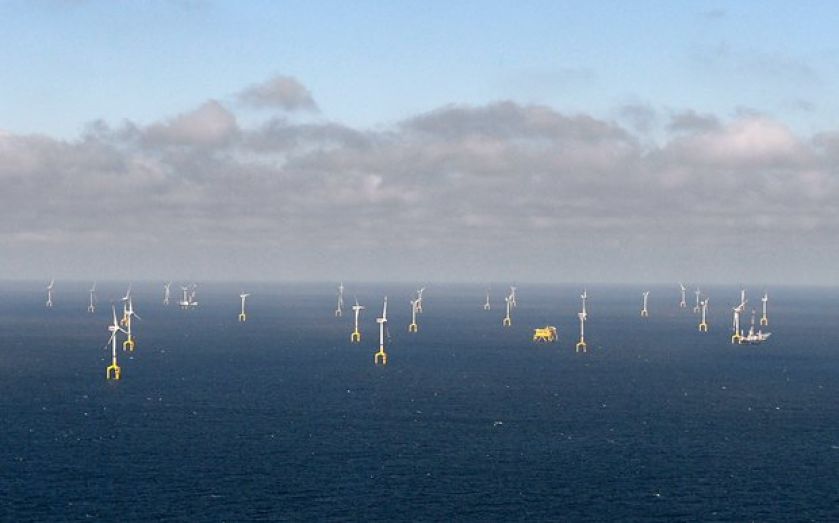
POLITICIANS and activists are celebrating the news that Siemens is prepared to invest £160m in facilities in and around Hull to produce and install offshore wind turbines. It sounds like good news: 1,000 new jobs. But our embrace of renewable energy will cost jobs overall, not create them.
The UK is putting eye-watering amounts of money into low carbon sources of energy. Most commentators think £200bn needs to be invested in the energy sector, mostly to meet government environmental targets.
Any investment on that scale will create jobs. If you invested hundreds of billions in building statues of Nick Clegg, workers would be needed to design, build, install and maintain them. It is also reasonable to believe that there will be more jobs in the energy sector if we shift from conventional energy – coal and gas – to renewable energy. More labour is needed to generate a megawatt hour of renewable energy than a megawatt hour of conventional energy. If we switched to generating our energy by hiring people to run around in circles, carrying children’s pinwheels, it would almost certainly create even more jobs. But do we really think that would be a good idea, or increase overall employment?
We pay a price for those green jobs. Energy firms need to make a profit on that £200bn investment, and the return on that investment will come straight out of the pockets of families and businesses. Analysts at Liberum Capital expect that total power costs could double by 2030 in real terms.
Higher energy bills will mean that families and businesses have less to spend on other goods and services. That means fewer jobs at the many, many firms which would have supplied those goods and services.
We can also expect energy-intensive industry to steadily relocate to countries where energy is cheaper. Due to high energy prices, the International Energy Agency expects Europe to lose 10 per cent of the global export market for energy-intensive goods.
If these industries leave, that costs jobs. Hundreds of jobs were lost when the Alcan Lynemouth aluminium smelter closed in 2012, for example, and the other sectors which depend on energy-intensive industries as suppliers or customers will also suffer.
The government is trying to help, and industry representatives welcomed the relief announced at the Budget. But for firms planning long-term investments, reliefs are a limited and unreliable substitute for the low prices competitors enjoy in the US.
Studies in Spain, Italy and Germany have confirmed that renewable energy subsidies destroy more jobs than they create overall. It is only possible to create net green jobs if you secure significant net exports. Basic arithmetic tells you not everyone can win that game.
Every country cannot simultaneously sell more wind turbines or solar panels than it buys, and installing lots of expensive offshore wind turbines in Britain will not make us the most competitive location in which to make them. Over time, the jobs will leak to other countries where costs (including energy costs) are lower. While it is understandable that people are celebrating in Hull now, they need to plan for the day when the constant stream of expensive subsidies which offshore wind depends on dwindles, and the green jobs dry up.
The sad thing is that jobs lost when energy policy raises prices are at firms that could have otherwise stood on their own two feet. Britain’s green jobs are no sustainable replacement.
Matthew Sinclair is an economist and the author of Let Them Eat Carbon: The Price of Failing Climate Change Policies, and How Governments and Big Business Profit From Them.