City leaders are constantly proposing ‘green initiatives’ but is the Square Mile really doing everything it can for climate change?

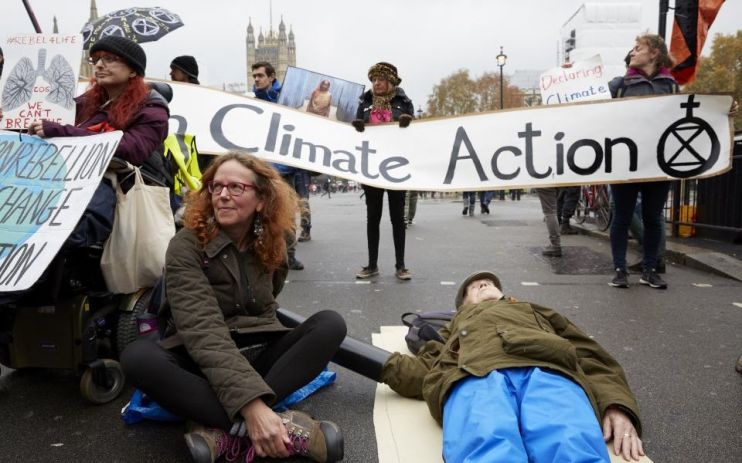
During London Climate Action Week, a series of sustainability initiatives are capturing airtime. The Canada’s ‘Climate Action Strategy’ aims to make the Square Mile net-zero in its carbon emissions by 2040. A group of law firms has adopted a ‘greener litigation pledge’. And financial services, which form the backbone of the City, are keen to recognise their contribution to global warming and to reduce it.
Laudable words, but do they translate to action? The inconvenient answer is that we don’t know. Central banks, regulators, corporations, and investors have become increasingly aware that sustainability matters, and that “non-financial” data are critical to the core institutions of the modern financial system. But for all the pledges and commitments to a greener future, the data required to understand how close we are to a truly sustainable City is sorely lacking.
There are some 700 competing frameworks for companies to report their sustainability data within. Some are compulsory, some voluntary, and with little consistency across the spectrum. And regulation around what must be reported, and how, is only set to increase. None of the financial services firms from the FTSE report on the emissions generated directly from their investments, for example.
Data we do get is not treated equally. ESG ratings agencies auditing the same company may judge them on completely different factors or measures. Two similar companies may achieve wildly different ratings due to the inclusion or omission of a single piece of data. Companies, naturally, are not sure what they should report, and this creates the temptation to ‘play the ratings’ to simply get the right boxes ticked, without properly committing to more sustainable practices and operations.
Indeed, our data show that of all the City firms, none is on target to meet the Paris goal of limiting global temperature increases to 1.5 degrees Celsius or below by 2050. This is regardless of the public commitments of company boards.
This is a huge issue. The financial services sector will play a crucial and influential role in mainstreaming ‘green’ products and services in coming years. If we don’t know whether the seller is on track with its own sustainability journey, how might we judge their product?
The European Union is reported to be considering a wide range of measures to bring the bloc’s financial sector into line with its climate plans, with mandatory climate-related disclosures for companies being mooted. It may well follow that if the City is to trade on equivalent terms with the EU, then these standards would also apply here. Even if it doesn’t, the EU’s ambitious package of measures will reallocate capital towards a more sustainable future, setting the standard for other markets to follow.
The 20th century proved that high-quality financial information is necessary to create capital markets that are transparent, accountable, and efficient. In the 21st century, we need high quality sustainability information to encourage a move towards a greener future. We won’t achieve this unless companies and regulators work together to produce a reliable data landscape. Initiatives like the (NGFS) are a great example.
Market forces may well be quicker than regulation to drive a change of pace and behaviour among companies towards being more sustainable. A company’s own insurers and auditors will pick up on the toxic nature of a poor ESG reputation or performance, hiking costs for a company to bear. Climate-related and environmental threats also represent a source of financial risk. And an increasingly values-led investor base may divert their capital elsewhere.
The transition to net-zero is by definition a journey. The majority of finance is neither green nor brown – more a shade of olive. By 2040, will the City be carbon neutral? I hope so. But for now, we must strive for better data and transparency to assess just how green companies in the Square Mile really are.