Greengage CEO: ‘Despite the noise around bad actors like FTX, the industry is very much here to stay’

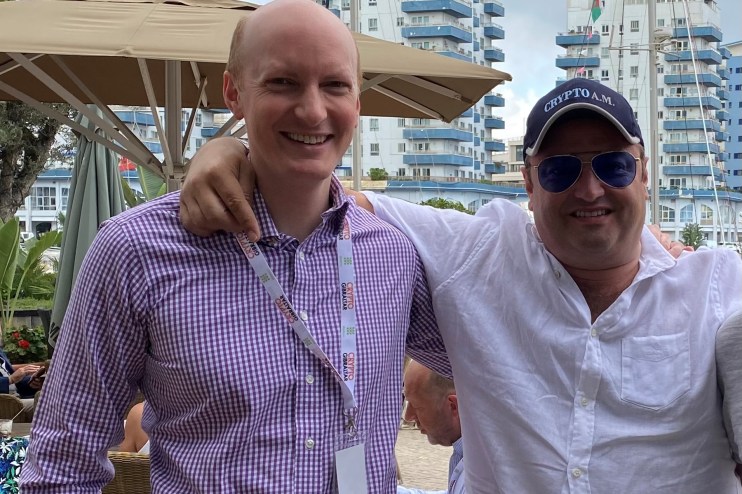
It’s the time of year when Crypto AM editor-at-large James Bowater discusses ups and downs, highlights and low points in the burgeoning crypto and digital assets industry with Sean Kiernan, founder and CEO of Greengage:
JB: Would you say 2022 has been a pivotal year for crypto and digital assets?
SK: Yes, it has! We will talk about FTX and other ‘crypto disasters’ later, but overall, the industry has had a pretty good year and industry sentiment is that the sector will continue to grow at pace in the next few years.
Despite the revolving door at No 10, the UK government has reaffirmed its commitment to establish the UK as a world leading fintech hub (including digital technologies) and has put forward amendments to the Financial Services and Markets Act 2000 to include crypto assets and associated activities within the rules ‘relating to financial promotion and regulated activities’. These amendments more or less bring the UK in line with the EU’s Markets in Crypto Assets (MiCA) legislation, considered the world’s first comprehensive set of rules for the emerging crypto sector.
JB: Do you anticipate greater interest in and adoption of new crypto and digital assets and technologies by financial institutions?
SK: Traditional financial institutions and service providers ARE sitting up and taking notice, even if yet to be fully engaged. There is an understandable degree of circumspection given what has just happened with FTX, and continuing negative narrative around cryptocurrencies particularly, which may impact faster and greater adoption in the shorter term. Nonetheless, many global players have established new digital assets businesses or are looking at how they might expand ‘traditional’ solutions (particularly in the post-trade arena) to support new assets and players.
We are at the beginning of what industry peers are referring to as ‘the era of convergence’ between traditional (TradFi), centralised (CeFi) and decentralised (DeFi) financial markets technologies. The challenge for traditional players is how to upgrade legacy ecosystems to connect (and interoperate) with new digital infrastructure. It is not just a question of ripping out and replacing things; a lot of core infrastructure can continue to add operational value and we need to bring these together with new technologies like blockchain and AI. I think that the next 5 or so years will see the launch of a number of hybrid services and solutions that help market participants navigate successfully from the old to new working models (one could call this the path to Web 3).
I heard someone say recently, “crypto has had its dot.com moment”. Despite the noise around bad actors like FTX, the industry is very much here to stay and will continue to develop and grow, weeding out the bad apples along the way.
JB: There’s been much talk about Central Bank Digital Currencies (CBDCs) but many are still at the pilot or experimental stage. What’s happening?
SK: According to the BIS 2021 CBCD survey, 9 out of 10 Central Banks are exploring CBDCs with more than half developing their own. Retail CBDCs present many opportunities to individuals and businesses in an increasingly cashless society, with particularly interesting use cases in geographies where access to traditional cash can be problematic. Work is also continuing on the development of wholesale CBDCs to support cross-border payments efficiencies.
The Bahamian CBDC, the Sand Dollar, has been in circulation for over a year. More than a hundred million individuals have transacted billions of yuan in digital renminbi (e-CNY). Sweden has developed a proof of concept and the US Federal Reserve has noted that “a CBDC could fundamentally change the structure of the US financial system”. The Digital Pound Foundation, a UK cross-industry initiative, is one of a number of bodies considering technology and policy considerations for a sterling CBDC.
Of course, there are fundamental challenges to overcome in respect of creating new forms of money, not least around the sticky issue of personal identity and data privacy and protection. Should CBDCs be modelled on old school cash or online and card payments, or pitched somewhere between the two? Overall, progress in 2022 is encouraging and we can expect to see more positive movement next year and beyond.
JB: Is crypto technology’s huge energy consumption a major impediment to success?
SK: The question of crypto mining, energy consumption and associated environmental impacts is always sensitive. Interestingly, however, we seem less bothered about the enormous – and often wasted – energy consumption required to power traditional financial activity, particularly with regard to newer cloud-based, big data processing models.
Nonetheless, the successful Ethereum Merge this year (which surprised many market commentators with its smooth implementation) will drastically reduce the power consumption required by the Ethereum blockchain by an astonishing 99.9%. It’s likely that the Ethereum Merge experience will influence development of other blockchains.
JB: Will the recent FTX fiasco – and other well-publicised crypto ‘failures’ – impact financial markets’ interest in digital assets?
SK: Some traditional players may run scared in the short-term. However, it depends on investors’ appetite for risk; there will certainly be some who will see current low prices as the opportunity to enter the market. While a number of key firms have failed in 2022, there is general industry acknowledgement that this asset class is here to stay – along with the underlying blockchain technology.
If the FTX collapse forces more scrutiny of gaps in current regulation and market infrastructure this may actually make TradFi more bullish in the longer-term as it will mitigate some inherent counterparty risks and reduce the likelihood of future market failures.
JB: What do you see as the coming year’s focus with respect to the industry and what are Greengage’s main priorities?
SK: Digital assets and technologies are going to have an increasing presence and relevance in tomorrow’s financial services. In terms of regulation, despite the original mission of crypto to decentralise finance and disintermediate traditional financial institutions, there IS a need for some level of industry regulation to protect market participants, including consumers, dipping their toes in these new, largely untested, waters. Whether existing financial markets legislation is sufficient or entirely new rules are needed to reflect the vagaries and complexities of a code is a subject for another day.
Over the next 12 months, we will continue to focus on our innovative e-money accounts and next generation merchant banking services targeting UK SMEs and cryptoasset firms. Through our collaboration with Eldora, a Web 3.0 finance hub, we are also excited to explore opportunities to develop and offer services in the metaverse.
It is an exciting step in our future development. According to Gartner research, by 2026, 25% of people will spend at least one hour a day in a metaverse, whether for work, leisure, education, entertainment or simply engaging in a social community. Whatever their reasons, it makes good sense to be ‘present’ wherever and however users want to reach us.