Skip to content
Saturday 22 August 2026London --:--Frankfurt --:--Zurich --:--
NewslettersSearchEN · DE · FR
MorningWire

European business, markets and politics

FTSE 100
10,816.56
+0.64%
DAX
26,136.56
+0.59%
CAC 40
8,484.43
+0.37%
STOXX 50
6,462.22
+0.63%
  • Europe
  • Markets
  • Business
  • Economy
  • Regulation
  • Politics
  • Opinion
More
GermanyFranceEU InstitutionsCompetitionPublic AffairsBankingTechnologyEnergy
  • Germany
  • France
  • Europe
  • Markets
  • Business
  • Economy
  • Regulation
  • Politics
  • Opinion
  • DE
Tuesday 01 December 2020 1:36 pm  |  Updated:  Tuesday 01 December 2020 1:42 pm

Halo saved Romain Grosjean but safety questions remain for Formula 1 over barriers and car chassis

By: Christopher Deacon

Add as a preferred source on Google
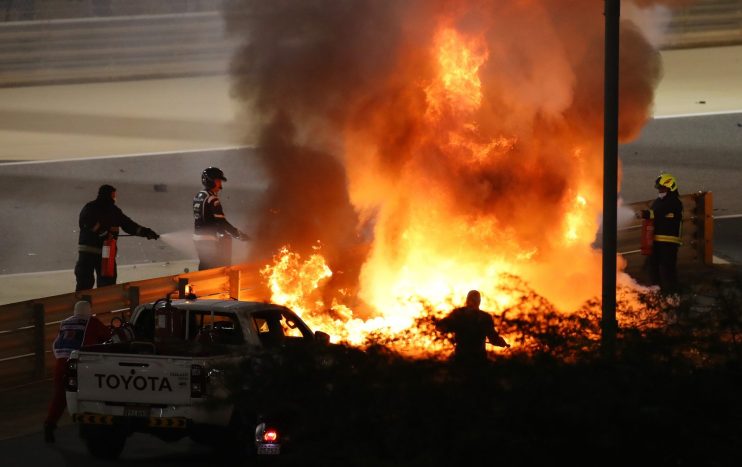
Romain Grosjean escaped with only minor injuries after a horror crash at the Bahrain Grand Prix last weekend

As details emerge of Romain Grosjean’s shocking accident at the Bahrain Grand Prix last weekend, Formula 1 drivers and commentators appear to be in unanimous agreement on one thing: the halo cockpit head protection device looks to have saved Grosjean’s life.

Grosjean came across the track and clipped Daniil Kvyat on the first lap of the race, causing him to veer off the track at high speed and hit the steel crash barrier.

His car sliced in two, which appears to have allowed fuel to escape. Fire then quickly engulfed Grosjean and his vehicle, as can be seen in striking images from the race.

The halo cockpit protection device meant that Grosjean avoided almost certain severe trauma to his head. He was able to escape the vehicle and has suffered only relatively minor burns to his hands and ankles. 

Motorsport’s governing body, the FIA, introduced the halo to Formula 1 cars in 2018.

Formula 1 is an open-cockpit series, meaning that drivers are particularly exposed to the potential of serious head trauma in the event of a collision, notably with trackside furniture or other vehicles.

The wishbone design of the halo fits over the open cockpit of the car and provides the driver with additional head protection during a race. 

Vindication for the halo after initial controversy

At the time of the halo’s introduction, it was the subject of considerable controversy, including from some of the leading motorsport competitors it was designed to protect.

The FIA had been working on the design at the time of Jules Bianchi’s fatal accident at the 2014 Japanese Grand Prix.

Bianchi suffered lethal head injuries in a violent collision with a mobile crane.

Following Bianchi’s death, the FIA accelerated plans to introduce the halo, despite resistance from other participants and stakeholders in Formula 1.

Read more

Five tracks that could host Formula 1 in coming years

Red Ferrari F1 car speeding past a blurred Malaysian flag banner on a race track

Grosjean’s accident is unequivocal vindication that the halo represents a big step forward in the FIA’s continued objective of improving safety. 

Nevertheless, following Grosjean’s accident in Bahrain, many questions remain in relation to important safety aspects.

Crash barriers and chassis in the spotlight

The immediate reaction of other drivers, including Sebastian Vettel and Pierre Gasly, was to observe that the crash barrier and the car should be designed to withstand an impact of this nature.

They reacted with shock at how Grosjean’s vehicle pierced through the crash barrier and split into two.

Like any sport, Formula 1 drivers accept an element of risk, but at the same time they participate on the basis that basic safety features have been robustly tested to ensure they are effective in the event of a crash.

Formula 1 cars regularly reach speeds in excess of 200kmph, and Grosjean’s collision happened at a force of 53G.
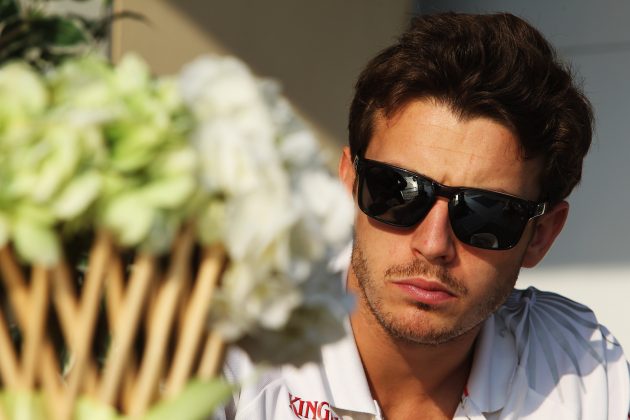
Formula 1 driver Jules Bianchi died after a crash at the Japanese Grand Prix in 2014

Arguably, the crash barrier and the car should be able to withstand a collision of this nature, which is an entirely foreseeable part of the sport, without such dramatic consequences.

The standard of crash barriers at FIA sanctioned race tracks, as well as the integrity of the Formula 1 race car chassis, will be firmly in the spotlight and a key focus in the FIA’s accident investigation which will now follow. 

The accident shows how the continued drive to improve safety standards, even in relation to well-established, fundamental aspects of racing such as the car’s bodywork and crash barriers, can still save lives and avoid serious injury. And in the case of the halo, may even appear to work miracles. 

Christopher Deacon is a Partner at Stewarts law firm, and specialist international injury lawyer. He represents clients following serious international accidents, and previously acted for the family of F1 driver Jules Bianchi following his accident at the 2014 Japanese Grand Prix, which led to his death in 2015.

Read more

Inside Formula 1’s £10,000 hospitality ticket on the back of a moving lorry

Black Formula 1 hospitality truck driving on a race track at dusk, bright lights and sponsor banners visible.

Share this article

  • Facebook
  • X
  • LinkedIn
  • WhatsApp
  • Email

Similarly tagged content:

Sections

  • Life&Style

Categories

  • Sport

Related Topics

  • Formula 1
  • motorsport

Trending Articles

  • House prices in wealthy London boroughs fall by up to £300,000

  • As it happened: FTSE 100 rallies after JD Sports drags on blue chips; oil jumps again

  • Mike Ashley’s Frasers offers to pay personal shoppers in Harvey Nichols takeover

  • Ratcliffe’s Ineos saves Runcorn plant

  • Amazon says it buys books in bulk to ‘improve products’

More from Morning Wire

  • Five tracks that could host Formula 1 in coming years

    Sport Business
    Red Ferrari F1 car speeding past a blurred Malaysian flag banner on a race track
  • Inside Formula 1’s £10,000 hospitality ticket on the back of a moving lorry

    Sport Business
    Black Formula 1 hospitality truck driving on a race track at dusk, bright lights and sponsor banners visible.
  • Williams turns to AI to squeeze more from F1 cost cap

    Tech
    Blue Formula 1 race car on track with AWS branding on the barrier, another car in the background.
  • Exclusive: Former Formula 1 figure invests £100k into new Pacer app dubbed ‘Sports Tinder’

    Sport
    White Martini Racing Formula 1 car on a grey track with green grass borders, in motion during a race.
  • Will Formula 1 need to refund sponsors for cancelled Middle East races?

    Sport Business
    Max Verstappen in a Red Bull Racing cap and team shirt, looking contemplative with hands under his chin.
  • Exclusive: Plans for city-based, private equity-backed athletics league revealed

    Sport Business
    Female official in headset and hat raising a starting pistol at a sporting event, crowd blurred in background
  • Lotus Emira 420 Sport: the best Emira yet is a downsized supercar

    Life&Style
    Bright orange Lotus Emira 400 Sport speeding on a racetrack under a blue sky with clouds.
  • Rolls-Royce Spectre Series II review: Driving a Rolls on a racetrack – yes, really…

    Life&Style
    Light blue Rolls-Royce Spectre electric coupe driving fast on a race track under a cloudy sky.
MorningWire

Independent European business, markets and political news for decision-makers.

Morning Briefing

Europe

  • Germany
  • France
  • EU Institutions
  • Europe

Business

  • Markets
  • Business
  • Economy
  • Regulation
  • Competition
  • Public Affairs

Editorial

  • Opinion
  • Editorial Policy
  • Corrections
  • Contact

Company

  • About Morning Wire
  • Privacy Policy
  • Terms of Use
  • Cookie Policy
© 2026 Morning Wire Ltd · Published by Morning Wire Media, Bahnhofstrasse 65, 8001 Zürich, Switzerland
Privacy · Terms · Cookies · Facebook