Skip to content
Friday 28 August 2026London --:--Frankfurt --:--Zurich --:--
NewslettersSearchEN · DE · FR
MorningWire

European business, markets and politics

FTSE 100
10,811.59
+0.18%
DAX
26,512.06
+0.55%
CAC 40
8,402.06
+0.99%
STOXX 50
6,472.31
+0.74%
  • Europe
  • Markets
  • Business
  • Economy
  • Regulation
  • Politics
  • Opinion
More
GermanyFranceEU InstitutionsCompetitionPublic AffairsBankingTechnologyEnergy
  • Germany
  • France
  • Europe
  • Markets
  • Business
  • Economy
  • Regulation
  • Politics
  • Opinion
  • DE
Thursday 18 June 2020 10:38 am  |  Updated:  Wednesday 17 June 2020 8:43 pm

Happy returns: Can employees refuse to go back to work?

By: Simon Kerr-Davis

Add as a preferred source on Google
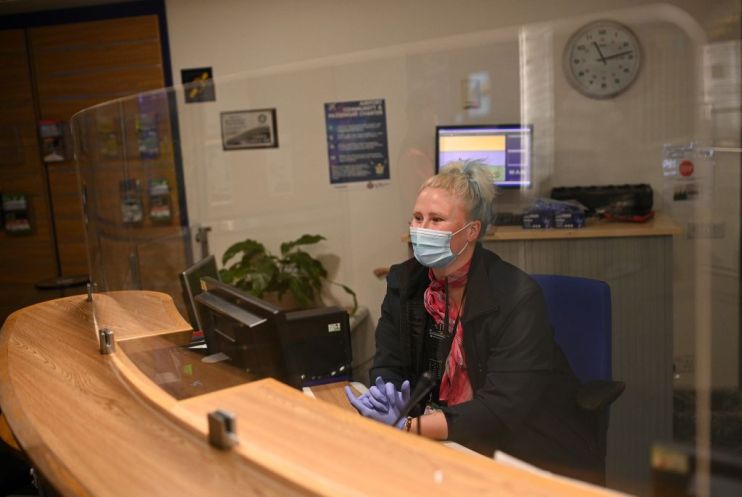
BRITAIN-HEALTH-VIRUS-TRANSPORT-TRAVEL
Clear communication will go a long way to allow workplaces to reopen in a way that is safer for everyone

As London comes out of hibernation and employees begin to return to work, companies are being confronted with the true scale of the challenge of running a business in the middle of a pandemic.

Employees, meanwhile, are feeling anxious that their workplace might remain unsafe.  

But is turning to the law the best way to address these concerns?

Employers have a duty to provide a safe workplace and owe obligations to their staff under health and safety laws. Social distancing, hand-sanitisers, health questionnaires and clear guidelines are all being brought into play by employers to try to ensure the safety of their workers in line with government guidance. But even with these steps, employers may be faced with a genuine and heartfelt reluctance to attend work in the current crisis.

For certain employees who are within the identified vulnerable categories or are living with people who are, the risks of Covid-19 are still very real and reluctance to return is entirely understandable. And even for workers outside these groups, there may still be high degrees of apprehension and anxiety about the return.

Social media has publicised the existence of section 44 of the Employment Rights Act as a way for employees who fear that their workplace may still present a danger to legitimately refuse to return to work. 

However, the legal reality is less clear-cut. Section 44 does provide employees with protection, but in a much more restricted set of circumstances than people on social media are being led to believe. The section protects an employee who refuses to attend work from being put under any detriment, but only where the employee reasonably believes that there is a “serious and imminent” danger.  

Read more

AI startup raises $20m to build ‘digital twins’ of office workers

Modern open-plan office space with employees working at computers, bright lighting, and large windows.

In the current circumstances, although Covid-19 may be a significant threat to public health, this does not necessarily translate into a serious and imminent threat to an individual employee’s safety. The medical evidence has consistently shown that those who are not in one of the identified vulnerable categories are unlikely to suffer a serious outcome even if they contract the virus, which in itself remains statistically unlikely.  

If the employer has properly applied the government guidance and has provided appropriate protections for its staff, then it further undermines the reasonableness of a belief that the workplace presents a serious and imminent danger to health.

Employees taking a rigid line and refusing to attend work may therefore be risking much if they place too much weight on this legislation.

That said, employers should also avoid taking too rigid a line.  The return to work will understandably be a source of anxiety for many, and people are entitled to expect that their employers will apply the government guidance designed to protect them.  

The compact between employer and employee is a complex one, but trust should sit at its centre — and that means talking to each other. Employees should consider carefully the protections that have been put in place and should speak up if they see any failings, raising concerns with their employer. Employers in turn need to build trust by acting on those concerns and exploring the reasons for a reluctance to return to work, rather seeing this as employees simply being “difficult”.  

Open, clear and timely communications in both directions in an atmosphere of trust and respect will go a long way to allow workplaces to reopen in a way that is safer for everyone.

Main image credit: Getty

Read more

Hargreaves Lansdown orders staff back to office

Hargreaves Lansdown financial services office exterior with company logo prominently displayed on modern building façade

Share this article

  • Facebook
  • X
  • LinkedIn
  • WhatsApp
  • Email

Similarly tagged content:

Sections

  • Jobs and Money
  • Opinion

Categories

  • Legal
  • Opinion
  • Personal Development

Trending Articles

  • Pensioners to hand over bank statements in government benefits crackdown

  • Jamie Carragher: HMRC petitions for Sky Sports star to be declared bankrupt

  • Brewdog founder James Watt hits out at ‘total silence’ over new venture

  • Lloyds Bank and Halifax users unable to use app in latest outage

  • Economists urge Bank of England to halt bond sales as borrowing costs climb

More from Morning Wire

  • AI startup raises $20m to build ‘digital twins’ of office workers

    Tech
    Modern open-plan office space with employees working at computers, bright lighting, and large windows.
  • Hargreaves Lansdown orders staff back to office

    Investing
    Hargreaves Lansdown financial services office exterior with company logo prominently displayed on modern building façade
  • Neurodiversity, employment law and ‘reasonable adjustments’ – the new HR headache

    Law
    Four brown puppies playing on a green mat with pink toys and a paw-print blanket.
  • City leaders weigh employment policy alternatives to non-competes

    Law
    LONDON, ENGLAND - OCTOBER 15: Commuters cross London Bridge on October 15, 2024 in London, England. Estimates for the September 2024 payroll indicate that the number of employees rose by 0.4% compared with September 2023, a rise of 113,000 employees. (Photo by Dan Kitwood/Getty Images)
  • Cloudflare Gives Companies Full Visibility to Audit & Analyze AI Use

    Business Wire
  • Cloudflare OS Is the First AI Workspace Built Around How Companies Actually Work

    Business Wire
  • Was Fifa able to sack senior exec Lamour without consequences? A lawyer explains

    Sport Business
    Getty Images news-related image depicting a significant event or person, suitable for general news and business contexts.
  • The Summer Slowdown can become a thing of the past

    Partner
    Four colleagues on a sunny rooftop terrace, enjoying drinks and conversation with city buildings in the background.
MorningWire

Independent European business, markets and political news for decision-makers.

Morning Briefing

Europe

  • Germany
  • France
  • EU Institutions
  • Europe

Business

  • Markets
  • Business
  • Economy
  • Regulation
  • Competition
  • Public Affairs

Editorial

  • Opinion
  • Editorial Policy
  • Corrections
  • Contact

Company

  • About Morning Wire
  • Privacy Policy
  • Terms of Use
  • Cookie Policy
© 2026 Morning Wire Ltd · Published by Morning Wire Media, Bahnhofstrasse 65, 8001 Zürich, Switzerland
Privacy · Terms · Cookies · Facebook