‘Hard to accept’: Small firms round on energy intensive subsidies

So-called standing charges are going up by as much as 94 per cent for all businesses bar the most energy intensive come April. Many are up in arms, writes Ali Lyon
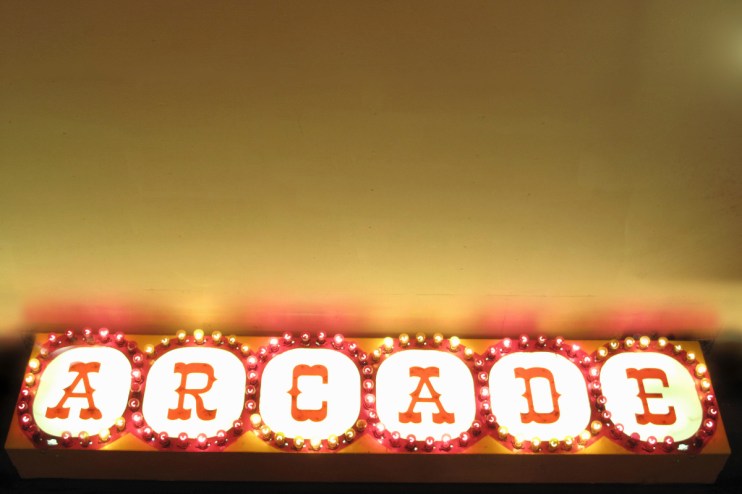
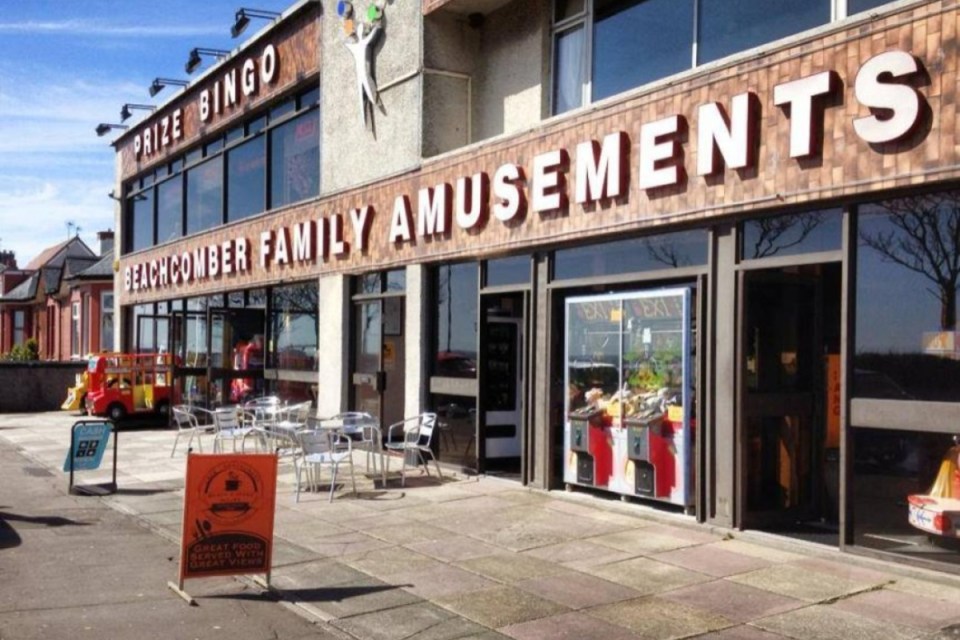
Even businesses like Michael Morris’s Beachcomber Amusements – a traditional arcade that treats guests in the small Fife town of Leven to games of air hockey and slot machines – must move with the times.
Indeed, with the Neart Na Gaoithe mega wind farm little more than 10 miles off its coast, the efforts being ploughed into the UK’s energy transition are hard for Morris and his handful of staff to ignore. And so at no small cost to himself, Beachcomber Amusements has been playing its own small part in the drive to cut emissions.
The arcade’s array of bright and flashing lights have all been converted from filament bulbs to LEDs. Its windows looking out onto the unforgiving North Sea have been fitted with double glazing to reduce heat leakage. And he has changed his amusements’ settings to ensure they are only on when its thrill-seeking customers are present.
Expensive as those changes were, Morris was happy to have made them. Or at least he was, until – slipped out in an announcement last month – the energy regulator Ofgem confirmed that a tariff applied to his and most UK’s businesses’ energy bills would nearly double, in large part because of discounts the government has handed to Britain’s most energy intensive firms.
Standing charges hike will leave energy bills even higher
So-called standing charges – a standard cost added to households’ and businesses’ energy bills that helps fund energy investment and improvements to the electricity network – will increase by 94 per cent for all but the UK’s 7,000 biggest commercial electricity users.
Those firms – which tend to sit in strategically important areas like steelmaking, chemicals, and data centres – have been excused from the charges via an Energy Intensive Industries (EII) Exemption in a bid to keep the UK’s ailing heavy industries afloat.
Made as part of the government’s long-awaited industrial strategy, the announcement was hailed by some as a crucial boost to a corner of the UK economy that was buckling under cripplingly high energy prices in some quarters of UK plc. Make UK, the manufacturing sector’s largest industry body, praised it as a “giant and much needed step forward“, and Jonathan Reynolds – the then business secretary – said it had been “the single biggest ask of us from businesses”.
But with the recently announced standing charge hike due to come in April, the move has left the vast majority of owners ‘normal’ businesses – like Morris’s amusement park – feeling like they are being left to pick up the bill of big polluters.
“In effect, we are being asked to subsidise the electricity costs of large, energy-intensive companies,” he tells Morning Wire. “From the perspective of a small, electricity-dependent business, a seaside family amusement arcade, this is particularly hard to accept.”
Morris is far from the only business owner reticent to bankroll the energy needs of colleagues in larger, more intensive industries.
Sky-high energy costs ‘unfair and unsustainable’
Firms are battling rising labour costs, fuelled by the government’s £25bn raid on payroll taxes and above-inflation minimum wage costs, continued business rate uncertainty and looming uncertainty surrounding the government’s flagship workers’ rights package.
And industry chiefs from hospitality, retail and those that represent small firms – all of whose members don’t come close to falling under the government’s EII exemption – view this as yet another body blow to interests that they already feel are under assault on multiple fronts.
“The proposed changes are neither fair nor sustainable,” says Chris Owen, the policy lead at the British Retail Consortium. “If you factor it in alongside wider costs that are affecting the industry, it’s a substantial, substantial impact.”
More to the point, all of this is coming on top of British businesses already facing the highest energy costs of any major economy; a fact that hasn’t – according to the Federation of Small Businesses (FSB) – gone unnoticed by business owners up and down the country.
The proposed changes are neither fair nor sustainable. They will have a substantial impact.
Over three times as many of the lobby group’s small business members cite the cost of utilities as a top ‘three barrier to growth’ now than did before the onset of the 2022 energy crisis. And this, according FSB executive director Craig Beaumont, is fuelling concerns around changes to standard charges.
“Our main concern is that in comparison to energy consumption – which a member can decrease either by consuming less energy or becoming more energy efficient – standing charges, are constant and unchangeable,” he says. “So it’s a burden for our members [and is] a stagnant cost, and it continues to make up more and more of your whole bill.”
Changes crucial for creaking energy grid
Ministers argue the charges are necessary to help fund crucial upgrades to the UK’s creaking, decades-old grid. And a spokesman for the Department for Energy Security and Net Zero said Britain’s energy infrastructure was “outdated and has suffered from years of under-investment” just when it is being subject to unprecedented demands from the electrification of our energy mix.
Beaumont and Owen both concede these upgrades must happen, and that energy costs are too high for the most energy intensive sectors. But rather than forcing businesses to plug the government’s fiscal hole yet again, they believe the revenue should come out of general taxation, where the load is spread more widely.
“We would be keen for a bit more diversification, so not every investment being added onto standing charges,” Beaumont says. “Because governments are recuperating the cost of investment to the grid and suppliers are recuperating their cost of investment as well.”
As for Morris and his amusement arcade, the standing charges will start appearing on his energy bills this April, which he says even bring the curtain down on decades of fun at his assortment of bowling alleys, fruit machines and motorbike simulators.
“We are now being told that heavy industry will receive direct financial support funded from the pockets of small, responsible businesses like ours,” he says. “Combined with the increased standing charges, it all makes operating a small business increasingly difficult and unsustainable.”