Has Reeves realised she’s reached the limits of taxation?

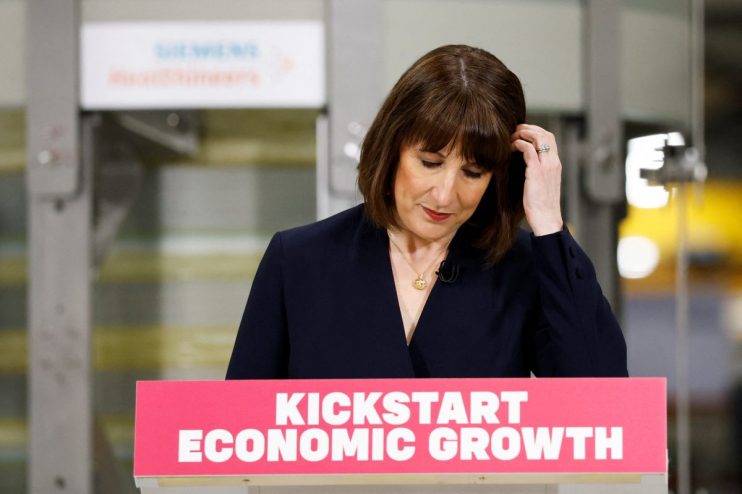
Much of the economic damage has already been done, but in ruling out wealth taxes and further pay deals with doctors, at least the Chancellor is allowing a shimmer of light to peep through, says Paul Ormerod
England’s cricketers narrowly failed to score the 374 runs needed to beat India in the final Test match at the Oval. It would have been a monumental achievement, their second highest ever total chasing a victory in the last innings.
It feels just as much of a challenge to write a positive column with which to start the holidays. But there are at least some straws in the wind.
One of these is that the Chancellor, Rachel Reeves, seems on the point of accepting that the limits to taxation have been reached, unlike many of the infantile Leftists who permeate the Parliamentary Labour Party.
Of course, further tax rises are inevitable in the autumn given Labour’s spending commitments. It seems certain, for example, that income tax thresholds will be frozen for longer. There is much talk about restricting tax relief on pension contributions.
However, the Chancellor appears to have ruled out a wealth tax, saying last week that “I think we’ve got the balance right in terms of how we tax those with the broadest shoulders”.
Much of the economic damage has already been done, but at least the Chancellor is allowing a shimmer of light to peep through.
Raising productivity
A key implication, if the next round of tax increases is indeed the last, is that the government will finally have to get round to raising the productivity of the public sector.
It cannot be stated too often that this is at the same level it was in 1997. In other words, no overall improvement in efficiency in almost 30 years.
Even a modest increase of just 10 per cent, one third of one per cent each year, would have freed up around £50bn a year.
The blame here has to be shared equally between the Labour governments of 1997 to 2010 and the Conservative ones from 2010 to 2024. This, at least, is not the making of the current government, whatever other economic havoc they may have caused.
But there are signs that the government is beginning to understand the problem.
In the first flush of victory in July 2024, Labour showered money on groups such as the resident (formerly junior) doctors and the train drivers. They hailed this as an achievement, settling the strikes by doing so.
Of course, any fool can settle strikes by giving the unions exactly what they want, just as over 1,000 years ago the invading Danes could be persuaded to leave by handing them large sums of money.
The problem was that they came back the next year for more.
This time round, unlike the Anglo-Saxon rulers, the government seems not at all keen on dishing out more Danegeld. The new set of demands by the doctors are being faced down, and it seems likely that the same will happen to the nurses when they go on strike, as seems inevitable.
The health service is the source of more good news. In Cambridgeshire, since February the NHS has been trialling an AI-based physiotherapy service.
The system provides same-day automated video appointments with a digital physiotherapist using an app which responds directly to information supplied by the patient.
Waiting times have been slashed. With back pain alone, over 800 hours of clinician time is being saved each month.
This is a huge improvement all round. Patients get treated much more rapidly, and valuable medical staff time is saved, boosting productivity.
The potential for AI to improve public service delivery is enormous. The Prime Minister makes the right noises about it but does not seem to have the focus to drive the changes through.
Well, as the saying goes, one swallow does not make a summer, but at least there are a few reasons to be cheerful.
Paul Ormerod is an Honorary Professor at the Alliance Business School at the University of Manchester, an economist at Volterra Partners LLP, and author of Against the Grain: Insights of an Economic Contrarian, published by the IEA in conjunction with Morning Wire