Has the time come for healthtech?

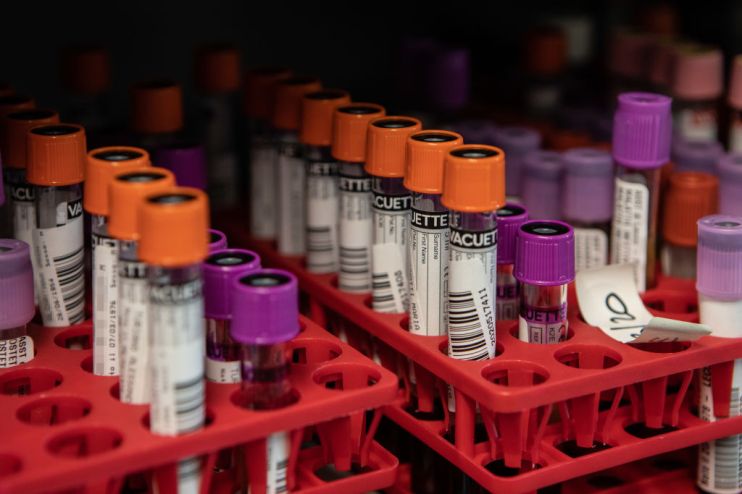
More than 110,000 coronavirus cases have been recorded worldwide and at least 3,800 patients have died.
Only time will tell how devastating the effect of coronavirus will ultimately be on the human population and the global economy.
Whatever happens, the Covid-19 virus could well go down in history as a moment of profound change in the way we use technology to replace the real with the virtual.
Coronavirus has already prompted an increase in homeworking and even sceptics are being forced to acknowledge the benefits of cloud services and video conferencing.
Similar transformations are taking place in the medical technology sector. Coronavirus may prove to be the tipping point when healthtech goes mainstream.
The reason? New technology is bringing medics to the front-room of potential sufferers, rapidly reducing the risk of contamination.
When the Spanish Flu infected 27 percent of the world’s population in 1918 all we could do was intervene physically — to isolate people and
diagnose them. Not much had changed by 2009, when the N1H1 virus took root.
This time, however, healthtech is playing a crucial role in the fight back against the potential pandemic.
In China they have used robots to consult patients and deliver drugs. Artificial intelligence is being used to look at scans for signs of the disease.
Public health officials around the world are urging doctors to embrace smartphones for information dissemination while the World Health Organisation has advised hospitals and clinics to expand their use of digital triage systems.
These digital front doors — like the service Doctorlink provides to the NHS — are an effective way of acting as a first line of defence to help diagnose potential sufferers without spreading the disease.
Instead of visiting a GP or hospital, people can answer a series of questions on their smartphone which can identify potential high-risk individuals based on their symptoms and contact and travel history.
If there is a possibility they might have coronavirus they can be advised to self-isolate and directed immediately to a relevant healthcare professional without ever needing to leave their home.
This information is collected and analysed in helpful ways — and very quickly. Healthcare professionals are then able to track the spread of the virus and highlight outbreaks ahead of time.
Another benefit of digital triage systems is that the guidelines and information can be instantly updated whenever new information is learned about the virus or new advice issued.
Although healthtech has been growing quickly, the adoption of it —amongst professionals and patients — has not always been a smooth process.
In recent months, there has been resistance to technology from people who fear that it will displace real doctors.
However, the best health technology doesn’t replace clinicians, it supports them — and takes a lot of the strain away so they can focus on the patients in most urgent need. With coronavirus spreading around the globe, we have reached the
tipping point when the benefits of health technology cannot be denied any longer.
Matt Hancock, secretary of state for health, is a champion for new technology who recognises the efficiencies and benefits it can bring. He set up the new unit NHSX to lead technology, data and digital change.
According to the Association of British Healthtech Industries, the UK sector already employs 127,400 people in 3,860 companies, with a combined turnover of £24bn.
A recent report by PwC said that health technology interventions will help to deliver net benefits to the UK economy of between £8bn and £13bn over the next financial year.
But change has been too slow. It is to everyone’s advantage for such changes to happen more quickly.
Rupert Spiegelberg is chief executive of Doctorlink, the leading provider of online symptom assessment to the NHS and is available to more than 10m patients.