Skip to content
Sunday 13 September 2026London --:--Frankfurt --:--Zurich --:--
NewslettersSearchEN · DE · FR
MorningWire

European business, markets and politics

FTSE 100
10,650.44
+0.39%
DAX
25,568.56
+0.82%
CAC 40
8,179.77
+0.78%
STOXX 50
6,325.13
+0.90%
  • Europe
  • Markets
  • Business
  • Economy
  • Regulation
  • Politics
  • Opinion
More
GermanyFranceEU InstitutionsCompetitionPublic AffairsBankingTechnologyEnergy
  • Germany
  • France
  • Europe
  • Markets
  • Business
  • Economy
  • Regulation
  • Politics
  • Opinion
  • DE
Wednesday 14 October 2020 4:18 am  |  Updated:  Tuesday 13 October 2020 4:44 pm

Heavy-handed Westminster diktats have eroded trust — now only localised Covid policy can restore it

By: Paul Ormerod

Add as a preferred source on Google
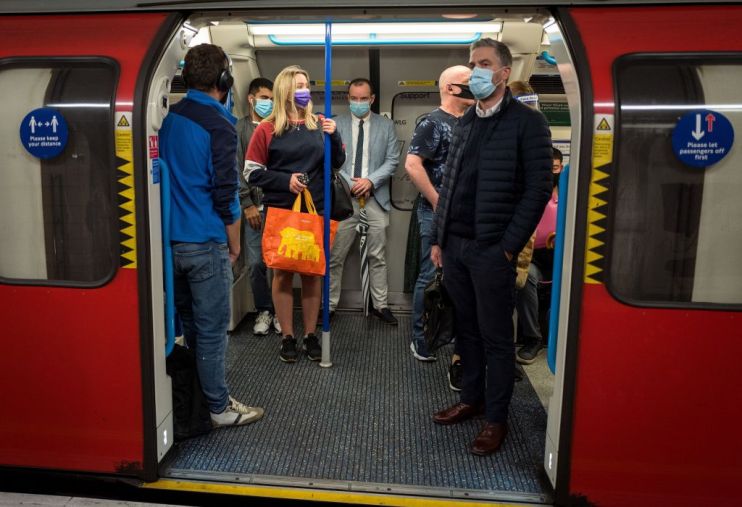
BRITAIN-HEALTH-VIRUS-ECONOMY-TRANSPORT
People need to feel a sense of ownership of any restrictions which are asked of them

Last month, the official group of scientific advisers — SAGE — warned the government that only a quarter of those who need to self-isolate due to coronavirus symptoms were in fact doing so.  

This illustrates a concept which is of great practical importance: namely the conflict between individual and collective rationality.  

Consider Margaret Ferrier, an SNP MP (who has since had the whip removed) who travelled by train from London to Scotland despite knowing she had tested positive for Covid-19. Better for her personally to be at home in Glasgow than stuck in a London hotel for a week, but worse for society as a whole as she risked spreading the virus to everyone on the train with her.

The textbook model of economics neatly sidesteps this potential problem. It sets up an idealised situation in which there is no conflict between individual and collective rationality.  The task is then to discover what assumptions about behaviour are needed to be compatible with such an outcome.

It is a very challenging question, and several of the early Nobel Prizes in economics were awarded for work in this area.

Economics itself has moved on in recent decades and pays much more attention to the potential rift between what is good for the individual and what is good for society.

One of the most influential thinkers in this area is Elinor Ostrom who received the Nobel prize in economics only three years before her death in 2012. Her work is very relevant in the Covid crisis.

Her doctoral dissertation was on how farmers and others in Southern California solved the problem of water management in their local area. For individuals with favourable locations, it was rational to grab as much water as they could. But collectively, this was a bad outcome. Others would be short of water.

Read more

‘We’d love an apprentice – but the government has made it too expensive’

Technician in blue shirt operating a large metal lathe machine, industrial manufacturing process

The key feature of Ostrom’s work was to show that individuals were capable by their own actions of avoiding conflicts of individual and collective rationality. It was not necessary to have a heavy-handed regulator trying to impose a solution from above.

Like the Nobel laureates before her, she basically worked out what assumptions were needed for this to happen. 

An essential element is that those involved must have some feeling of being part of a group. Further, disruptive and self-serving behaviour should be speedily identified and punished, in ways which are seen to be fair within the group. People also need to feel a sense of ownership of any restrictions which are asked of them.  

When Boris Johnson announced lockdown on 23 March, in effect the nation was the group. For a period, most people behaved with proper regard to others.  

The subsequent maze of complex and often contradictory diktats issued by health bureaucrats and politicians since then has eroded much of this trust.  

Countries such as Germany which had locally based Covid strategies from the outset have fared much better than the centrally planned attempts in the UK, in part because they have been able to maintain this trust and sense of community.

At long last, the UK government shows signs of being willing to trust local authorities to do what is best for their area — in the form of local lockdown rules. They may still get it wrong, but local autonomy on Covid policy at least gives the chance of restoring the trust which is essential to any successful strategy.

Main image credit: Getty

Read more

Amanda Blanc has worked her magic at Aviva

Aviva's deal to buy Direct Line was agreed in March

Share this article

  • Facebook
  • X
  • LinkedIn
  • WhatsApp
  • Email

Similarly tagged content:

Sections

  • Markets & Economics
  • News
  • Opinion

Categories

  • Economics
  • Opinion
  • Politics

Trending Articles

  • Wetherspoon boss: ‘Not up to Burnham’ to choose who is on the high street 

  • Badger Beer maker Hall & Woodhouse doubles profit ahead of tie-up with James May

  • Four interest rate hikes loom despite surprise economic growth

  • Primark sales slip as owner dresses up retailer for demerger

  • Barclays faces legal scrutiny over role in £90m ‘Ponzi scheme within a Ponzi scheme’

More from Morning Wire

  • ‘We’d love an apprentice – but the government has made it too expensive’

    Economics
    Technician in blue shirt operating a large metal lathe machine, industrial manufacturing process
  • Amanda Blanc has worked her magic at Aviva

    Insurance
    Aviva's deal to buy Direct Line was agreed in March
  • The BBC shouldn’t push Londoners to accept antisocial phone behaviour 

    Opinion
    Passengers inside a graffiti-covered London Underground train car, some looking at phones, others observing the interior.
  • Dolly Parton: The rhinestone capitalist

    Opinion
    Dollywood gift shop with Dolly Parton t-shirt, books, mugs, and colorful floral display. A person browses merchandise.
  • Forecast rain sweet for Sugar and Kalpana

    Sport
    Jockey in pink helmet and green/white silks riding a brown racehorse at full gallop on a green track.
  • HSBC shares slump as finance chief set to exit

    Banking
    HSBC has sold off a major UK division.
  • The way Dolly Parton announced her death is an inspiration to us all

    Life&Style
    Dolly Parton, blonde hair, white jacket, black lace top, black skirt, singing into a microphone on stage
  • Starling plans to ‘come out swinging’ in diversification bid

    Fintech
    Smiling woman, potentially Starling CEO, over city skyline with STARLING branding
MorningWire

Independent European business, markets and political news for decision-makers.

Morning Briefing

Europe

  • Germany
  • France
  • EU Institutions
  • Europe

Business

  • Markets
  • Business
  • Economy
  • Regulation
  • Competition
  • Public Affairs

Editorial

  • Opinion
  • Editorial Policy
  • Corrections
  • Contact

Company

  • About Morning Wire
  • Privacy Policy
  • Terms of Use
  • Cookie Policy
© 2026 Morning Wire Ltd · Published by Morning Wire Media, Bahnhofstrasse 65, 8001 Zürich, Switzerland
Privacy · Terms · Cookies · Facebook