Hello, 999? Our ambulances are in desperate need of emergency surgery

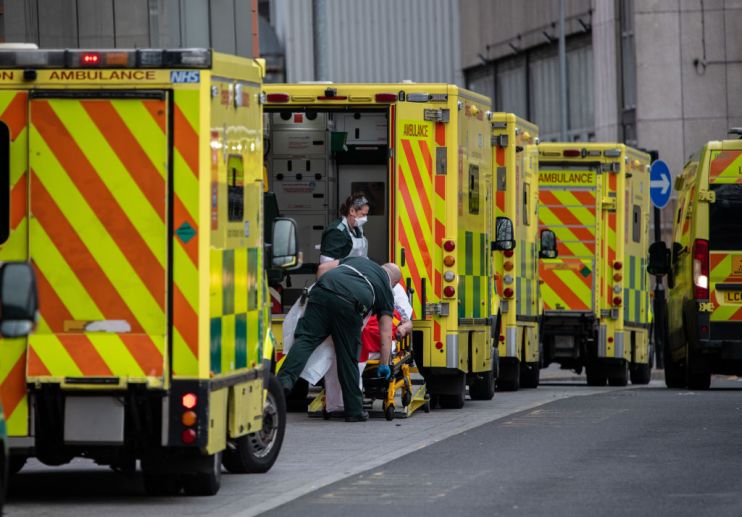
Therese Coffey has only been in post for two weeks, as she reminded everyone, repeatedly, while announcing her plans to fix the health service. Her proposal is not quite as easy as ABCD, but that’s what it’s called. Ambulances, backlogs, care, doctors and dentists. Among her plans, people will be able to see their GP within two weeks, and the sometimes catastrophic delays for ambulances will be a top priority.
Putting A first is not just because of the alphabet. This summer saw record highs for ambulance delays.The standard waiting time at the point of handover – when the patient is moved from the ambulance to the hospital – is 15 minutes. This summer it went up to four, six and in the worst cases 12 hours. But according to Coffey, 45 per cent of these delays came from just 15 of the 219 NHS trusts.
This crisis is not happening in a vacuum – rather, it’s like a dog chasing its tail. Ambulances reach the hospital, but there is no space on wards to transfer patients once they get out of A&E. Almost 30,000 people waited longer than 12 hours to be admitted to hospitals from A&E in England this July.
Only once the patient has been discharged to the hospital can the ambulance leave and pick up someone else. But in the meantime, hours go by. Ambulance crews used to pick up 7 to 8 people in their 12 hours shift, now they sometimes only see one or two.
Coffey promised to have a “laser like focus” on this crunch point of the handover, but gave little more details on the practicalities.
“It’s not the first time we see this, but we’ve never seen it this bad”, says Dr. Katherine Henderson from the Royal College of Emergency Medicine. The problem with space in hospital beds is worsened by a delay in discharging patients who should be in social care.
Discharging patients should be relatively easy. When someone is deemed ready to leave the hospital, a plan is put in place so they can receive help at home, or a short-term bed in a community hospital, or have their longer-term needs addressed. “Getting that support up and running quickly, and agreeing who’s going to pay for it, takes time”, says Sarah Scobie, deputy director of research at the Nuffield Trust. This delay is not good for the patient, and definitely not good for the hospital, which can’t accommodate new people.
Social care, in the meantime, has been whipsawed by shrinking budgets and staff. The sector heavily relied on immigrants, but the post-Brexit visa regime has made it hard to come here for this kind of work. Twelve years of Conservative rule have overseen extensive cuts in local authorities funding – and social care falls under their remit. People who can’t access social care go to the hospital instead. Coffey acknowledged this problem, and promised more future spending – yet it remains unclear where this money will come from after the hike to National Insurance contributions was scrapped.
In July, 42 integrated care systems were introduced in England. These are partnerships between health and social care institutions, aimed at improving services at the local level. In principle, there’s no better way to tackle the root causes of the NHS crisis. But the system has only been introduced, and will take some time to reap the fruits.
In the meantime, people’s lives are on the line. Those waiting for an ambulance for a long time are “without a doubt the highest at risk and have a very real chance of coming to harm as a consequence of that wait”, says Richard Webber, a senior NHS paramedic. This places a huge burden on ambulance staff, with high levels of dissatisfaction and cases of people leaving the profession altogether. Coffey has promised to boost call handlers picking up 999 and 111 calls, but said little on ambulance staff.
NHS staff have come up with initiatives to alleviate the stress on the system. There’s RAT – Rapid Assessment and Treatment – where people are quickly discharged where they can be seen by a senior person. There are HALOs – Hospital Ambulance Liaison Officers, ambulance staffers who stay in the emergency department with patients until they can be seen by a doctor, so that the rest of the ambulance crew can leave to pick up other people in need.
These quick solutions are smart – but small. NHS staff don’t want money thrown at the problem – they want comprehensive solutions, starting from social care and moving up to hospital wards. The crisis in ambulance service is only the tip of the iceberg; the new Health Secretary now has little choice but to peer underwater and look the problem in the face.