
How herd behaviour affects your money

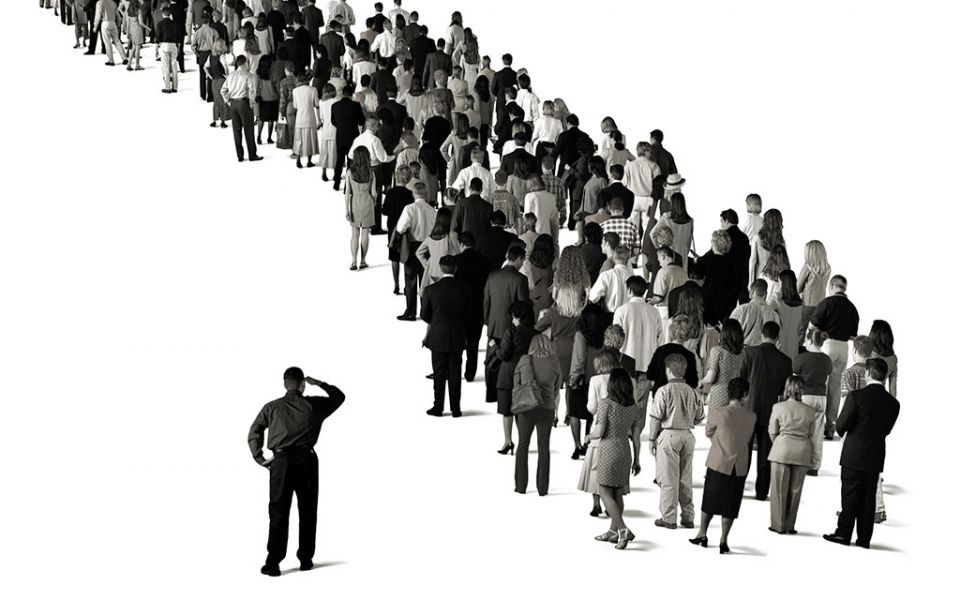
We are not quite the independent thinkers we like to believe we are.
People value safety in numbers. And while imitating the actions of others is sometimes a good thing, we should be aware of how making decisions without thoughtful analysis can have a negative impact on our finances.
Animals regularly move together as a group, or as a herd. This impetus can build from just one or two leaders with others quickly falling behind them – occasionally to their detriment. We might scoff, but humans similarly display such ‘herd behaviour’ in all walks of life by following the crowd.
We often use mental shortcuts – sometimes known as heuristics – to help us make our decisions. Nobel prize-winning economist Daniel Kahneman classified two main systems that drive the way we think: System 1 (fast, intuitive and emotional) and System 2 (slower, more deliberative and more logical). Because we are busy, and sometimes lazy, most of the time we use System 1.
With herd behaviour, System 1 is usually in play; if everyone else is doing something it must be a good idea, or at least safe. This is acceptable when ordering in a restaurant or finding the best route out after a concert – but our finances demand more consideration. We should pay more attention to the critical deliberations of System 2.
Robust or bust
Investors may suffer when they are caught up in a swell of people buying or selling particular investments. The same can be true for commercial property or housing deals when an area becomes rapidly popular.
Of course, on many occasions investments may rise (or fall) and locations may become attractive for the right reasons. But we must be mindful of the excess scrutiny that regions receive if they are high profile (such as China), or if products are enjoyed (such as Apple). And that familiarity is not an indicator of a robust investment.
After all, herd behaviour has a long history of driving booms and crashes. Notable examples include the Dutch tulip bulb mania of the 17th century, the “dotcom” bubble of the late 1990s and the property market dynamics that precipitated the global financial crisis in 2007/2008.
We should be wary today, too, of cryptocurrencies or regions attracting large inflows because they are perceived to be the ‘next big thing’.
What we can do to avoid the herd
The lessons for all investors, whether we witness a rush to buy or a stampede for the exit, is to stop and think before acting. Or as Daniel Kahneman nicely put it in Thinking, Fast and Slow: “This is your System 1 talking. Slow down and let your System 2 take control.”
At Netwealth we remain watchful of the effects of herd behaviour. “Any action we take on behalf of our clients demands rigorous analysis,” says portfolio manager Simon McConnell. “This is why we try and ignore our own biases and that of others and always explore the fundamentals of where we are looking to invest and what we are trying to achieve.”
Importantly, falling under the spell of such biases as herd behaviour is not evidence of a lack of intelligence. Sir Isaac Newton, arguably the smartest person of his era, was scooped up in the wild enthusiasm for a hot stock of his day, the South Sea Company. The company tanked and Newton lost millions in today’s money.
Herd behaviour is just one of many biases that can affect how we behave when investing. To help keep them to a minimum, many individuals choose a wealth manager such as Netwealth to make decisions for them – or if it is more beneficial, to decide not to act at all.
Please remember that when investing your capital is at risk.