Holocaust Memorial Day: in the words of survivors

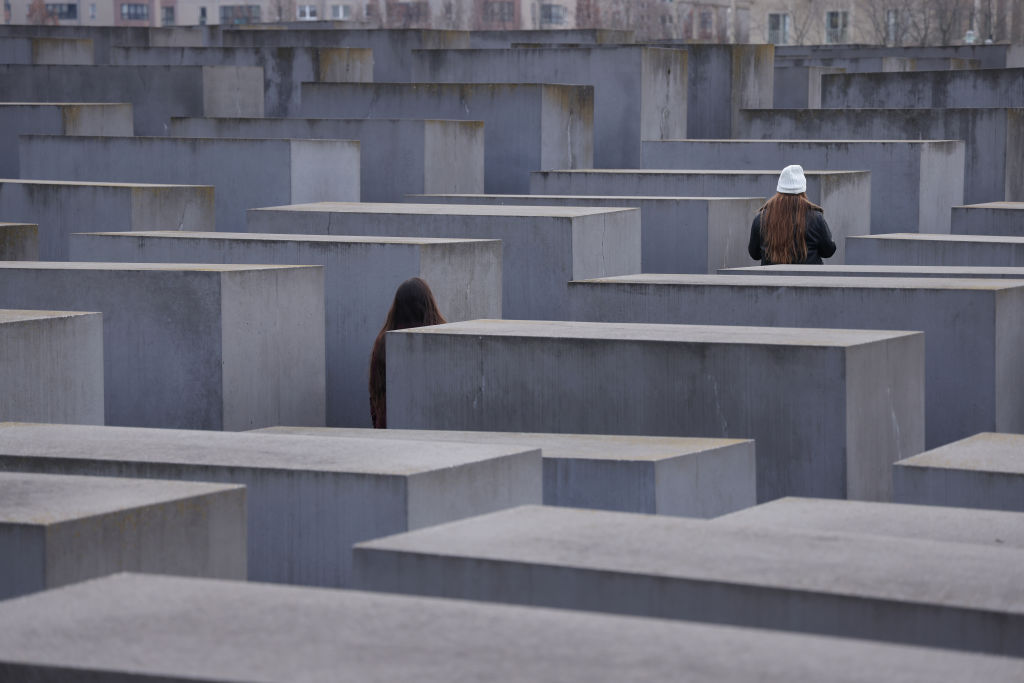
Six million Jewish people were murdered by the Nazis in the Holocaust and millions of lives were taken under Nazi persecution of other groups, like Roma and Sinti people, black people, gay people, mentally and physically disabled people. And while we said, “never again”, genocides followed since in Cambodia, Rwanda, Bosnia and Darfur, with millions more people murdered – simply for who they were.
When survivors talk about their traumatic experiences, they all have one thing in common. Each of them can recall One Day in which life changed forever – for better or for worse. Extraordinary acts of kindness or shocking acts of cruelty, worlds turned upside down – as we mark Holocaust Memorial Day 2022, we have asked Holocaust and genocide survivors about their One Day.
John Hajdu MBE, Holocaust survivor:
‘One day that stands out for me is 14 October 1944 when all Jewish women and children were herded together in the courtyard of our block of flats in Budapest, Hungary, to be deported to a concentration camp. My aunt rushed me across the corridor to the flat of a non-Jewish neighbour and friend who agreed to hide us in a cupboard. Had we been discovered, we would have been shot and there is no question in my mind that this act of kindness by our neighbour saved my life.’
Joan Salter MBE, Holocaust survivor:
“One day in July 1942, when we turned up for weekly registration as aliens at a local police station in Paris, France, a police officer warned my mother that deportations of women and children were due to start the following day. Our names were on the list for the first transport. My mother arranged for us to escape, and we were smuggled out of Paris in a laundry van in the dead of night. More than 11,000 children were deported from France to Auschwitz and other Nazi death camps. Over the years I have thought of that police officer who tipped off my mother about the Nazi raid, not just of his humanity but of his bravery in defying authority. I owe my life to him.”
Var Ashe Houston BEM, survivor of the genocide in Cambodia:
“I was 26 years old and married with two young daughters when the Khmer Rouge came to power in Cambodia in April 1975. I will never forget the day that they began emptying the cities and towns by ordering everyone out of their homes at gunpoint. Most of us walked out with just a bunch of keys. With millions of people in the streets all at once, walking under the scorching sun without water and food, the chaos was unimaginable. It was also heart-wrenching to see hospital patients lying on the pavements enduring pain, lost kids crying for their parents, and women delivering babies by the roadside screaming for help. That one day was the beginning of four years of suffering and terror as the Khmer Rouge turned my country into a vast concentration camp.”
Eric Murangwa MBE, survivor of the genocide against the Tutsi in Rwanda:
“We’ve heard it said many times that football is so much more than just a game. In my case, this statement proved to be more than just a cliché. The moment that saved my life during the genocide against the Tutsi in Rwanda was supplied by the beautiful game. As people were being murdered, my fellow players protected me. One day, five armed men burst into my house in Kigali – indenting to kill us. We were forced to lie on the floor, but when the killers discovered that I played football for Rwanda’s most popular team, Rayon Sports, my life was spared as the conversation turned to football. This is why I now use football as a vehicle for peace and reconciliation.”
Smajo Beso, survivor of the genocide in Bosnia:
“I was so desperate to learn to read and write in Bosnia, that I risked my life to attend school during the siege of East Mostar. The journey to school was always a matter of life and death being at the mercy of snipers and shelling. Arriving at Newcastle airport on the 19th of July 1994 as a 9-year-old refugee, I realised I had to start all over again. All the things that anchor a person in life were suddenly gone, my family, my home, my community, my language, my ability to read and write, my culture and my identity. Storytelling has been a vital part of my road to recovery, using my story as a tool for education and peace-making to reduce the chances of what happened in Bosnia happening anywhere else.”
El Sadiq Manees, survivor of the genocide in Darfur:
“During the genocide in Darfur, I was condemned to death for ‘crimes’ I knew nothing about. I was locked up in prison to await my execution and shared a one-bed cell with eight other people. But one day, after two weeks of incarceration, one of my uncles came to my rescue. He paid a bribe to have me freed but advised that I would have to leave the country. I was freed and driven for hours to a remote area where I was dumped. I walked for days before coming across a truck carrying animals and the owner kindly allowed to hop on and travelled to the border with Libya. I later found out that my uncle was murdered for facilitating my freedom, but I will never forget the day he came to that prison.”