Should we be worried about the rise of the Bank of Mum and Dad mortgage?

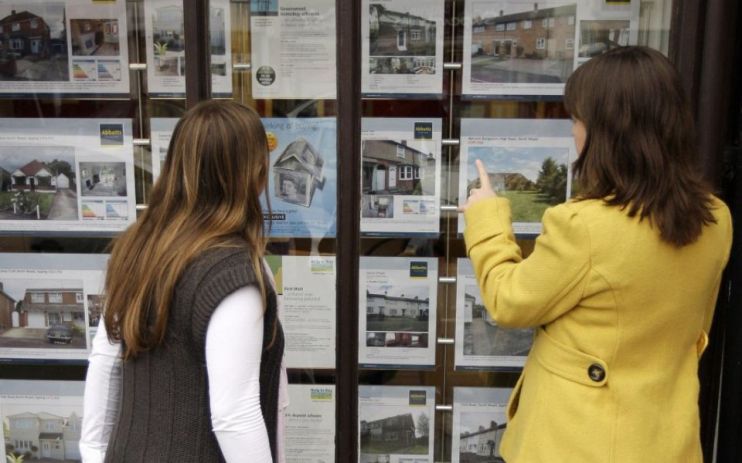
In the years leading up to the financial crisis, it was relatively easy for wannabe homeowners to get loans for the full value of a property – otherwise known as a 100 per cent loan-to-value mortgage.
Of course, we know the problems caused by these mammoth loans, and since then, affordability criteria have become stricter and loans have become smaller.
So the news last week that Lloyds Bank has launched a 100 per cent loan-to-value mortgage certainly raised a few eyebrows.
As Andrew Hagger from Moneycomms says: “Whenever I see the term 100 per cent loan-to-value mortgage, I can’t help thinking back to the mortgage madness in the run up to the financial crash.”
The Lloyds’ “Lend a Hand” deal isn’t the traditional 100 per cent loan-to-value mortgage that we all know and loathe from the pre-crisis era, because the bank is still asking for a deposit worth 10 per cent of the property purchase price – it’s just that the money is held by a family member in a separate savings account.
It means that first-time buyers don’t have to stump up tens of thousands of pounds to get on the housing ladder, and parents – who have to keep their money locked away for three years – can benefit from the 2.5 per cent interest rate on their savings.
While the saver isn’t technically a guarantor, parents are putting up security which can be drawn against if the borrower defaults on mortgage payments. It’s also clearly a way for Lloyds to tap into the UK’s biggest lender: the Bank of Mum and Dad.
The general consensus is that this is a positive move, particularly given that the cost of living in places like London (where the average deposit for first-time buyers is a ridiculous £110,182) makes it hard for young people to save enough to buy.
As Habito’s Daniel Hegarty says: “Banks are responding to demand from would-be buyers by creating new lending products to help families get their children on the ladder.”
We need to see the buyer being empowered, rather than creating further reliance on the Bank of Mum and Dad
Lloyds isn’t the first to offer so-called “Bank of Mum and Dad mortgages”, with the likes of Barclays, Yorkshire Building Society, and Bank of Ireland offering their own versions. But it certainly marks an ongoing trend.
In fact, last November, the Building Societies Association (BSA) urged lenders to “revisit the case for lending up to 100 per cent loan-to-value ratio mortgages”, suggesting that technology could provide more accurate predictions to determine how risky a borrower is.
The BSA also mentioned that more building societies were developing products which use “family collateral” in order “to address the challenge of deposit-raising and demonstrating affordability”.
However, we shouldn’t ignore the massive risks inherent in these huge loans, in that they assume that house prices will rise. If house prices fall, the danger is that borrowers on high loan-to-value mortgages could end up trapped with no other option but to move onto the lender’s expensive standard variable rate once their fixed deal ends, warns Hagger.
In some cases, borrowers could fall into negative equity (where the mortgage is worth more than the value of the property), which is a problem for consumers and lenders alike.
Personal finance expert Hagger says that consumers should weigh up these factors, particularly given the current economic uncertainty surrounding Brexit and, of course, slowing house price growth.
These deals effectively create a two-tiered mortgage application system
Large loan-to-value deals aside, what about the trend for Bank of Mum and Dad mortgages?
Habito research found that 44 per cent of parents would gift or lend their children money from their own savings to get them on the property ladder, with 20 per cent saying that they would lend them £10,000 or more.
The Lloyds deal means that parents don’t have to give the money, but merely set it aside for a few years. However, at 10 per cent of the value of the home, Hegarty points out that they would need to fork out £23,000 for an average UK property. “Many parents don’t have that sort of cash lying around to gift,” he adds.
Chief executive at StepLadder, Matthew Addison, says that these type of mortgage deals “provide the wrong answer to the right question”, adding: “We need to see the buyer being empowered, rather than creating further reliance on the Bank of Mum and Dad.”
Addison warns that these deals effectively create a two-tiered mortgage application system – where those from well-off backgrounds will be given disproportionate access to credit.
Essentially, these deals make it easier for people to buy homes provided that their family is wealthy enough to foot the bill.
Mum and Dad mortgages aren’t the only way that banks are switching up house-buying. Last year, Darlington building society launched its Professionals Mortgage, with a six-times income ratio, while Clydesdale Bank said that it would lend 5.5 times a borrower’s income, with the buyer only needing a small five per cent deposit.
But, while lenders are clearly creeping towards higher income ratios and smaller deposits, those that do will have strict criteria for approval. Both Clydesdale and Darlington require applicants to be qualified in just a few eligible professions.
Hegarty explains that a buyer’s affordability is also stress-tested to prove that they could continue making repayments at between six and nine per cent interest. “For those that are approved, these products are very welcome, but the number of applicants who fit the criteria and get accepted will be very low.”
While at first glance, lenders seem to be returning to riskier products, it’s perhaps unfair to say that they are repeating the recklessness that prompted the financial crisis.
Indeed, strict lending rules introduced since the crisis make it difficult for those mistakes to happen again.
But while the Habito boss stresses that regulation for borrowing is incredibly important, he says it shouldn’t be at the total cost of much-needed product innovation.
“Lenders must balance operating within the regulator’s rules for safe lending, while still being able to respond to a changing house price and affordability environment, and being flexible enough to offer the products that borrowers need.”