How better competition policy can restore public trust in capitalism

Competition policy is not something most people spend much time thinking about.
It’s a dry, legalistic area of policy that even elected officials themselves have largely preferred to delegate to technocratic regulators.
Yet competition policy is an integral part of the lifeblood of capitalism. At a time when trust in the market economy is under severe strain, ensuring that markets remain free and contestable is more important than ever.
A key flashpoint in this deepening distrust has been the growing market power of a small number of giant technology companies — sparking a reaction from politicians and the public that has been labelled the “techlash”.
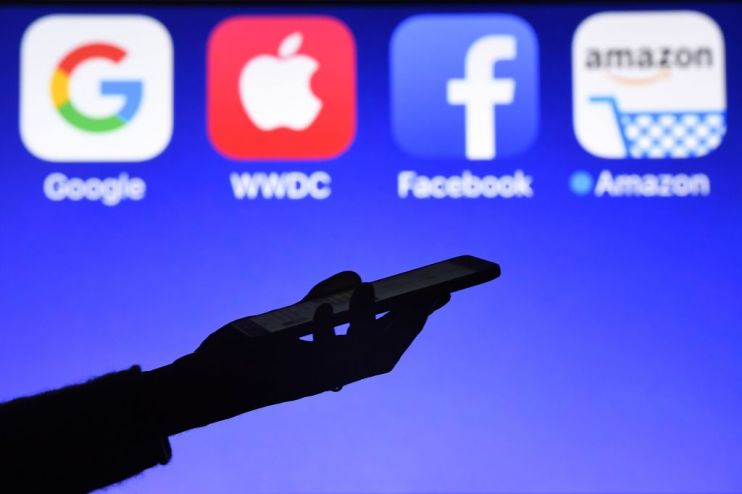
In just a few years, companies such as Facebook, Google and Amazon have gone from being perceived as heroic disruptors to immoveable incumbents dominant in an ever-increasing number of markets, from advertising and artificial intelligence to e-commerce and cloud computing.
More fundamentally, public unease about “big tech” has stemmed from the pervasive sense that users lack understanding and control over how the growing quantities of data collected about them are used. The 2018 Cambridge Analytica scandal, in which the personal data of millions of Facebook users was harvested without their consent, starkly brought this home.
Yet despite these trends, competition regulators — including the UK’s Competition and Markets Authority (CMA) — have been slow to react. For decades, antitrust policy has been dominated by the “Chicago School” of thinking: the idea that concentrated markets are not problematic unless they lead to higher prices for consumers.
While this philosophy may have worked in an analogue economy, it has been unable to grasp the implications for competition of new business models in which “free” services are tacitly exchanged for personal data and the right to target users with tailored advertising, itself underpinned by that very same user data.
This has meant so-called “killer” acquisitions by tech giants — those of companies that may have one day become challengers, such as WhatsApp or Instagram — went unchallenged by the CMA and other competition authorities.
Considerations beyond the acquisitions’ impacts on consumer prices, such as their potential effects on innovation or data concentration, were simply deemed irrelevant.
This has finally begun to change. Regulators are getting to grips with the nature of digital competition, with the CMA — whose remit is being expanded post-Brexit — at the forefront.
Under its energetic new chair, Lord Tyrie, the CMA has sought to bolster its armoury through a combination of upgrades to its legal powers and a broader rethinking of its approach.
In terms of the former, it has requested a series of new powers from the government, including a greater ability to impose fines for abuses, the capacity to act more swiftly using interim measures, and expanded information-gathering powers outside of formal investigations.
All of this will depend on the new administration’s willingness to pass legislation along these lines, which is highly uncertain.
Rather than wait for an answer, the CMA has set itself a bold agenda: rethinking its approach to acquisitions, taking a more preventative “ex-ante” approach to regulation, conducting a study of the highly-concentrated online advertising sector, and establishing a dedicated tech unit to strengthen its activities in the digital realm.
A more robust approach from a higher-profile CMA, in digital markets and beyond, will go some way in combating the perception that the economy is rigged in favour of a few powerful incumbents. A greater willingness to intervene when acquisitions threaten competition will ultimately benefit consumers, and ensure that genuine challengers can emerge to today’s dominant platforms.
The CMA will need to proceed carefully to avoid spooking investors and undermining the UK’s notable recent successes in tech. This means ensuring that its work is evidence-based, transparent, and consistent. The recently launched investigations of Amazon’s attempted investment in Deliveroo and Takeaway.com’s proposed takeover of Just Eat, will be instructive in this regard.
But a more assertive and self-reflective competition authority is something we should all welcome.
Main image credit: Getty