How capitalism will conquer space

The world’s first trillionaire will be the head of a space-based business, predicts Rainer Zitelmann
Space is the most undervalued industry in the world. It is particularly unappreciated in Europe, which has now fallen hopelessly behind the United States and China. The US carried out 153 launches last year, China 68 and Europe three.
The science fiction author Arthur C Clarke wrote back in 1977: “The impact of satellites on the entire human race will be at least the same impact as the advent of the telephone in so-called developed societies”. And he was right. Satellite mega-constellations such as Starlink, Qianfan, Kuiper, and Sat Net will ensure that the third of the world’s population that does not currently have access to the internet will soon be connected – with far-reaching economic implications.
CNBC has called space “Wall Street’s next trillion-dollar industry”, and according to a study by the World Economic Forum in April 2024, the space economy is expected to be worth $1.8 trillion by 2035. Morgan Stanley expects a space-based business to create the world’s first trillionaire.
Following the moon landings at the end of the 1960s and beginning of the 1970s, manned space flight in the US all but stalled, largely due to political interference. Each new president came to office with new ideas and new priorities, and contracts were too often awarded or simply cancelled on blatantly political grounds.
The private sector space race
NASA’s space shuttle program failed to live up to expectations. Despite the substantial investments made in the International Space Station (ISS), questions remain as to whether the money was spent wisely. And the launch costs, measured as the cost of getting one kilogram of payload into space, more or less stagnated for almost four decades.
It was private companies that achieved the breakthrough, driving launch costs down by approximately 80 per cent. And this is just the beginning. Space exploration once again proves the superiority of capitalism. The space race between the Soviet Union and the United States in the 1960s has now been replaced by a contest between the United States and China. But there is one crucial difference: during the original space race, the US and USSR space programs were both state-led. Yes, private companies also built rockets for the Apollo program, but those companies were given strict and narrow guidelines by the state space agency NASA, which told them exactly how to construct a rocket and led to high costs as the companies followed NASA’s instructions meticulously. Through cost-plus programs, there was not the slightest incentive to reduce costs; instead, the companies were incentivised to increase costs.
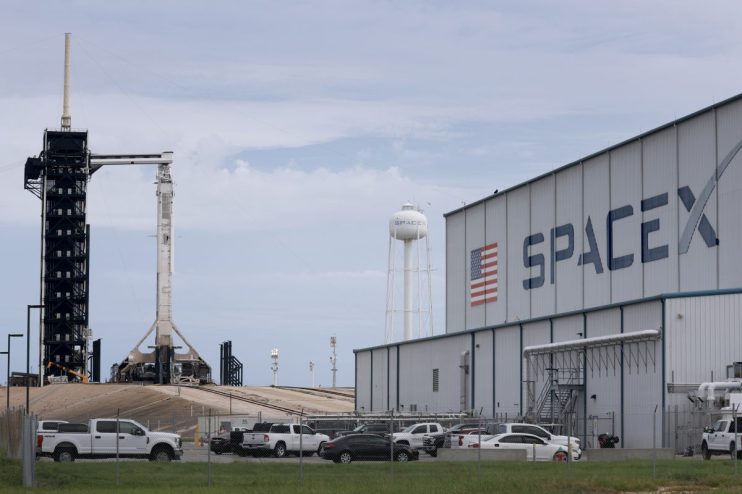
The relationship between NASA and private companies has changed dramatically in recent years. Elon Musk insisted on fixed prices and instead of telling SpaceX what to build, NASA specified what services it wanted to buy. The result: of 261 space missions worldwide in 2024, 134 were launched by SpaceX. If SpaceX were a country, it would by far surpass the second-largest country in the world, China, which registered 68 launches.
Even today, private space travel is hampered by superfluous regulations and government interference, particularly in Europe, but also in the United States. I suspect that a key reason for Elon Musk’s foray into politics is that he wanted to find a way to liberate private space companies from the growing bureaucratic burdens in the US.
The outcome of the new space race – whether China or the United States emerges victorious – will largely depend on which country grants more freedom to the growth of private space exploration
The outcome of the new space race – whether China or the United States emerges victorious – will largely depend on which country grants more freedom to the growth of private space exploration. Currently, the United States is well ahead, but it would be dangerous to underestimate developments in China, which is also reducing its reliance on an exclusively public sector space program and is increasingly involving private companies.
Rainer Zitelmann has written a discussion paper for the Institute of Economic Affairs summarizing 15 recent publications on developments in the Space Economy.