How do you value a football club? Why luxury brands may hold the secret

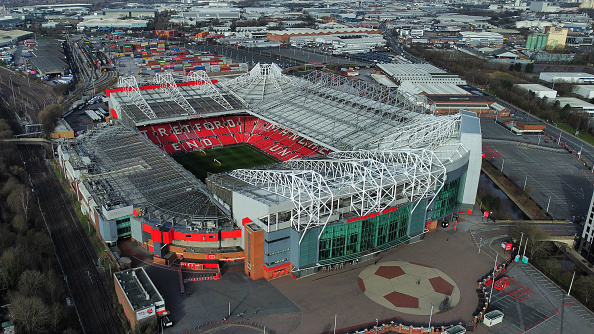
It is a question playing on the minds of Sir Jim Ratcliffe, Sheikh Jassim Bin Hamad Al Thani and Manchester United’s other suitors. The Glazers have already come up with their own answer, while Todd Boehly and Clearlake Capital had to grapple with it before buying Chelsea last year. How exactly do you value a football club?
Most businesses are evaluated on their profit generating potential, but football clubs are not like most businesses. Few turn a significant profit due to the unpredictability of results, which drive revenues, and the imperative to reinvest in the team to chase success. United, Chelsea and other top sides belong to an asset class with its own rules.
There are models and formulae of varying sophistication for crunching the numbers. United, to use the most topical example, are listed on the New York Stock Exchange, so it is easy to calculate their market capitalisation ($3.53bn/£2.85bn at time of writing) or enterprise value ($4.08bn/£3.29bn).
Buyers may use a multiple of income – Premier League clubs typically go for 1.5-2.0 x revenue – while some employ a formula that uses a revenue multiple minus the enterprise value and divided by EBITDA. Others also factor in how big matchday crowds are and how much wages eat into revenue.
But it is not an exact science, as the negotiations for United neatly illustrate. While Ratcliffe and Sheikh Jassim’s latest bids are believed to value the club at around £5bn, the Glazers are said to put that number at £6bn or even £6.5bn. Even allowing for a scarcity premium, and the likelihood that parties on both sides of the talks have adopted exaggerated negotiating positions, that is a significant gap. The £2.5bn that Boehly’s consortium paid for Chelsea, meanwhile, far exceeded initial forecasts.
It could pay to think of leading football clubs like luxury brands, putting United and Chelsea in the same bracket as Hermes and LVMH, says Nick Barlow, a director in PwC’s Sports Practice. Investors pay high multiples of revenue for top-end fashion and cosmetic brands, despite the companies often needing further expenditure to expand and reach their full potential.
“The current profitability – or lack of – doesn’t tell the full story of the ‘potential’ value in the business,” says Barlow. “There are parallels here to successful sports teams.”

There is more common ground in the way that football clubs and luxury brands interact with consumers. “Ultimately, both types of business understand that their ‘customers’ have a deep emotional connection to the ‘product’ and brand,” Barlow adds. “Investors know that this gives them significant opportunities to create value.”
Increasingly, it is not enough simply to assess at the club in isolation. Multi-club ownership models, like those popularised by City Football Group and Red Bull, can drive cost savings and therefore profitability.
Moreover, as the biggest teams become affordable only to the super rich, sovereign wealth funds and private equity, valuation estimates must also consider whether the asset will be part of a wider business portfolio.
Some empires – such as Ratcliffe’s Ineos, which includes his chemicals business, cars, clothing and sporting investments from French football to Formula 1, cycling, sailing and rugby union – can generate additional value for multiple companies, for instance through marketing initiatives.
“I believe that we are seeing new types of investors entering sports and these investors are thinking more broadly about the opportunities in the sector,” says Clive Reeves, PwC’s Global Sports Leader.

“We are increasingly seeing sports investment groups buying multiple assets across the sports ecosystem – for example RedBird Capital [investors in AC Milan and Liverpool owners Fenway Sports Group], HBSE [Harris Blitzer Sports Entertainment, part owners of Crystal Palace] – with the view to creating incremental value through synergies and leveraging capabilities developed at the holding group level.
“When investors look at sports properties they are now considering how value can be unlocked through acquisition of complementary assets. Therefore when valuing a sports asset we must keep in mind that value could be created beyond the single asset itself.”
Valuations continue to rise as the market for teams enjoys a post-pandemic boom. Just weeks after the Chelsea sale recalibrated expectations in football boardrooms, the NFL’s Denver Broncos set a new benchmark for a sports franchise purchase when it changed hands for $4.65bn (£3.86bn).
It seems certain that, should it go through, Manchester United’s sale will smash that record, even if debate about the price tag – and how best to calculate it – is destined to rage on.