How German politics went kaput

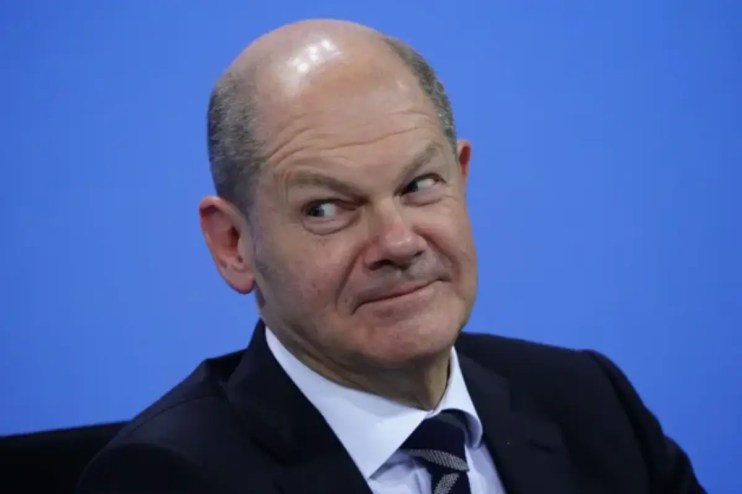
After the collapse of its shaky ‘traffic light’ coalition, Germany is once again the sick man of Europe, says Rainer Zitelmann
German chancellor Olaf Scholz (SPD) has sacked his finance minister Christian Lindner (FDP) and delivered an aggressive speech personally insulting Lindner. This is a drastic shift in tone for the otherwise calm chancellor, who is furious because he realises that his political career is beyond rescue.
From day one, the coalition of the SPD and the Greens, both left wing, and the free-market liberal party, the FDP, was on shaky ground. The Greens have always pushed for a shift to a planned eco-economy and both the SPD and Greens want more public debt, higher taxes, and more state intervention. In contrast, the FDP wants a more market-driven economy. These fundamental differences fuelled ongoing conflicts within the government.
Germany is once again the sick man of Europe – as it was at the end of the 1990s. However, it is important to recognise that the country’s problems did not arise overnight, they began long before the current “traffic light” government (the coalition government’s nickname “Ampel” because of the red, yellow and green colours of the three parties) and they have a name: Angela Merkel. Whether it’s the nuclear power phase-out, the ban on combustion engines, the failed migration policy, the decaying infrastructure and a military that could only defend Germany for a few days, all of these problems started under Merkel’s tenure, not with the Scholz government.
Following Merkel’s departure, a radical change of direction was needed. Instead, the Green economy minister Robert Habeck and chancellor Scholz not only stuck with Merkel’s failed policies, they took them up a notch or two. Scholz was proud when he was photographed using Merkel’s signature diamond hand gesture, positioning himself as her natural successor.
The FDP went along with all of this for too long. It has lost the confidence of two thirds of its voters. Despite achieving 11.5 per cent in the 2021 federal elections, current polling places the party on between three and four per cent. The FDP should have severed ties with the coalition long ago. The extremely unpopular Heating Act, which the Green economy minister used to dictate to his fellow countrymen which heating systems they would be allowed to install, would have been a good opportunity to leave the government – as would the nuclear power phase-out and the combustion engine phase-out. The FDP missed these opportunities and should now take a self-critical look at the mistakes of the past and reposition itself.
Will everything get better when economics minister Habeck returns to his former profession and writes children’s books? I do not have much hope. Yes, The Christian Democrats under Friedrich Merz have moved in the right direction and have corrected their course compared to the Merkel era, particularly in terms of migration policy. But without a thorough and self-critical reappraisal of the Merkel era, the CDU will have a hard time. So far, Merz has not dared to do this because there are too many disciples of Angela Merkel in his party. And most recently, the CDU made a fool of itself by cosying up to the socialist Sahra Wagenknecht and her new party BSW, which opposes NATO and support for Ukraine and advocates for increased socialism in domestic economic policy. The CDU has said it is willing to cooperate with this party in some regions of Germany.
Support for the right-wing Alternative for Germany has grown because other parties have neglected key issues such as migration, political correctness and nuclear power
The right-wing Alternative for Germany (AfD), currently polling at around 20 per cent, has grown because the CDU and FDP have neglected key issues such as migration, political correctness, and nuclear power. The AfD’s opponents have done the party a massive favour by trying to fight it on the battle ground of migration policy – which is precisely where the AfD has the greatest support among voters. Unfortunately, the AfD is not an alternative either, if only because its leaders, in particular Tino Chrupalla, systematically trivialise Russian imperialism and even act as Moscow’s 5th column in parliamentary debates.
Wilting Greens
The Greens have fizzled out. That’s one thing we can thank the traffic light coalition for. The last few years have opened many people’s eyes to this party of arrogant know-it-alls. But there remains a hard core of around 12 per cent who are unwaveringly loyal to these eco-socialists.
Is there a short-term solution to improve conditions in Germany? There will be new elections on 23 February. And then? The CDU are polling just over 30 per cent. They’ve already said they don’t want to form a coalition with the AfD. That leaves the FDP, who, assuming they make it into the Bundestag, won’t be enough for a majority. So, the CDU is left with the option of forming a government with one of the two left-wing parties, the Greens or the SPD.
Germany will not have a future until a chancellor gives a speech in which he boldly declares: “The energy and mobility transition has failed. I hereby declare an end to these misguided policies. On migration, we will now follow the examples set by Sweden, Denmark, the Netherlands and Poland. With the billions freed up by ending ideological projects, we will double our defence budget to four per cent of GDP.”
Unfortunately, I don’t see Germany getting such a transformative leader anytime soon. Implementing change on the scale of the transformations achieved by Maggie Thatcher, Ronald Reagan or Javier Milei will first require a fundamental shift in mindset. That takes time. There is not much hope in the short term.
Rainer Zitelmann is the author of In Defence of Capitalism and The Power of Capitalism