How London fell back in love with the office

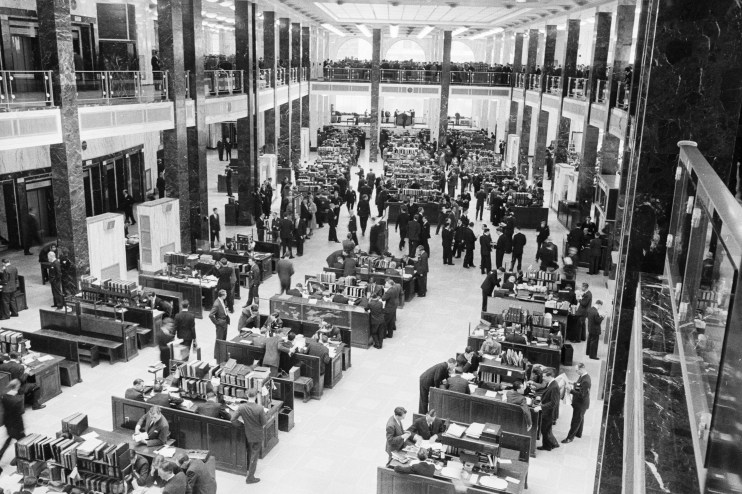
With workplace leasing enjoying a major post-pandemic bounceback, it’s clear that, once again, the office is seen as critical to success, writes Philip Hobley
The third quarter of 2025 marked the low point for sentiment among UK business leaders. Volatile geopolitics and concerns about UK productivity and competitiveness prompted executives to adopt defensive positions: cost reduction and cash control were the top priorities for chief finance officers surveyed by Deloitte in September.
Read the data from the London office market, however, and a different story emerges. Last year, London office take-up hit 12.1m square feet (sq ft) across 1,400 deals – the strongest year since the pandemic and right at the top end of our most optimistic forecast. Of the 98 deals signed in central London that were larger than 20,000 sq ft, 70 were expansionary, with companies agreeing to occupy more office space than they had before.
How can it be that the business community was both deeply anxious about the future and, at the same time, competing for larger slices of London’s prime office market? The explanation lies in a convergence of factors: the rapid pace of technological change, a long-postponed need to modernise facilities – a priority made even more urgent by the growing obsolescence of much of London’s existing office stock – intensifying competition for talent and classic supply-and-demand forces. Yet all these trends point to a single conclusion: in an increasingly uncertain world, business leaders view the office as a critical asset for success.
Pandemic dip is over
This would have been unthinkable to some only five years ago, when the Covid-19 pandemic forced companies to shift to full-time remote work. Many questioned whether offices would regain their former relevance, yet momentum behind both hybrid and full-time office returns has continued to grow. The scale of the shift was on display this week when Knight Frank hosted 400 real estate leaders at the Nobu Hotel in London’s Portman Square for our annual London Breakfast.
The message was clear: major employers from Blackrock to Salesforce, Disney to Intel, and the Bank of New York to Royal Bank of Canada and WPP are now encouraging employees to return to the office for four days a week. Others are relocating to access new pools of talent, or overhauling operations for the AI-era. All these shifts are fuelling renewed urgency among companies to secure high-quality workspace.
But firms are now facing a squeeze. Office development dropped dramatically as build and debt costs began to surge in 2021. Companies that put their search for premium office space on hold during the pandemic are finding themselves with a shrinking number of options – all while rents tick higher.
Rents for prime West End buildings are now £185 per sq ft, whilst in Canada they stand at £102.50 per sq ft with forecast growth of 4.2 per cent and 4.6 per cent per annum respectively out to 2030.
Such strong growth is positive, but the atmosphere at the London Breakfast also struck a note of caution. The slowdown in development has been so pronounced that it may soon pose a threat to London’s ability to remain globally competitive. More than 50m sq ft of leases will expire between 2026 and 2030, and our figures suggest that the undersupply of new and fully refurbished space will hit 12m sq ft between now and 2030.
Office shortage could force businesses out of London
This shortage will disproportionately impact the larger firms that drive the British economy. Just 19 buildings capable of accommodating lettings of 100,000 sq ft or more are scheduled for delivery between now and 2030. Over the past five years, 54 such transactions have been completed – and we expect demand to be even stronger over the next five.
Staying put will work for some businesses. We estimate that about a third of occupiers that actively seek out new space will end up staying in their existing building, whether due to lack of choice, costs or economic volatility. Still, without a turnaround, the shortage risks hampering the growth of healthy businesses, or worse, pushing them to sign leases elsewhere.
The government deserves credit for its efforts to simplify planning policy, but inconsistencies between local authorities remain a barrier to progress. Clarity and consistency are needed if we’re to unlock the next wave of high-quality workspace in London.
Developers, too, stand to gain if they read the signals. After years of prohibitive costs, development is becoming more viable as rents rise faster than inflation. Prime space is letting fast: nearly three-quarters of City offices completed in the past two years were pre-let at the point of completion. That trend, combined with rapidly shrinking supply in high-demand submarkets, suggests a favourable risk-return profile is re-emerging. Investors are already taking note. More than half of the 120 global investors surveyed as part of our Active Capital report are seeking to deploy capital in London. Of those, 85 per cent are targeting offices.
The fundamentals for speculative development are stronger than they’ve been in years. Developers who move early and build to the right specification are likely to benefit from both strong leasing velocity and sustained rental growth. In a market defined by scarcity, those who act now will be best placed to meet future demand – and to help secure London’s long-term competitiveness as a global business hub.
Philip Hobley is Knight Frank’s London head of offices