Skip to content
Saturday 8 August 2026London --:--Frankfurt --:--Zurich --:--
NewslettersSearchEN · DE
MorningWire

European business, markets and politics

FTSE 100
10,901.09
+0.31%
DAX
26,319.45
+0.69%
CAC 40
8,714.93
+0.17%
STOXX 50
6,523.86
+0.33%
  • Europe
  • Markets
  • Business
  • Economy
  • Technology
  • Politics
  • Opinion
More
GermanyFranceBankingAIEnergyFintechPropertyCapital Markets
  • Germany
  • France
  • Europe
  • Markets
  • Business
  • Economy
  • Technology
  • Politics
  • Opinion
  • DE
Saturday 21 June 2025 5:46 am  |  Updated:  Thursday 19 June 2025 12:26 pm

How much should you pay to see Billie Eilish? Don’t ask St Thomas Aquinas

By: Paul Ormerod

Add as a preferred source on Google
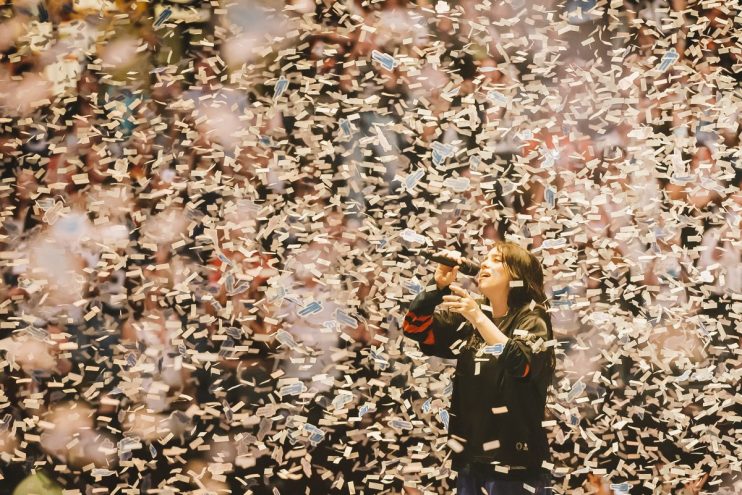
MELBOURNE, AUSTRALIA - MARCH 04: Billie Eilish performs her 'Hit Me Hard And Soft' Tour at Rod Laver Arena on March 04, 2025 in Melbourne, Australia. (Photo by Naomi Rahim/Getty Images for Live Nation)

Thomas Aquinas argued for the concept of a “just price”, but when it comes to concert tickets the correct price is the one determined by the market, says Paul Ormerod

Summer is in full swing, and with it the usual round of festivals and music gigs.  

Alongside these, another tradition is emerging. Namely, extensive whingeing and whining about the price of tickets to these events.

Certainly, prices seem to have risen very substantially in the past few years. The Times newspaper gave a good example last weekend.  In 2022, Billie Eilish performed for six nights at the O2 arena. The average price for a standing place was £76. This year, she is carrying out exactly the same schedule. The difference is that the same places are on offer at £245.

We might reasonably feel that this is a simple matter of supply and demand. After all, no one is forced to attend a concert or a sporting event, it is a matter of choice. If the supplier pitches the price too high, this will be reflected in empty seats.

The medieval scholar St Thomas Aquinas is famous for developing the concept of the “just price”. Given the pervasive feeling that it is somehow unfair to charge too much, it seems to be an idea which is very much alive and well.

Dynamic pricing

A recent development facilitated by technology is the source of much disquiet. This is the phenomenon of “dynamic pricing”. Promoters of events set a range of prices for the same seat and related services. Once the first tranche, at the lowest price, has sold out, the next one is put on offer at a higher price, and so on.

The practice has become widespread. Most long-distance trains, for example, offer a small number of very cheap advanced tickets for a particular service. When these are gone, higher prices apply. The nearer it is to the time of journey and the more flexibility the traveller wants, the higher the price.

But it is the application of dynamic pricing to popular culture events which attracts particular opprobrium.

Earlier this year, Lisa Nandy, the Culture Secretary, pledged to crack down on high prices at gig events. One of her Cabinet colleagues, Lucy Powell, at the time expressed personal outrage at the amount she had to pay. At least, unlike many Cabinet members, she paid for herself.

Read more

Global Citizen’s links to Fifa chief Motsepe and the first ever World Cup half-time show

Getty Images logo displayed prominently on a digital screen, representing professional stock photography and licensing ser...

The problem for any sort of inquiry is that the whole process of pricing is complex.  

The supply and demand curves drawn in basic economics textbooks look very neat. Price is set where the curves cross, where supply and demand are equal. But there is much more to it than this.

For example, financial markets might seem an obvious application of the elementary laws of supply and demand. But the price at any point in time of, say, Microsoft shares, does not appear by magic. In order to find the price which balances supply and demand, most markets use an algorithm known as a continuous double auction which both stores and matches orders.  

Uber is another well known example of the use of an algorithm to set the price. In this case, if demand is high in a particular locality, the service is not doled out in successive parcels at different prices. Prices surge immediately.   

Even old-fashioned greengrocer stalls in markets use a form of algorithm. If a product is perishable and really will not be fit to sell tomorrow, the price is discounted.  

The alternative to using price to decide who gets what is of course the queue. The NHS is the prime example of this mechanism. You join the list and wait.

Increasingly, of course, people are rejecting the queuing principle. More and more are using private health care.  

Whatever its faults, price is the best way we have yet discovered to allocate resources.

Paul Ormerod is an Honorary Professor at the Alliance Business School at the University of Manchester, an economist at Volterra Partners LLP, and author of Against the Grain: Insights of an Economic Contrarian, published by the IEA in conjunction with Morning Wire

Read more

Sports hospitality has never been this good – but which sport does it best?

Last week Guild Esports revealed it only had £25,000 left in its accounts, sending its share price plummeting to a record low

Share this article

  • Facebook
  • X
  • LinkedIn
  • WhatsApp
  • Email

Similarly tagged content:

Sections

  • Opinion

Categories

  • Opinion

People & Organisations

  • Billie Eilish
  • Dynamic pricing
  • Lisa Nandy
  • Lucy Powell
  • Oasis
  • Thomas Aquinas

Trending Articles

  • WPP slashes jobs as revenue continues to fall

  • Liverpool owners tipped to sell – but not to Amazon boss Bezos – by former CEO

  • Revolut founder’s wealth set to balloon amid talks of share award at $500bn valuation

  • Starling plans to ‘come out swinging’ in diversification bid

  • As it happened: Stocks rise despite new tensions in Strait of Hormuz; Oil price climbs

More from Morning Wire

  • Global Citizen’s links to Fifa chief Motsepe and the first ever World Cup half-time show

    Sport Business
    Getty Images logo displayed prominently on a digital screen, representing professional stock photography and licensing ser...
  • Sports hospitality has never been this good – but which sport does it best?

    Sponsored
    Last week Guild Esports revealed it only had £25,000 left in its accounts, sending its share price plummeting to a record low
  • Tickets for England World Cup quarter vs Norway on sale for $8m

    Sport Business
    Economic analysis charts and graphs showcasing global market trends in 2023 with a focus on stock performance indicators.
  • Bargain: England World Cup semi tickets vs Argentina just $2,700

    Sport Business
    GettyImages 2285694346 shows a dynamic cityscape with bustling streets, highlighting urban life and modern architecture.
  • Starmer took sport freebies worth tens of thousands of pounds while PM

    Sport Business
    Getty Images logo on a digital screen, symbolizing media content and stock photography for news and business platforms
  • Frying squad: England’s World Cup bid fuelled by cooking oil and leftover food

    Sport Business
    Getty Images logo on a digital display, representing the brands impact in digital media and stock photography industry.
  • Could an England World Cup win boost the markets?

    Opinion
    Getty Images logo on a smartphone screen, representing a focus on digital media and stock photography industry trends
  • Will Britain follow Japan’s great growth gamble?

    Opinion
    Japan Prime Minister Sanae Takaichi speaking at a press conference, highlighting her leadership and political agenda
MorningWire

Independent European business, markets and political news for decision-makers.

Morning Briefing

Europe

  • Germany
  • France
  • Europe
  • UK & Ireland

Business

  • Markets
  • Banking
  • Technology
  • Energy
  • Property
  • Fintech

Editorial

  • Opinion
  • Editorial Policy
  • Corrections
  • Contact

Company

  • About Morning Wire
  • Privacy Policy
  • Terms of Use
  • Cookie Policy
© 2026 Morning Wire Ltd · Published by Morning Wire Media, Bahnhofstrasse 65, 8001 Zürich, Switzerland
Privacy · Terms · Cookies · Facebook