How NFTs can revolutionise the fashion industry

When people ask me, what fashion is, I say it’s art and passion. I grew up in Milan – “la Capitale della Moda” – where brands set trends and give us social status.
I walked a few catwalks when very young, which was fun and put me in contact with some key industry figures. I met many extravagant designers and still now attend fashion shows around the world. I love unique creations by designers such as Prada, Chanel, Dior and Balenciaga.
Fashion is collectible art. Fashion is one of the oldest and biggest creative industries in the world. It creates memorable pieces, generates revenue, sets trends, expresses ideas and communicates values. Massively influenced by society and the economy, fashion is a representation of the world, the inner voice of all society’s facets.
Like any art, it is constantly changing.
Technology has been driving its evolution, creating new opportunities for brands to diversify their offerings and increase their revenue streams. E-commerce, with its plethora of online platforms, has helped reach wider communities and democratise access. The rise of Virtual Fashion and Fashion Tech has brought new realities for customer engagement and added new channels and solutions to the traditional in-store shopping concept.
But there is much more. Blockchain has arrived and things are going to get even more exciting as the technology is more widely adopted: a new level of transparency and security to tackle historical issues such as counterfeiting, broken and murky supply chains, authentication and limits in digital engagement.
Crypto is not only fashionable, but it offers new solutions and can even solve problems in the fashion industry.
Here come the NFTs
As a new concept of ownership is gaining recognition across the new generations, fashion is ripe for another big disruption, perhaps bigger than e-commerce. NFTs or non-fungible tokens are a new asset class that find value in scarcity and uniqueness, which lend status to the owners within certain communities.
For those who are not familiar, here is a short explanation: NFT is a file format for transferring data and information on a blockchain.
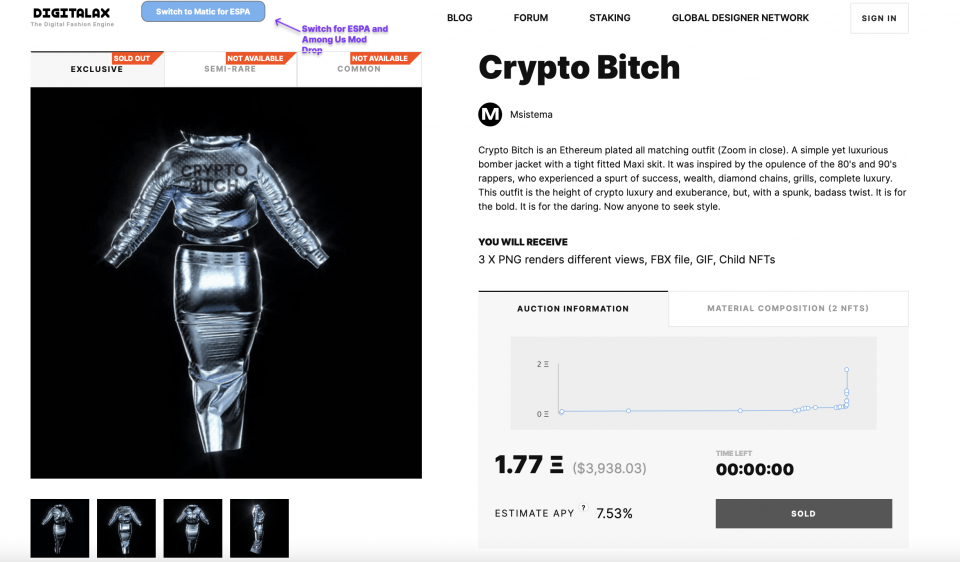
Its distinctive characteristic is non-fungibility, or uniqueness, to use a word more familiar to fashion people. Because it is recorded on a blockchain, it guarantees full transparency and tracked provenance as well security and exclusive ownership.
NFTs represent a new digital asset uncorrelated to the current traditional market and not really to cryptocurrencies, which can appreciate over time and be monetised.
Why should the fashion industry care about NFTs?
NFTs are now promising to be the solution for alternative asset ownership, completely disrupting the collectible industry which, together with sport memorability, digital art could also include fashion.
It opens up a new dimension for collectors who can now not only use the NFT digital content – perhaps in a virtual reality context – but also monetise the same asset online. NFTs offer an opportunity to attribute perpetual royalty rights to the creators, which has already proved a winning proposition in the music and art businesses.
NFTs are like social assets, people buy what they represent because they give status in a community.
A Chanel bag can have its NFT, so together with the physical piece it will first have a unique digital virtual version that can be used in digital realities like games or virtual gatherings. Secondly, it can guarantee proof of ownership in the second-hand market and record the full history of the item.
New realities
Let me break this down: most of our lives are now spent on the web. We socialise, we shop and we play online. We will be joining new realities such as games, meetings and interactive realities with customised avatars.
Brands will have the opportunity to get into the space with virtual collections – we still want to be fashionable online and NFTs can be used to monetise the market.
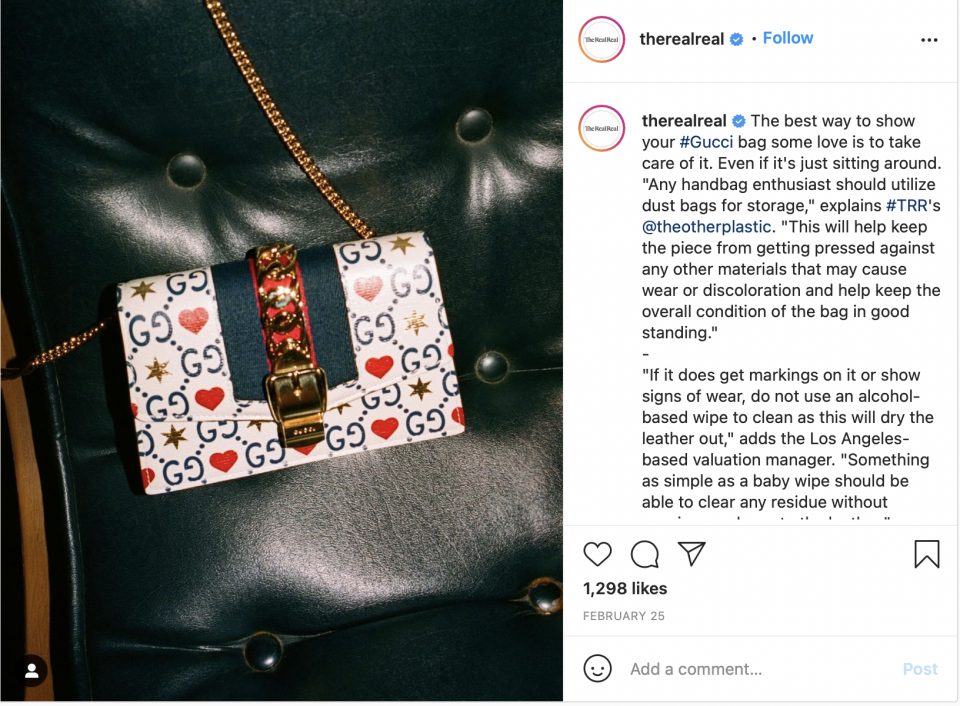
Let’s now look at the secondary market where NFTs can play a key role.
We all agree that some fashion items such as expensive and limited-edition pieces are collectible: some Chanel bags go for thousands of pounds Hermes for dozens of thousands. They can be considered alternative investments, collectibles that increase in value over time because of their uniqueness.
The secondary market is where items are resold via multiple collectors. Their scarcity drives value and price – it becomes a bit like treasure hunting.
The preloved fashion market is booming. Pre-Covid figures show a current value of $24bn, with predictions to reach $64bn within the next five years, and potentially by $80 bn by 2029. Those numbers are augmented by Covid, showing the massive potential growth of the second-hand industry, which has been spurred by the trend of sustainability and circular economy to manage waste and educate people on more responsible consumption.
However, major problems arise in dealing with preowned items: provenance and authentication. You will never know the full history of the item you’ve bought: where did it come from and what if it’s a fake Chanel bag?!
Human error
The larger re-sellers are relying on manual authentication processes with experts around the world studying each item carefully, going through the main characteristics and specifications in order to be able to prove they are not fake. The whole process is expensive, time consuming and requires specific expertise: a human decision which inevitably carries the risk of human error.
This problem brings us back to NFTs and their value within the fashion industry.
NFTs not only guarantee the exclusivity of the item they represent, but also offer full transparency of ownership, thanks to blockchain technology.
In the current fashion system, something often completely missed is an item’s story. A limited-edition Chanel bag can be a collectible and its value can increase also based on the people who have owned it over time. Think about it: if Rihanna carried this bag at a music award ceremony or in one of her videos, I would like to know, because that adds considerable value to the bag, as a significant part of the item’s history.
NFTs can have a great use case in pre-loved fashion, particularly when we are talking about special edition handbags, ready-to-wear unique collections, and one-off pieces. Those are collectibles and become investment pieces.
But that’s not everything. NFTs can also incorporate royalties for creators. This is an interesting area, particularly for designers and brands to protect their work while creating opportunities to increase their revenue, tapping into the billion-dollar pre-owned market. But it also opens up new ways for the brand to engage with NFT users as a special pass. Many features can be built on top using smart contracts.
Brands can create virtual collections for online use and also guarantee the authenticity of their exclusive pieces with NFTs, which also carry royalties for the brands who minted them, once they move into the secondary market.
Obviously, the NFT market is in its very early stages and needs to evolve to be fully understood and offer those more valuable use cases. There is huge hype right now, which always happens when new ideas and technologies come out. Concerns remain about rights of ownership, especially from an IP perspective, but the intrinsic disruptive value of status ownership and the new digital world NFTs are ushering in with new ways to monetise assets have caused ears to prick up and open up innovative dimensions for many industries.
Fashion is definitely one of them. Watch this space.