How paving over London’s rail routes could end the miserable commuter squeeze

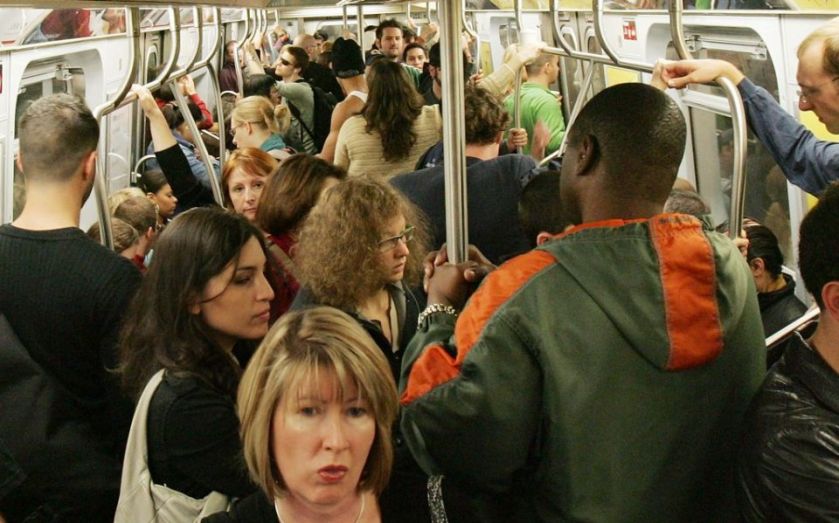
London’s population is forecast to hit 10m in 2030 and it’s difficult to see how the transport system will cope. A high proportion of commuters already endure severe overcrowding, standing in jam-packed carriages or even struggling to find enough space to get on trains.
The government sees additional rail capacity as the best way to address rising demand. But this is unrealistic. With further spending cuts needed to reduce government debt, there is simply no way the Treasury will be able to fund the scale of investment required.
Part of the problem is that rail schemes in London are hugely expensive. The proposed Crossrail 2 scheme, which will add relatively little to the capital’s transport capacity, is predicted to cost an astounding £27bn. Many more big projects would be needed for the network to accommodate the projected additional numbers of passengers. This is simply unaffordable. Public transport subsidies already cost taxpayers £12bn a year, with roughly half of this spent in London.
An alternative strategy would be to manage demand by raising fares. Yet despite the economic logic, fare hikes have become politically toxic. Even rises of just 1 per cent above inflation are now deemed unacceptable.
Future governments will therefore face a difficult predicament. They won’t be able to afford to increase rail capacity to cope with growing demand and they will struggle to manage congestion with fare increases due to political constraints. Fortunately, there is a potential solution if policymakers are prepared to think outside the box and take a more flexible approach to the use of transport infrastructure.
Rapidly-growing cities in Latin America and Asia have faced similar issues: rising demand but severe budgetary constraints. But rather than investing in hyper-expensive rail infrastructure, local governments have often decided to build much cheaper high-capacity busways instead. From Istanbul to Mexico City, these busways carry vast numbers of commuters while offering cheap and affordable fares.
So why not do this in London? One apparent reason is the lack of space, with the city lacking the wide boulevards used for busways elsewhere. But London does have an extensive rail network, with often vast corridors reaching right into the centre. This raises the question, would some of these routes deliver better value for money if they were converted into busways?
There is certainly strong evidence that this would bring a major increase in capacity. A single bus lane in New York’s Lincoln Tunnel carries up to 30,000 commuters in the peak hour, compared with a figure closer to 10,000 for a typical railway track entering Central London. And on former railway routes managed to avoid congestion, the potential capacity of busways would be much higher.
There could also be a big reduction in fares. Operating costs are likely to be much lower than on comparable rail routes. Busways are far simpler to manage and maintain.
Concerns about journey times can also be dismissed. On the shorter commuter routes where busways would be most appropriate, a combination of more direct services and increased frequency would deliver faster door-to-door travel times for the vast majority of passengers.
While busways may not be the best option in every location, the next government should not set transport infrastructure in stone. A more flexible approach may be the only way to avoid a severe capacity crunch.
Dr Richard Wellings is head of transport at the Institute of Economic Affairs and the co-author, with Paul Withrington, of Paving Over the Tracks… a better use of railways?