Skip to content
Thursday 20 August 2026London --:--Frankfurt --:--Zurich --:--
NewslettersSearchEN · DE · FR
MorningWire

European business, markets and politics

FTSE 100
10,693.14
-0.47%
DAX
25,934.92
-0.60%
CAC 40
8,463.17
-0.46%
STOXX 50
6,413.11
-0.49%
  • Europe
  • Markets
  • Business
  • Economy
  • Regulation
  • Politics
  • Opinion
More
GermanyFranceEU InstitutionsCompetitionPublic AffairsBankingTechnologyEnergy
  • Germany
  • France
  • Europe
  • Markets
  • Business
  • Economy
  • Regulation
  • Politics
  • Opinion
  • DE
Tuesday 26 May 2015 1:01 pm

In pictures: Why TfL escalator and lift work can take so long

By: Jessica Morris

Add as a preferred source on Google

Maintaining the heavy duty escalators and lifts which support London's tube network is a mammoth task – and this helps to explain why replacements and refurbishment can take such a frustratingly long time.

It all boils down to the fact these escalators and lifts aren't subjected to an ordinary degree of wear and tear, according to Transport for London (TfL).

Escalators and lifts on the tube network are used by around 1.265bn customers annually, and generally operate in both directions for a period of up to 20 hours a day, seven days a week, 364 days a year.

But because of the number of passengers they're used by, as well as the number of trips they have to perform, they're classed as heavy engineering machinery meaning upgrades can take a very long time.

David Waboso, LU Capital Programmes Director describes the size and difficulty of the tasks:

It can take up to 24 weeks to carry out an overhaul, particularly when spare parts have to be manufactured from scratch and installed deep underground in confined spaces.

Physical and geological considerations mean that every escalator on the Underground network is custom-built for its location.

Many components are made bespoke by the manufacturers, which mean a stockpile of spare parts can't be built up.

A typical heavy-duty escalator weighs 40 tonnes, has a vertical rise of 15 metres and would span over 37 metres if was laid out flat. 

Some installed pre-WW2 are actually embedded into the station's structure, such as those which were at Embankment Station, requiring a lot of building work to create enough space to fit a new escalator.

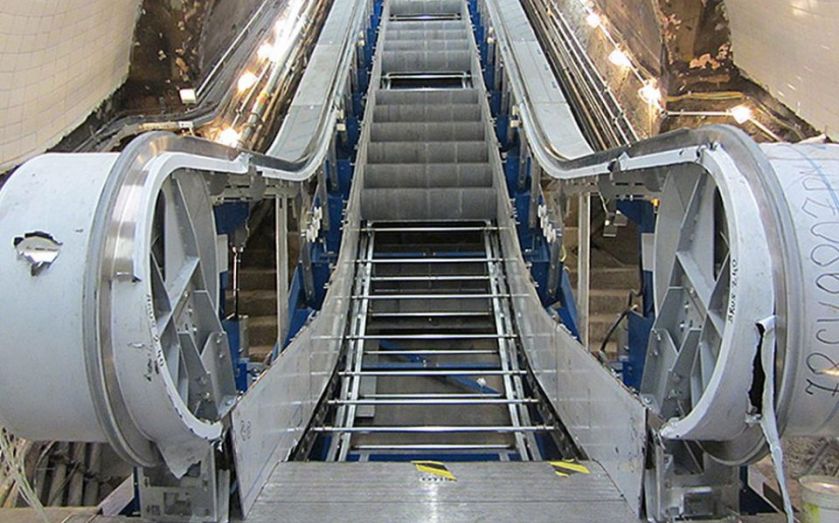
Below are pictures of escalator refurbishments at Embankment Station which was closed to the Bakerloo and Northern lines for 10 months.
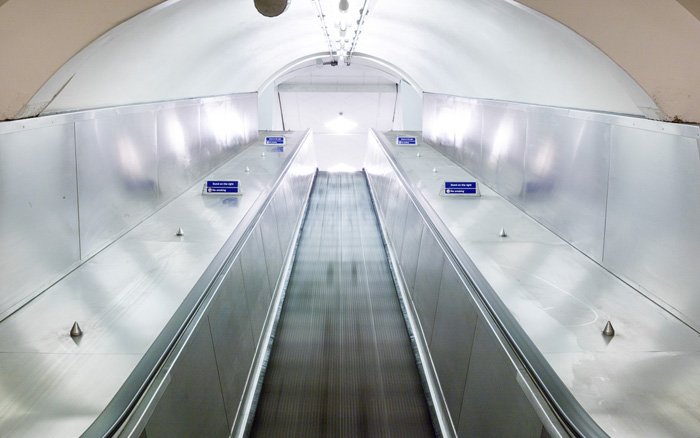

TfL replaced four escalators at Embankment Station (Source: Getty)
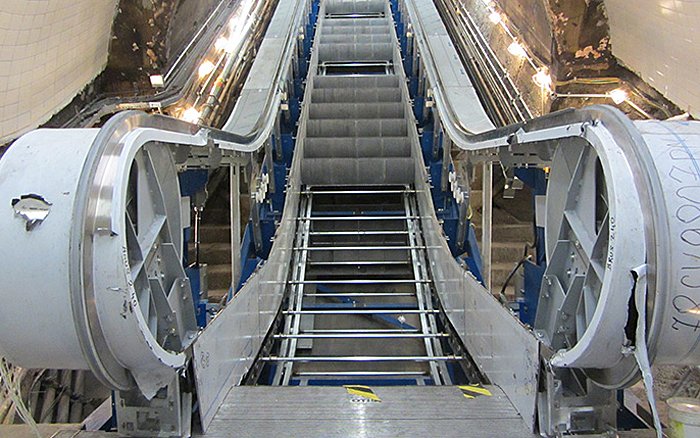


View from lower landing of the escalator with new decking panels (Source: TfL)
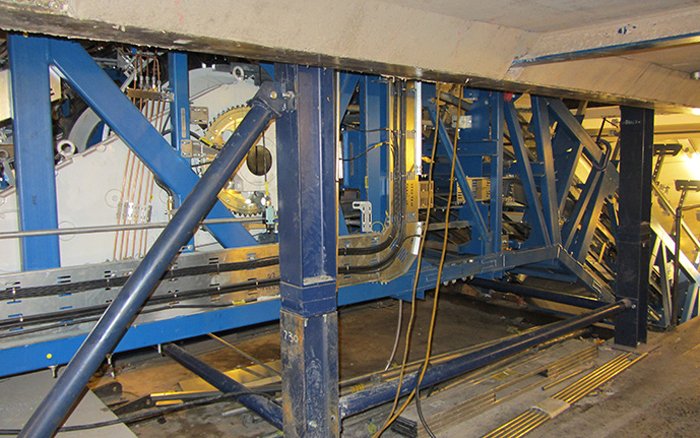


View of the new upper truss section from the machine room (Source: TfL)
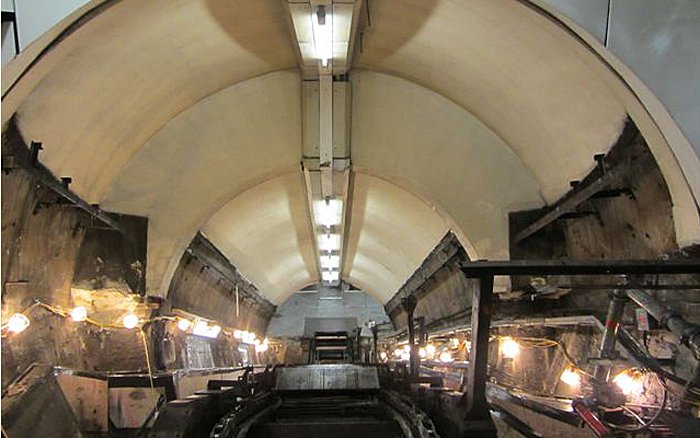


Upper landing during removal of the old escalator (Source: TfL)
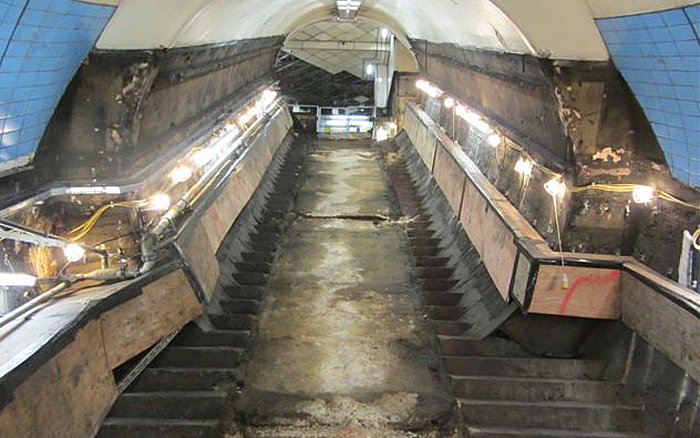


Incline with old escalator completely removed (Source: TfL)
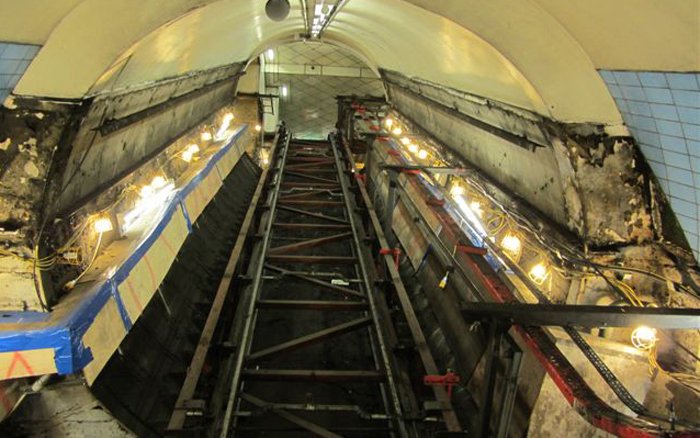

Embankment Station (Source: TfL)
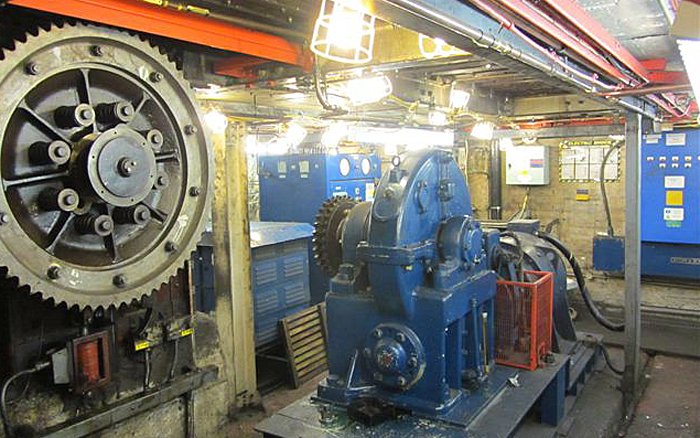


Upper machine chamber, the old machines have been removed as they are life expired (Source: TfL)
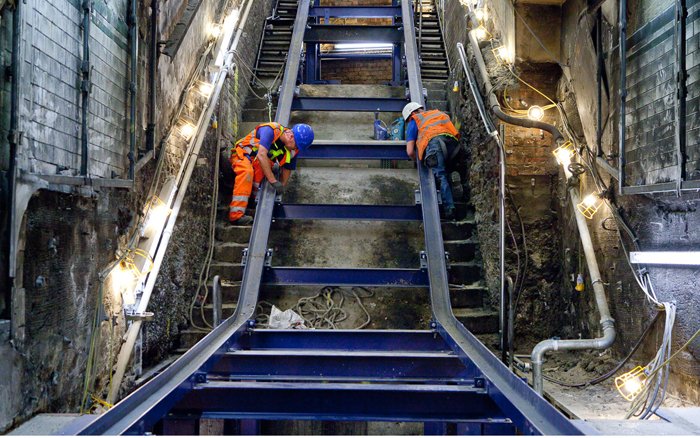


Installation of temporary trackway ready for delivery of new escalator truss sections (Source: TfL)

Share this article

  • Facebook
  • X
  • LinkedIn
  • WhatsApp
  • Email

Similarly tagged content:

Sections

  • News

Categories

  • Business
  • Transport & Infrastructure

Related Topics

  • Transport for London

Trending Articles

  • Jobless Banquet: Youth unemployment surge ‘sends Neets to KFC’

  • City law firm sues prominent Emirati business family

  • Amanda Blanc has worked her magic at Aviva

  • As it happened: Miners fuel FTSE 100 recovery; oil jumps as Trump claims Strait of Hormuz

  • House prices in wealthy London boroughs fall by up to £300,000

More from Morning Wire

  • No air conditioning on the Tube? Blame Sadiq Khan

    Opinion
    Crowded London Underground platform during summer heat wave, passengers fanning themselves to stay cool
  • Balfour Beatty ups profit forecasts as it defies construction gloom

    Transport & Infrastructure
    Balfour Beatty construction site showcasing cranes, workers, and building progress against a city skyline backdrop
  • Which is the smelliest Tube line?

    Opinion
    Passenger wearing a blue surgical mask and coat on a London Underground train.
  • Russians are poised to compete at the LA 2028 Games as IOC lifts ban

    Sport Business
    Getty Images logo displayed on a computer screen in a dimly lit room, emphasizing its prominence in digital media.
  • TfL greenlights Wayve’s autonomous vehicles in the City

    Tech
    Wayve autonomous vehicle navigating a busy London street with iconic cityscape in the background
  • Councils accused of turning e-bike operators into ‘revenue stream’ as fees surge

    Transport & Infrastructure
    Lime faces growing scrutiny over its safety record.
  • Unilever turns to ‘avocado mayonnaise’ as food weighs on profit ahead of spin-off

    Retail
    Hellmanns Real Mayonnaise jar in a refrigerator with fresh vegetables like tomatoes, lettuce, and onions
  • I’m 60, please don’t give me a Freedom Pass

    Opinion
    Close-up of a blue Oyster card against a white background, highlighting its role in public transportation payment systems.
MorningWire

Independent European business, markets and political news for decision-makers.

Morning Briefing

Europe

  • Germany
  • France
  • EU Institutions
  • Europe

Business

  • Markets
  • Business
  • Economy
  • Regulation
  • Competition
  • Public Affairs

Editorial

  • Opinion
  • Editorial Policy
  • Corrections
  • Contact

Company

  • About Morning Wire
  • Privacy Policy
  • Terms of Use
  • Cookie Policy
© 2026 Morning Wire Ltd · Published by Morning Wire Media, Bahnhofstrasse 65, 8001 Zürich, Switzerland
Privacy · Terms · Cookies · Facebook